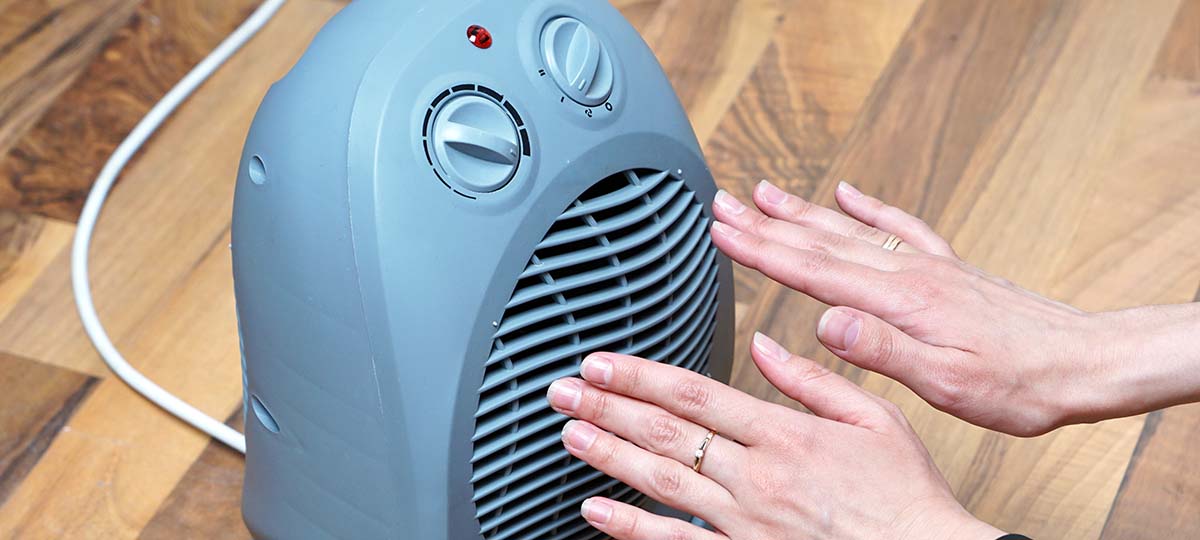
A space heater is a short-term way to make one occupied room more comfortable. It is not a replacement for central heat, a device to run while you sleep, or a safe way to rescue a cold house with a bad outlet. For most people who can meet the safety rules, the Vornado AVH10 Whole Room Heater with Auto Climate is the one to consider: it has a thermostat, two heat settings, a fan-only mode, tip-over protection, an automatic safety shutoff, a cool-touch case, and a current five-year satisfaction guarantee. The catch is just as important as the feature list: it must sit on a stable, level surface, be plugged directly into a wall outlet, and have three feet of clear space around it.
Before buying anything, decide what is actually cold. A room that feels chilly only while you sit at a desk may be better served by a low-watt personal heater or warmer clothing. A bedroom that is cold every night may need weather sealing, a heating-system check, or better bedding. A portable heater adds a high-wattage appliance to the room. The safest purchase is sometimes no heater at all.
Our picks at a glance
| Pick | Choose it for | Main limitation |
|---|---|---|
| Whole-room pick: Vornado AVH10 | Occupied rooms that need controlled, circulated heat and a readable thermostat. | Like most full-size plug-in heaters, it can draw up to 1,500 watts on high and needs its own wall outlet. |
| Small personal-area pick: Vornado VH202 | A modest work or sitting area where a lower-wattage heater is appropriate. | It is not intended to heat a whole cold room. |
| Sleep alternative: A warm non-electric blanket | Nighttime warmth without a portable heater running nearby. | It does not raise room temperature. |
Start by deciding if a portable heater is appropriate
Portable electric heaters are useful for a person sitting in a cold home office, a living room that is occupied for a few hours, or a room that is otherwise adequately heated but has a cold corner. They are a poor answer for a space that needs unattended, all-night, whole-home heat. The Consumer Product Safety Commission estimates that portable heaters, including electric space heaters, were involved in an average of 1,600 fires each year from 2020 through 2022, causing an average of 70 deaths and 150 injuries. That statistic should change the buying question. Do not ask only which heater gets warm fastest. Ask whether you can use one safely in the room you have.
Check the outlet and the floor first. The heater needs a wall outlet that grips the plug firmly, a stable level surface, and a clear zone that is at least three feet from curtains, bedding, sofas, papers, clothes, pet beds, and other combustible material. If a room cannot offer that space, it does not offer a safe placement for a portable heater. Do not place it on a table, dresser, bed, thick rug, or anything that could tip or obstruct airflow.
Never run an electric heater while sleeping or unattended. Turn it off when you leave the room and unplug it when it is not in use. A timer, thermostat, tip-over switch, and overheat shutoff are useful backup features, but they do not make an unsafe placement safe. If you need warmth overnight, begin with a good sheet and bedding setup. A heated blanket has its own precautions, covered in our electric-blanket guide, but a portable heater should not be the bedroom’s overnight appliance.
The whole-room pick: Vornado AVH10
Vornado’s AVH10 Whole Room Heater with Auto Climate is the strongest fit for a person who needs to warm an occupied room, rather than just blow hot air at their knees. The current 2025 AVH10 has two heat settings, a fan-only setting, push-button controls with a digital display, an electronic thermostat, a cool-touch case, tip-over protection, and an automatic safety shutoff system. Vornado says its Auto Climate Control reduces heater output and fan speed as the room approaches the selected temperature, then increases it again when the room cools. It also backs the model with a five-year satisfaction guarantee.
Those features make the AVH10 easier to live with than a heater that only has a blunt high/low dial. You can choose a target temperature, use the lower heat setting when it is enough, and avoid a constant stream of maximum heat. The model’s high setting is 1,500 watts and its low setting is 750 watts. That is typical full-size electric-heater territory, and it is why the outlet matters. Vornado states that the high setting draws 12.5 amps. Do not share that receptacle with another high-wattage appliance, do not use a power strip, and do not use an extension cord.
Buy the AVH10 for an occupied office, den, or living room that has the required clearance and a sound wall outlet. Do not buy it for a bathroom, a damp basement floor, a child’s unsupervised room, or a cramped bedroom with bedding within three feet. Vornado says the AVH10 is not intended for bathrooms or similar wet environments. If a home needs routine supplemental heat in several rooms, a portable heater is the wrong scale of solution; ask a qualified HVAC or building professional about the underlying heating and insulation problem.
The small-area choice: Vornado VH202
Vornado VH202 is the lower-output option for a smaller personal area. Vornado lists this compact model as an exception to the 1,500-watt category: it uses up to 750 watts on high and 375 watts on low. That lower draw may better suit a small office or desk-side position, but it does not waive the normal rules. It still needs a direct wall connection, a clear floor location, and active supervision. “Lower wattage” does not mean safe on a crowded desk, near a wastebasket, or below dangling clothing.
Choose a personal heater only when you have identified a modest, local need. It is a better answer for one person working at a desk than a full-size unit running at maximum heat in a small room. The trade-off is that it cannot transform an unheated bedroom or a large living area. Trying to force a small heater to heat beyond its useful range leads to longer run times and poor expectations, not a better outcome.
Do not use a portable heater under a desk if the chair, bags, cables, paper, or the desk itself block intake or exhaust airflow. Vornado permits some under-desk use only where the airflow path is not blocked; a desk is not automatic approval. Look around the full three-foot zone, not just the front grille, before switching on any model.
Safety features are requirements, not bonus features
Buy an electric heater with an appropriate safety certification mark, a tip-over switch, an overheat shutoff, and a stable base. For United States buyers, a mark from a nationally recognized testing laboratory, such as UL or ETL, is a sensible minimum. The relevant voluntary standard for movable room heaters is UL 1278. Certification tells you the product line was evaluated against a standard; it does not compensate for damaged wiring, a faulty outlet, a recall, blocked airflow, or unsafe use.
Check the CPSC recall database by brand and model before purchase and when taking an older unit out of storage. This is not theoretical: CPSC announced a recall of Vornado SRTH small room tower heaters in June 2026 because the fan blade can detach, leading to overheating and melting. That recall does not apply to the AVH10, but it shows why the exact model name matters. Do not assume a familiar brand makes every older or current product interchangeable.
Inspect the heater, its cord, and the plug before each season. Stop using it if there are cracks, a damaged grille, a loose plug, fraying, scorching, a burning smell, unusual noise, repeated shutdowns, or a hot cord. If the plug, outlet, or outlet faceplate becomes hot, disconnect the heater. Do not try a different extension cord, tape the cable, or keep using the outlet. Have a qualified electrician assess a hot or loose outlet, and have an authorized repair provider assess a hot cord or defective heater.
Use the three-foot rule literally
The three feet are not a suggestion for the front alone. CPSC advises keeping all sides of a portable heater at least three feet from beds, clothes, curtains, papers, sofas, and other material that can catch fire. That means a heater cannot sit close to a bed where a comforter might fall, beside a chair with a throw blanket, or against a wall crowded by curtains. Do not dry clothes over it, point it at laundry, or use it to warm a pet bed. Keep children and pets away from the unit and its cord.
Place the heater on a hard, stable, level floor where it cannot be kicked, bumped, or pulled by a cord. Run the cord openly to the outlet. Never route it beneath a rug or carpet, pinch it under a door, or hide it under furniture. Plug it directly into the wall. Power strips and extension cords can overheat under a heater’s high load, and an outlet that does not hold the plug tightly is not suitable.
A smoke alarm on every level and inside each bedroom, plus carbon-monoxide alarms outside sleeping areas, are sensible household safety equipment. Test them regularly and use battery backup where a power outage is possible. Alarms do not make a heater safe, but they are a critical backstop against many household dangers.
Know what a heater can and cannot heat
Most plug-in space heaters convert electricity to heat at the point of use. The difference between models is largely how they circulate or direct that heat, regulate the temperature, and fit safely in a room. A 1,500-watt heater cannot draw more power just because a room is very cold. It will run longer. A drafty room, an open stairwell, high ceiling, or leaky window can make a portable heater feel ineffective even when it works as designed.
Use the heater to warm the room you are in, while you are in it. Close doors where safe and practical, use curtains that remain well outside the heater’s clearance zone, address drafts, and wear a layer. If you are comparing a heater with a fan to a radiant model, consider where you will sit. Fan-circulating models can mix warm air through a room; radiant styles heat objects and people in front of them but still need the same clearance. Neither format belongs beside bedding or running without supervision.
Do not use any fuel-burning heater indoors unless it is specifically installed and vented for indoor use by qualified professionals. Never use a grill, camp stove, charcoal, or gasoline generator inside a home, garage, basement, or any partially enclosed space for heat. Those devices can produce deadly carbon monoxide. During a power outage, use layers, blankets, and the safety plan in our emergency-supplies guide rather than improvised indoor combustion.
Maintenance is simple, but it matters
Unplug the heater and let it cool before cleaning. Remove dust from the exterior and intake or exhaust areas only as the manufacturer directs. Dust buildup can restrict airflow; forcing an object through the grille can damage the unit. Read the owner’s guide for filter cleaning, storage, and seasonal inspection. Store the heater dry, with the cord loosely arranged, and avoid stacking boxes on its grille or cord.
At the beginning of each cold season, read the model label, check the recall database, inspect the plug, verify the outlet, and choose the location before turning it on. This five-minute routine is more valuable than upgrading to a heater with another digital mode. If the unit starts acting differently from its normal operation, stop using it until you have identified the issue.
Power use and thermostat expectations
Electric heat can be expensive because a portable heater turns a substantial amount of electricity into heat each hour it runs. The AVH10’s 1,500-watt high setting uses 1.5 kilowatts while it is actively heating. To estimate its cost, multiply the heater’s kilowatt rating by the hours it is actually running, then by the electricity rate on your utility bill. Thermostat cycling can reduce run time once the room is warm, but it cannot make a cold, leaky room free to heat. Avoid claims that a portable heater will automatically lower a whole-home heating bill; the result depends on whether you can safely lower central heat in unused rooms and on the home’s layout.
Use the thermostat for comfort, not as a license to leave the heater on. Set a reasonable temperature, stay in the room, and turn the unit off when you leave. A lower-output personal heater can be the better choice when you only need to take the chill off a desk area. The right heater is the one that meets a defined need without encouraging constant maximum-power use.
Children, pets, and shared rooms
Do not leave a portable heater operating around children or pets without a responsible adult present. Even a cool-touch case does not remove the risks of a cord being pulled, a grille being blocked, or fabric being dropped nearby. Keep the appliance where it cannot be knocked over and where the three-foot clearance zone stays clear through normal movement in the room. If that cannot be maintained, use layers or address the room heat instead.
In a shared office or apartment, agree on the placement before use. Someone else may move a chair, set a bag nearby, or plug a high-draw device into the same circuit without realizing the heater is running. The safest heater setup is visible, stable, and temporary.
When a different fix is better
If a room is cold all winter, check for drafts, missing insulation, a blocked vent, a thermostat problem, or an undersized central-heating system. Renters can document the condition and raise it with the property manager or local housing authority. Homeowners should consider weather sealing and qualified HVAC advice before making a portable heater the permanent fix. A heater can make one room more comfortable; it cannot repair a building envelope.
For a commute, emergency kit, or unheated car situation, do not use an indoor space heater as a vehicle accessory. Keep warm layers, a blanket, water, and light in the car instead. Our wool-socks guide and flashlight guide cover gear that is useful when the power is out or travel plans change.
How we chose these options
We reviewed current Vornado product information and owner guidance for the AVH10 and VH202, plus current CPSC fire-safety and recall guidance. The recommendations reflect stated product features, intended use, and safety limits; they are not claims of hands-on testing. Retail listings and product revisions change, so verify the exact model, certification mark, safety instructions, and recall status before purchase.
Buy the AVH10 only for supervised, well-cleared whole-room use. Pick the lower-output VH202 when the need is truly personal and local. If you cannot meet the placement and outlet requirements, do not buy a portable heater. Warm layers, better bedding, and a repair to the room’s actual heating problem are safer choices.