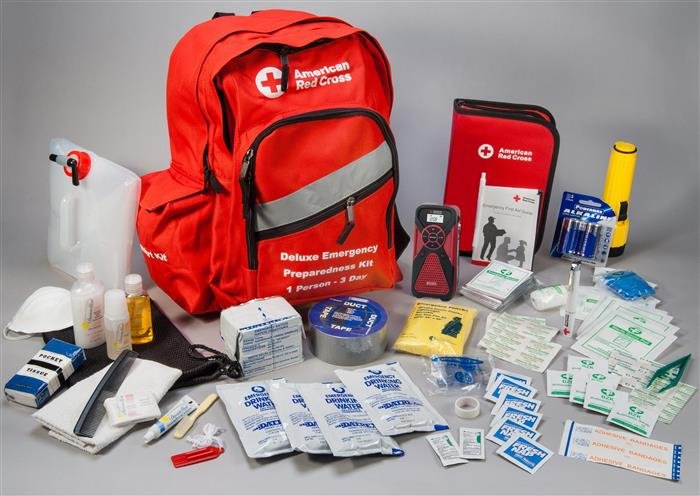
An emergency kit should be built from the things your household cannot safely do without for several days, not from a generic pile of tactical-looking gear. Start with stored water, shelf-stable food you will eat, a way to see and receive alerts, essential medicines and documents, and the supplies required by the people and animals in your home. Keep a small go-bag for leaving quickly and a larger home kit for a power outage or shelter-in-place event. The right kit changes with your local hazards, housing, transportation, medical needs, and season.
Buy the boring essentials first: a battery or hand-crank weather radio and reliable lights, a purpose-made water container, a basic first-aid kit you understand, and a charged power bank compatible with your phone. Add specialized gear only after you have planned for water, medications, hygiene, and communication. A tote of novelty survival tools is less useful than a labeled container of familiar supplies that everyone can find.
Build two kits, not one enormous bin
Keep the home kit where it is accessible, dry, and unlikely to be blocked by a damaged garage door or a fallen shelf. It can be a tote, cabinet, or shelving area. Its job is to support you at home through a short disruption: several days without ordinary shopping, safe running water, electricity, or travel. Use robust water containers, food, lighting, sanitation items, medicine records, and household-specific supplies. Do not store it in a place where summer heat, freezing, or moisture will ruin the contents.
A go-bag has a different job. It should be light enough to carry, ready at an exit, and built for the first day or two away from home. Include copies of identification and contacts, a change of clothes appropriate to the weather, medications, a charger, cash in small bills, water, shelf-stable snacks, light, a small first-aid kit, and a local map. Add a spare key only if it is stored securely. You may never need to use it; that is the point. A bag that requires a half-hour of sorting before evacuation is not a go-bag.
If you drive regularly, add a compact vehicle kit rather than moving your home kit into the trunk. Include a light, charger, water, simple food, warm layer, basic first-aid supplies, and any item required for the weather and roads where you travel. Our guides to jumper cables and jump packs and flashlights explain what is worth carrying without turning the car into a storage locker.
Water is the supply that needs a real plan
Ready.gov and the CDC advise storing at least one gallon of water per person per day for several days. That total covers drinking, basic food preparation, and hygiene, so it is easy to underestimate. Pets and any person who is pregnant, lactating, ill, working in heat, or relying on medical care may need more. Start with a manageable amount, label it with the storage date, and add capacity over time. A few disposable bottles are useful for a go-bag; purpose-made containers are easier to manage for home storage.
Store potable water away from gasoline, solvents, cleaners, and direct sunlight. Use food-grade containers intended for drinking water, not an old jug that previously held another liquid. Rotate stored water according to the container maker’s directions and local public-health advice. A water filter can be useful outdoors or during a disruption, but it is not a universal cure for every contaminant. Do not assume a filter makes floodwater, seawater, or chemically contaminated water safe. Follow local emergency instructions about boil-water notices and treatment.
For a deeper look at containers, treatment limits, and portable filters, read our emergency-water storage guide and portable water-filter guide. Water is usually more valuable than another multi-tool.
Food should match your household, not a movie set
Choose food with a long shelf life that needs little or no cooking, has a low water requirement, and is already acceptable to the people who will eat it. Canned beans, soups, fish, vegetables, nut or seed butter, crackers, dried fruit, shelf-stable milk, ready-to-eat grains, and familiar snack bars can all make sense. Include a manual can opener if you store cans. Do not buy a case of food nobody has tried and call the problem solved.
Special needs come first. Infants may need ready-to-feed formula, bottles, nipples, familiar food, and a safe way to clean feeding equipment. People with allergies, diabetes, swallowing difficulty, or other dietary requirements need food that fits those requirements. Add pet food and water for several days. Keep the food separate from household pantry stock only if that makes rotation easier; otherwise use a “use first, replace first” system so it does not quietly expire.
A camp stove may be useful for an outdoor cooking plan, but never use a fuel-burning stove, grill, or generator indoors, in a garage, or close to doors and windows. Carbon monoxide can build up without warning. In a short power outage, cold meals are safer than improvising an indoor fuel source.
Medication, medical equipment, and care plans outrank gadgets
Talk to your clinician or pharmacist about an emergency supply of prescription medication and how to store it. Current CDC guidance recommends at least a week of prescriptions for individual kits, and its checklists for some circumstances call for a two-week supply. Keep an up-to-date list of medications, dose, frequency, generic name, allergies, diagnoses relevant to emergency care, clinicians, pharmacies, and emergency contacts in a waterproof container. A phone photo is useful but not sufficient when phones are unavailable or locked.
Plan for cold-storage medication before the power fails. Keep a cooler and chemical ice packs if appropriate, and get personal guidance from the pharmacist or prescribing clinician rather than guessing whether a medicine is usable after a temperature excursion. If someone relies on a powered medical device, create a specific backup-power and evacuation plan with their care team, utility, and local emergency resources. A consumer power bank should not be assumed capable of supporting critical medical equipment.
Add prescription glasses, hearing-aid batteries, mobility aids, communication devices, continence supplies, and spare chargers as needed. Do not use an emergency kit to self-treat a serious condition. In a life-threatening emergency, call local emergency services when possible.
Light, alerts, and power need redundancy
Use a headlamp or flashlight for each person who may need one, with compatible spare batteries or a tested rechargeable setup. Headlamps leave both hands free for stairs, first aid, and carrying supplies. Avoid relying on candles when the power is out; open flame adds a preventable fire risk in a dark, crowded home. A battery-powered or hand-crank radio that can receive NOAA Weather Radio alerts gives you a source of official information when cellular service or home internet is unreliable.
Keep your phone charged when severe weather is forecast. A power bank is helpful only if it has been charged, has the cable your phone requires, and is tested occasionally. Save key phone numbers and evacuation routes on paper. Identify one out-of-area contact who can coordinate messages if local calls are congested. Wireless emergency alerts and official local updates should guide decisions; do not rely on social posts for evacuation, shelter, or water-safety instructions.
For charging gear that works in daily life too, see our guide to travel chargers and power banks. The good choice is a power bank you can recognize, charge, and use before an emergency.
Hygiene and sanitation prevent small problems from becoming bigger ones
Pack soap, hand sanitizer, toilet paper, garbage bags, moist towelettes, menstrual supplies, diapers, wipes, and any daily personal-care item that would be difficult to replace during an outage. Include work gloves and sturdy shoes if cleanup after a storm or earthquake is a plausible local risk. Plastic sheeting and duct tape can be useful for a shelter-in-place plan, but only use them as local officials direct; they are not universal emergency gear.
A basic first-aid kit should match your skill level. Include bandages, gauze, tape, gloves, a thermometer, and the supplies you have been trained to use. Add copies of emergency information and a list of allergies. Replace opened, expired, or water-damaged items. In an emergency, first aid is not a replacement for professional care when someone has trouble breathing, uncontrolled bleeding, chest pain, signs of stroke, a severe allergic reaction, or another immediate danger.
Plan for the people and animals in your home
Preparedness becomes useful when it reflects real dependency. Children need age-appropriate food, diapers, familiar comfort items, and contact information. Older adults may need a mobility plan, extra medication, hearing-aid batteries, and a reliable way to receive alerts. A person with a disability may need alternative communication tools, backup batteries, a manual mobility option, and contact information for care providers. Pets need food, water, medication, a leash or carrier, waste bags, and veterinary records.
Identify where each person will go for the hazards most likely near you. Floods, wildfires, winter storms, earthquakes, tornadoes, and power failures create different decisions. Know the official evacuation route, a nearby meeting place, an out-of-neighborhood meeting place, and a local safe room or shelter option. The best time to solve transport, pet carriers, and accessible exits is before an alert arrives.
Maintain the kit every six months
Put two reminders on the calendar each year. Check expiration dates, charge power banks, test lights and radios, refresh water as instructed, replace seasonal clothing, update contacts, and confirm that the kit has not migrated into ordinary household use. Rotate food into normal meals and replace it, rather than throwing out forgotten cans. Make sure everyone who may need the kit knows its location and how to turn off utilities only if the local authority or utility has instructed them to do so.
Make the kit usable during a power outage
A power outage is the most common reason many people will reach for this kit. Keep a flashlight at the bed, another near the main exit, and a third in the home-kit bin. A headlamp is especially useful when you need to check a breaker, carry a child, or hold a door. Verify the smoke alarms and carbon-monoxide alarms have backup power before storm season. If they are battery powered, keep the correct spare batteries with the kit, not in an unrelated drawer.
Put appliance thermometers in the refrigerator and freezer if food loss is a concern. Do not open the refrigerator repeatedly during an outage. Follow local public-health instructions on food safety after an extended power loss; smell and appearance are not dependable safety tests. Keep a simple written list of food in the freezer before a major storm so you know what needs attention when the lights return.
A generator is not a casual addition to a home kit. It needs a safe outdoor location, fuel plan, maintenance, correct cords or a professionally installed transfer switch, and an understanding of its limitations. Never run one in a home, garage, basement, crawlspace, shed, or near windows and doors. Carbon monoxide is odorless and can kill quickly. If you rely on electricity for medical equipment or heating, make a plan with the relevant medical provider, utility, and local support services rather than assuming a portable generator will cover the need.
Cash, documents, and information are supplies too
Keep a small amount of cash in small bills because card readers and ATMs may not work during an outage. Do not store more than you can protect. Copies of identification, insurance information, medical information, property records, and key account numbers belong in a waterproof pouch or container. Keep a secure digital backup as well, but make sure you can access it without a home computer or your usual phone.
Write down household contacts, an out-of-area contact, medical providers, pharmacies, schools, veterinary clinics, and your insurance claim number. Include meeting locations and any directions a visitor could follow without an online map. A printed local map is still useful if charging and cellular data fail at the same time. This information takes little room and is often more valuable than another piece of equipment.
What to leave out until you know you need it
Skip weapons, tactical accessories, dehydrated meals you have never tasted, novelty solar chargers, and giant multi-tools until the base kit is complete. These purchases are easy to make and hard to maintain. They can crowd out water, medication, documents, pet supplies, and warm clothing. A compact power bank that you use every month is a more dependable choice than a large solar panel left in its packaging for years.
Do not buy bulk medical supplies you cannot identify or use. Get trained in first aid and CPR if those skills are useful for your household, then stock equipment that supports that training. Avoid antibiotics, prescription medications, and chemical water-treatment products without knowing their storage limits, correct use, and relevant professional guidance. Emergency preparation should reduce mistakes under stress, not add more ways to make them.
A simple first-week build order
On the first day, write your emergency contacts and meeting places, identify your local hazards, and gather medications, glasses, copies of documents, and a basic first-aid kit. Next, store water and several days of familiar food. Then add lighting, a radio, spare batteries, phone charging, sanitation supplies, and equipment for pets or dependents. Put a smaller version of those essentials in a go-bag and test whether you can carry it.
In the following weeks, improve the system rather than starting over: get a suitable water container, add a weather radio, replace a weak power bank, label the bins, and organize the car kit. Talk through the plan with everyone in the household. A prepared home is not defined by how much gear it owns; it is defined by whether people can locate supplies, communicate, and make safe decisions when ordinary routines break down.
Review the plan after a real disruption
After a storm, brief outage, evacuation drill, or even a difficult travel day, make notes while the details are fresh. Did the lights work? Could everyone find the water? Was a pet carrier missing? Did the phone cable fit the power bank? Replace used supplies and correct the weak point. A kit improves through these small revisions. The goal is not to predict every emergency; it is to make the next few hours calmer, safer, and easier to manage.
We based this guide on current Ready.gov, CDC, and National Weather Service guidance, then organized recommendations around practical decisions rather than survivalist shopping. The specific hazard plan should come from your local emergency-management office and weather service. Start with water, medicine, food, light, alerts, and the needs of your household. Then make the kit easy to reach, easy to maintain, and useful on an ordinary bad day as well as a major emergency.
Keep the kit where everyone can reach it, and keep a short printed inventory with it. When water, medicine, food, or batteries are used, replace them during the next ordinary shopping trip instead of waiting for the next seasonal check. That simple habit keeps a prepared kit from becoming a box of expired supplies.