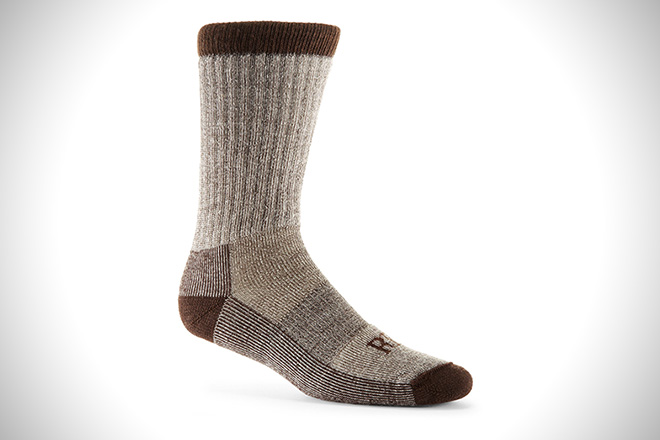
For most hikers and travelers, start with the Darn Tough Light Hiker Micro Crew Cushion. It has a micro-crew height that clears a hiking shoe or standard boot, light cushioning underfoot and around the Achilles, mesh on top of the foot, and a relatively lean 43% merino, 54% nylon, 3% Lycra blend. That makes it a good match for footwear that already fits closely. Move to the Smartwool Hike Classic Edition Extra Cushion Crew when you have a roomier boot and genuinely want more insulation and padding. For running, the Smartwool Run Low Ankle Targeted Cushion keeps bulk down with mapped cushioning and mesh; it is not a winter hiking sock in disguise.
Wool socks are not automatically warm, durable, or comfortable. Their height, cushion placement, knit density, and synthetic reinforcement affect how they feel in a particular shoe. The most expensive pair can still be the wrong pair if it crowds your toe box or slides down your heel. Buy the sock for the footwear and the day ahead, then try it on at home before taking it on a long walk.
Quick picks
- For most hikes and active travel: Darn Tough Light Hiker Micro Crew Cushion. A lightweight micro crew with underfoot, ankle, and Achilles cushioning, top-of-foot mesh, a smooth toe construction, and a lifetime guarantee. Check the Darn Tough Light Hiker Micro Crew on Amazon.
- For cold weather and roomy boots: Smartwool Hike Classic Edition Extra Cushion Crew. A crew-height sock with dense full cushioning and a 70% merino, 29% recycled-nylon, 1% elastane blend. It is intentionally thick. Check the Smartwool Hike Classic Extra Cushion Crew on Amazon.
- For running and low-volume shoes: Smartwool Run Low Ankle Targeted Cushion. A low sock with targeted cushioning, mapped mesh, an Achilles tab, and a 57% merino, 40% nylon, 3% elastane blend. Check the Smartwool Run Low Ankle socks on Amazon.
- For a sturdier all-season hiking sock: Darn Tough Hiker Micro Crew Cushion. A midweight micro crew with terry loops underfoot and targeted Achilles protection, made for people who prefer a more substantial sock in boots. Check the Darn Tough Hiker Micro Crew on Amazon.
Buy the Darn Tough Light Hiker Micro Crew when one pair has to cover a lot of ground
The Darn Tough Light Hiker Micro Crew Cushion is the practical middle option for day hikes, travel days, and walking-heavy weeks. Darn Tough lists an 8.5-inch heel-to-cuff height for its men’s micro crew, which usually shows several inches above a low hiking shoe and reaches just above a standard boot. The knit has terry loops underfoot and targeted cushioning around the ankle and Achilles, while mesh panels on top of the foot reduce bulk where many shoes already fit snugly. Its stated material blend is 43% merino wool, 54% nylon, and 3% Lycra Spandex.
That is a deliberately mixed construction. The wool portion provides the temperature and odor-management properties people want from merino. Nylon does a large share of the work in abrasion resistance and shape retention. Lycra helps the sock stay fitted. Do not use the merino percentage alone as a quality score. A hiking sock is a system of fibers, stitch patterns, and fit, and a blend with substantial nylon can be the better choice when you expect repeated walking in boots.
The Light Hiker’s main advantage is restraint. It protects the foot without turning a hiking shoe into a smaller shoe. That matters on warm trips and in trail runners, where a thick sock can crowd the forefoot and create pressure. Its micro-crew cuff also keeps grit and boot collar friction off the lower leg without climbing as high as a traditional tall crew. Darn Tough backs the model with its unconditional lifetime guarantee, a real factor if you plan to keep a small rotation for years rather than buy disposable socks every season.
It is not the pair to buy for deep winter solely because the label says wool. The light cushion and breathable top are better suited to active use and footwear with a close fit. If your winter boot already has a roomy toe box and you spend long periods standing still in cold weather, a denser, thicker sock is the more sensible tool. The Light Hiker is also not a running-specific low sock; its height and cushion placement are designed around hiking footwear.
For travel, carry at least two pairs rather than relying on one “odor-resistant” sock for every day. Rotate them, air them out, and let each pair dry fully. That approach works well beside a foldable travel duffel, since a small separate pouch keeps worn socks away from clean clothing without taking up much luggage space.
Choose the Smartwool Hike Classic Extra Cushion Crew for volume and insulation
The Smartwool Hike Classic Edition Extra Cushion Crew exists for a different boot setup. Smartwool describes it as an extra-cushion crew with dense, full-sock padding and a heavy thickness. The listed blend is 70% merino wool, 29% recycled nylon, and 1% elastane. It has a flat-knit toe seam and is made for people who need more material between foot and footwear during cool-weather hikes or in a boot with enough room to accommodate it.
“Extra cushion” has an important consequence: it consumes space. A dense sock can feel excellent in a larger hiking or winter boot, particularly when walking on hard ground or carrying weight. Put the same sock in a snug shoe and it can reduce toe-box clearance, change heel position, and increase rubbing. The right test is not how plush the sock feels in your hand. Put it on with the shoe you will use, lace the shoe as normal, walk stairs, and pay attention to the forefoot and heel. If the shoe feels suddenly tight, choose less cushion instead of assuming you will break it in.
The tall crew cuff is helpful with a mid or high boot, where it protects the lower leg from the collar. It is less necessary with a low trail shoe and can feel warmer under close-fitting pants. Smartwool’s full cushioning is a genuine feature for a certain use case, but it is not a default upgrade. People who walk in warm weather, run in low-volume shoes, or prefer a thinner footbed will be better served by the Light Hiker or the Smartwool running sock.
Wool does not replace sensible layering. If feet get cold while standing outside, start with dry feet, a boot that leaves enough room for circulation, and insulation matched to the conditions. Stacking two thick socks inside a tight boot often creates more problems than it solves. The inner sock can bunch, the boot can squeeze the foot, and the extra friction can make a short walk unpleasant. One appropriate sock and a properly fitting boot is the cleaner solution.
The Smartwool Run Low Ankle is the better choice for running shoes
Running socks need a different shape from hiking socks. The Smartwool Run Low Ankle Targeted Cushion has a low profile, an Achilles tab to help keep it from disappearing into the heel collar, a flat toe construction, targeted cushioning, and mapped mesh zones. Smartwool lists 57% merino wool, 40% nylon, and 3% elastane. The extra nylon is unsurprising here: a running sock must stay fitted through repetitive movement and handle high-wear areas without becoming baggy inside a close shoe.
Targeted cushioning means the material is placed in selected impact and friction zones rather than built as a thick layer around the entire foot. That is useful in a running shoe where volume is limited and heat can build quickly. The mesh zones are intended to increase breathability, while the lower cuff keeps the sock out of the way. The trade-off is less protection from a boot collar, less insulation during cold stationary time, and less padding than a full-cushion hiking sock.
Choose this one for road running, treadmill workouts, short trail runs in low shoes, or everyday athletic shoes. It can also work well for travel when your main footwear is a sneaker rather than a boot. Do not choose it for a multi-day cold-weather hike simply because it has merino in the blend. Its design is for low bulk and movement, not for filling a boot or creating a thick buffer over a long day of rough terrain.
Fit matters more than brand loyalty in a running sock. The heel pocket should sit under the heel, the toe box should not fold over the toes, and the cuff should stay in place without leaving a harsh mark. If a sock repeatedly slides down, check the shoe collar and size before blaming the material. A shoe that is too large or too small can make any sock move. For an at-home training setup, choose footwear and socks that let you move naturally; the same principle applies on a treadmill as it does outdoors.
The Darn Tough Hiker Micro Crew Cushion is for people who want a more substantial boot sock
The Darn Tough Hiker Micro Crew Cushion is the sturdier companion to the Light Hiker. It uses a midweight construction and places terry loops underfoot, with targeted cushion over the ankle and Achilles. The micro-crew height still works with a low hiking shoe or standard boot, but the overall knit is more substantial. Choose it when the boot has enough room, the weather is changeable, or you simply prefer a more buffered feel underfoot than a lightweight sock provides.
The important distinction is not “light” versus “good.” A midweight sock makes more sense with a traditional hiking boot, rougher trail surface, or a person who notices pressure under the foot. It is less attractive in a close-fitting trail shoe during hot weather. A sock that feels sturdy on the couch can make a shoe feel crowded after an hour of walking, so test the combination with the insole and lacing pattern you will use on a trip.
Darn Tough uses a smooth toe closure and describes the line as performance fit. No manufacturer phrase guarantees that every foot avoids hot spots, but seams, bunching, and an over-tight toe box are common sources of irritation. Use the sock height that matches the shoe collar, trim toenails before a long hike, and replace a sock whose heel has stretched or whose cushion has flattened unevenly. Even a lifetime guarantee does not mean a worn-out pair remains the right pair for a demanding trip.
This is a better all-season hiking pick for many boot wearers than an expedition-weight sock. Expedition socks are specialized gear for very cold conditions and sufficiently roomy footwear. Most people need a sock they can wear on a cool morning, through a warm climb, and back in the car without wishing they had brought a thinner option. Midweight cushion offers a useful middle path if the boot fit allows it.
Choose wool sock height and cushion from the shoe outward
Start with the footwear volume
Put on the shoes or boots you will use most often and notice how much free space remains at the toes and around the instep. A shoe with a close athletic fit needs a thin or targeted-cushion sock. A traditional hiking boot may accommodate a light or midweight cushion. A winter boot can take a dense sock only if there is still room for toes to move and for the foot to stay warm through normal circulation. If a sock makes the shoe tight before you leave the house, it is the wrong thickness.
Use height to manage the collar
No-show and ankle socks suit low sneakers. Quarter and micro-crew socks are often the useful middle ground for trail runners and hiking shoes because they rise above the collar without wrapping most of the calf. Full crews make sense with taller boots, cold-weather pants, and work boots. Higher is not inherently warmer; the cuff mostly changes coverage and how well the sock protects skin from the boot edge.
Choose cushion for pressure, not for marketing labels
Zero-cushion socks have the least bulk. Light cushion adds material where the foot meets the shoe. Targeted cushion limits that material to selected zones. Full or extra cushion adds more knit throughout the foot. The right option depends on your footwear and walking pattern. A person who gets pressure under the forefoot may appreciate more cushioning there; another person may need less material to prevent toe crowding. Try one pair on a normal walk before buying a drawerful.
Read the blend for the job it does
Merino wool is valuable for temperature regulation, moisture handling, and odor resistance. Nylon helps a sock survive heel and toe wear, while elastane or Lycra helps it return to shape. A higher wool percentage is not automatically better, especially for an active hiking or running sock. The placement of each fiber and the way the sock is knitted matter. Buy based on fit, cushion, and stated intended use, then treat the fiber blend as supporting information.
Care is part of sock performance
Wash merino-blend socks inside out in cool or warm water with a gentle cycle, skip bleach and fabric softener, and use low heat or air dry as the maker allows. Darn Tough recommends a cold gentle wash and low tumble dry or hanging; Smartwool specifies gentle warm or cool washing and low tumble drying for its running socks. Check the specific pair’s label because blends and construction vary. Hot dryers and harsh chemicals can shorten the useful life of elastic fibers.
Rotate more than one pair on a trip. Let damp socks dry fully, and do not put a damp pair into a closed bag with the hope that wool will solve the problem. Inspect heels, toes, and the inside surface for thinning before an extended hike. A small hole is easier to address at home than while travelling. A simple rotation also gives shoes time to air out, which may matter more for comfort than spending extra on a different sock label.
What not to buy
A generic “thermal” sock can be a poor purchase when the seller does not state its fiber content, cushion, or intended footwear. Thick novelty socks often feel warm at home but are too bulky for walking shoes. Cotton-heavy athletic socks can work for casual use, yet they are a different choice from a merino blend for a wet or long walking day. Buy socks from a maker that states the materials, height, cushion level, care guidance, and size range clearly.
Skip a two-sock layering system unless you have tested it with your exact boots. Layering can be useful in specialized cold-weather situations, but it adds volume and potential bunching. It is not a universal fix for blisters or cold feet. If one sock is failing, first check shoe fit, wetness, sock thickness, and lacing. The smallest change that fixes the problem is usually better than adding another layer.
How we researched
We compared current manufacturer descriptions for material blends, sock height, cushion placement, toe construction, stated intended use, care instructions, and guarantee coverage. We selected models for distinct footwear and activity needs rather than treating one wool percentage as a universal ranking. We did not represent manufacturer claims as hands-on testing or medical advice. Sizes, colors, and stock can change, so use the maker’s current size chart and try a new pair with your own shoes before relying on it for a long trip.
Wool sock questions answered
Are wool socks too warm for summer hiking?
Not necessarily. A lightweight merino-blend sock with mesh and limited cushioning can work well in warm conditions, especially when it fits the shoe properly. A thick, full-cushion winter sock is more likely to feel hot in a close trail shoe. Choose the weight and knit for the shoe and weather rather than assuming all wool socks perform alike.
Should hiking socks be thick?
Only if the boot has enough room and the conditions call for it. Thick cushioning can help in a roomy boot and cold weather, but it can crowd a close-fitting shoe. Many hikers are better served by a light or midweight cushion that keeps the foot stable inside the boot.
How many wool socks should I bring on a trip?
For a short trip, two or three pairs usually give you a rotation so each pair can dry between uses. Longer trips call for a washing plan and enough pairs to avoid wearing damp socks. The exact number depends on conditions and activity, but one pair is rarely a practical plan.
Can I wear wool socks every day?
Yes, provided the thickness and height fit the shoes you wear. A lightweight pair can work for commuting and travel, while a heavy hiking sock can feel excessive in dress shoes or low sneakers. Rotate pairs and follow the care label so the elastic fibers and shape last longer.