A sleep mask is one of those purchases that seems too small to deserve much thought—until a cheap one leaks light around the nose, presses on your eyes, slides into your hair, or ends up untouched at the bottom of a travel bag. The useful version does two things well: it makes the room dark enough for you, and it stays comfortable long enough that you forget it is there.
For most people, we would buy the Manta Sleep Mask. Its separate, movable eye cups make it much easier to tune the fit than a flat mask, and the cups leave room to blink without crushing lashes. If you prefer a softer, face-conforming feel and do not want adjustable cups, the TEMPUR-Sleep Mask is a good simpler alternative. If the material against your skin and hair matters more than maximum blackout, a Slip Pure Silk Sleep Mask is the luxury choice.
Those recommendations are intentionally different. A mask can be excellent for a bright bedroom and wrong for a side sleeper. A pretty silk mask can feel great but allow more light than a contoured blackout model. This guide helps you choose the shape and fit first, then the product.
Our picks at a glance
- Best sleep mask for most people: Manta Sleep Mask. Adjustable eye cups create a personal seal and leave space around the eyes.
- Best soft, simple blackout mask: TEMPUR-Sleep Mask. Contouring TEMPUR material and an adjustable closure suit people who prefer a single padded piece.
- Best less-expensive contoured alternative: Nidra Deep Rest Eye Mask. A shaped foam design with eye clearance, useful when you want the basic contoured idea without paying for a modular system.
- Best silk mask for fabric feel: Slip Pure Silk Sleep Mask. A flat, pure-silk option for people who prefer a light, low-profile mask and accept that fit determines how much light gets through.
Best sleep mask for most people: Manta Sleep Mask
The Manta Sleep Mask earns the top spot because it addresses the two things that make sleep masks feel personal: the distance between a person’s eyes and the shape of the nose bridge. Instead of one fixed padded panel, it uses two eye cups that attach to the inside of the strap. You move those cups until they surround your eyes, then set the strap tension. That small amount of adjustment is far more useful than another layer of padding.
The cups provide room for your eyelids and lashes. That is important if flat masks make you feel as if fabric is resting directly on your eyes, or if you wear lash extensions. Manta describes the design as full blackout with zero eye pressure. The real benefit is not a slogan; it is that you can adjust the cup position when a sliver of light appears at the nose or temple. With a fixed mask, there is no equivalent fix beyond tightening the strap.
It is a good choice for a bright bedroom, shift-work sleep, hotel rooms with unfamiliar curtains, and long flights. It also travels well because it is light and has no electronics to charge. The trade-off is profile. Any cup-shaped mask is thicker than a flat silk one, and side sleepers who rest their face deeply into a firm pillow may notice the outer edge of the cup. Give it a few minutes of adjustment before deciding it is too large; moving the cups slightly outward or downward often changes the feel substantially.
We would skip it only if you strongly dislike hook-and-loop closures or want the thinnest possible mask. If your priority is total darkness plus freedom to blink, it is the sensible place to start. Wash the removable pieces according to the manufacturer’s instructions and keep the fastening surfaces free of lint; a sleep mask is close to the face every night, so easy care matters more than it does with most travel accessories.
Best soft, simple blackout mask: TEMPUR-Sleep Mask
The TEMPUR-Sleep Mask is a better fit for someone who does not want individual eye cups to position. It is a single padded mask filled with TEMPUR material, designed to contour to the face, with an elastic strap and adjustable hook-and-loop closure. That construction can make it feel less technical than a modular mask while still doing a much better job of blocking light than a thin, flat fabric panel.
This is the option to consider when your face responds better to gentle, broad contact than to structured cups. The foam adapts around the eye area and nose, which can help limit obvious gaps. It also packs easily enough for travel and has none of the battery, speaker, or app complications found in some premium sleep accessories.
The limitation is the same thing that makes it simple: there is less independent adjustment. If a particular place on the nose bridge leaks light, you cannot move one half of the mask the way you can with the Manta. And because the product is sold as a personal sleep item, Tempur-Pedic notes that it is not returnable. That makes it worth checking the dimensions and the retailer’s policy before you buy, particularly if you have had fit problems with masks before.
Choose this mask when you want a padded, face-conforming blackout option with straightforward setup. Do not choose it solely because it is from a mattress company. Comfort is still individual. A mask is successful only if you can wear it loosely enough to feel relaxed and still keep the light out.
Best less-expensive contoured alternative: Nidra Deep Rest Eye Mask
The Nidra Deep Rest Eye Mask is the middle ground for people who want eye clearance and a shaped seal without paying for the Manta’s separate adjustable cups. It uses a molded, contoured foam form to keep material off the eyelids and includes an adjustable strap. The overall profile is low enough to make sense for commuting, naps, or a travel kit.
With any one-piece contoured mask, fit is the deciding factor. The contour needs to meet your nose and cheekbones without a gap, but the strap should not be pulled hard enough to leave marks or cause a headache. Put it on in a lit room. Look toward a lamp, then loosen and reposition it until the light leak is acceptably small. That tells you more than testing it in a dark room, where almost any mask seems adequate.
It is also worth being realistic about durability. Foam masks are light and comfortable, but they benefit from gentle washing and air-drying. Avoid tossing one loose into a bag with chargers, pens, and toiletries; crushed eye cups can lose the shape that created the clearance in the first place. A small pouch is enough protection and helps keep the mask clean between flights.
Choose the Nidra if you want a more structured mask on a tighter budget. Move up to Manta if you know that most masks leak around your nose or if you want to control the placement of each eye cup. Move toward a flatter silk option if thickness at the sides is your main complaint.
Best silk mask for fabric feel: Slip Pure Silk Sleep Mask
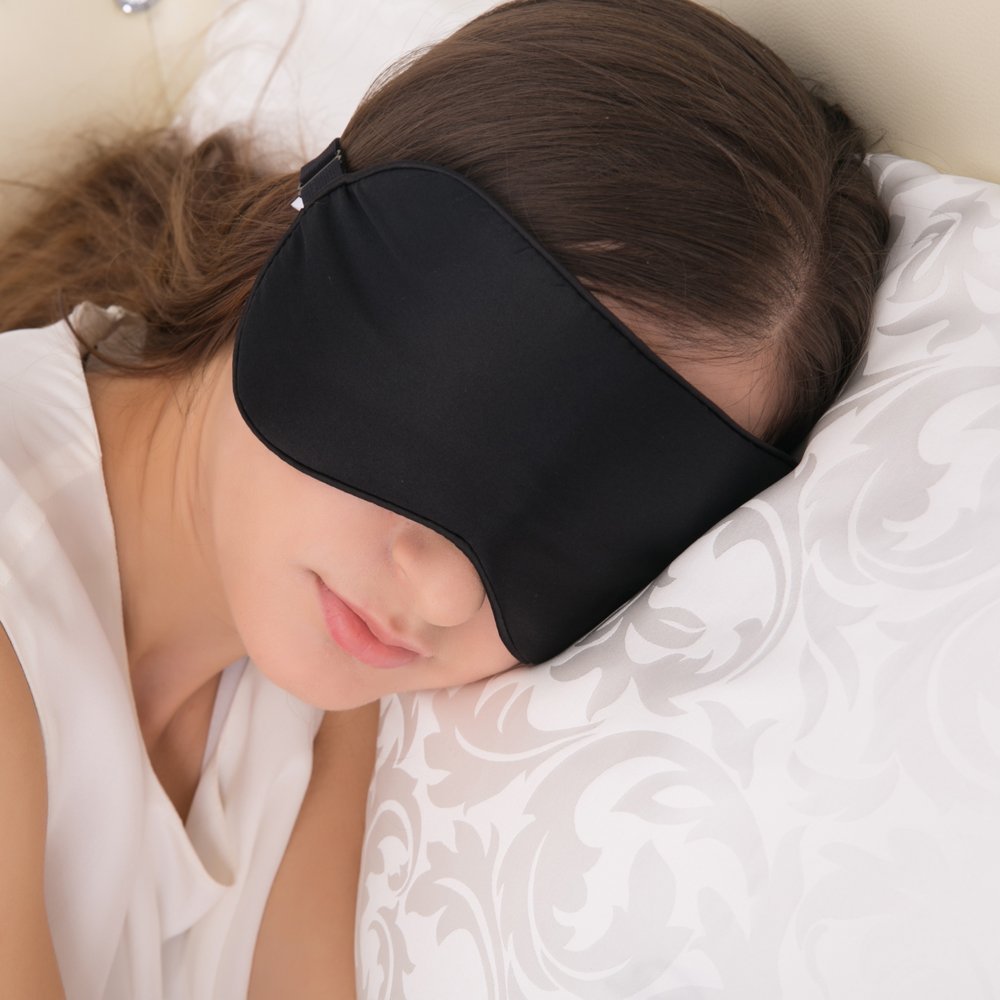
The Slip Pure Silk Sleep Mask is for a different buyer. It is not a contoured blackout system. It is a light, flat mask made with pure silk filler and an internal liner, intended for people who care about the softness and low profile of the material against their skin and hair.
A flat silk mask is wonderfully easy to pack and can be less noticeable for a side sleeper because it does not have rigid eye cups. It is a pleasant choice for a dim bedroom, a late-morning nap, or a person who finds thicker foam masks warm. The compromise is that a flat mask depends more heavily on your face shape and strap fit. If you need near-total darkness in a sunny room, a contoured mask will usually give you a more dependable seal.
Silk is not automatically a better sleep mask material for every person. It needs gentler care than synthetic fabric, and a smooth flat design can slide more easily on some hair types. Buy it because you prefer its feel and will use it, not because you expect any fabric on its own to solve a poor fit. If a mask is comfortable but lets in a thin line of morning light, that line can still defeat the purpose.
This is the premium giftable choice, especially for someone who already sleeps in a mostly dark room and dislikes bulky eye cups. It is not our first recommendation for overnight flights, daytime sleepers, or people who need the strongest possible seal around the nose.
The decision that matters: blackout, eye room, or low profile?
Most shopping pages emphasize material and color, but the shape is what changes the experience. Start with the problem you are trying to solve.
- Morning light, streetlights, or shift-work sleep: choose a contoured blackout mask with an adjustable nose area. Light leakage usually appears at the nose bridge and temples, not through the center of the fabric.
- Pressure on lashes or eyelids: choose a mask with real eye cavities. The goal is a little room to blink, not a mask tightened so firmly that it stays in place by force.
- Sleeping on your side: look for tapered or lower-profile contours. A large, stiff cup may seal well when you lie on your back and shift when the pillow presses into it.
- Sensitive skin, hair, or a dislike of foam: a silk or soft-fabric flat mask may be the more wearable answer, as long as your room does not demand complete blackout.
- Flights and travel: favour a mask that is easy to clean, simple to adjust in a seat, and small enough to live in a pouch with your earplugs and charging kit.
Do not conflate darkness with pressure. A well-fitting mask can block light without being cinched tightly. If you need to pull the strap very hard to stop gaps, the shape is probably wrong for you. Try moving it slightly lower on the bridge of the nose, then reduce the tension. A mask that feels calm is more likely to stay on than one that wins a two-minute light test and gets removed at 2 a.m.
How to fit a sleep mask properly
Put the mask on while you are still standing in a normally lit room. Center it over the eyes, then set the strap lightly. Look down, turn your head, and lie on your usual side for a moment. Now adjust the places where light enters. On a cup-style mask, move the cups before tightening the strap. On a one-piece mask, shift the whole mask up or down by a few millimeters and try again.
Once the light is blocked, stop. Over-tightening is the common mistake. It can leave marks, add tension at the temples, and create the exact discomfort that makes you take the mask off during the night. The mask should stay in place through normal movement, not feel like protective equipment.
If you use skin-care products before bed, give them a moment to absorb. Oil-heavy products can make fabric masks slide or require more frequent washing. Keep hair out from under the strap, particularly with hook-and-loop closures, and make sure the closure lies flat rather than digging into the back of your head.
For travel, do the fitting at home first. Airplane cabins, unfamiliar hotel rooms, and late-night arrivals are not the ideal place to discover that a mask requires fiddling. Put the mask in the same pouch as your travel charging essentials or other in-flight items so it does not disappear into checked luggage.
Side sleepers should care about more than the marketing photos
Side sleeping changes the geometry of any mask. Your pillow can push the outer edge toward the face, break the seal near the nose, or press an eye cup into the temple. That is why a mask that feels perfect upright may feel completely different after ten minutes on a pillow.
Before committing, wear the mask on both sides of the bed. Notice whether the strap buckle sits at the back rather than against the pillow. Notice whether the eye area remains clear when your cheek is compressed. With modular cups, make small adjustments one at a time. With foam, test whether the mask is tall enough to seal without catching the eyebrows.
There is no universal side-sleeper winner because pillow height and face shape vary too much. The useful pattern is simple: people who want deep eye clearance and adjustable placement should start with Manta; people who cannot tolerate structure at the sides should start with a thinner flat mask and accept less aggressive blackout. Choose the discomfort you are actually trying to avoid.
When a sleep mask is useful—and when it is not
A sleep mask is a low-stakes environmental tool, not a treatment for every sleep problem. It can make a bright room more manageable, help you nap in an unfamiliar place, or preserve a later wake-up time when sunlight arrives early. It cannot compensate for a loud room, an uncomfortable bed, a wildly changing schedule, or persistent insomnia.
If you are having ongoing trouble falling asleep, waking frequently, or feeling unrefreshed, do not assume a new mask is the whole answer. Talk with a qualified clinician about persistent symptoms, particularly if breathing, snoring, pain, mood, or medication may be involved. The right way to think about a mask is as one small piece of a comfortable, dark, predictable sleeping environment.
Care, cleaning, and replacement
Anything that sits against your face should be cleaned regularly. Follow the label first: silk often needs more delicate care, while foam contours may need hand washing or spot cleaning and air-drying. Heat can distort foam and shorten the life of elastic, so do not treat a molded sleep mask like a cotton T-shirt in a hot dryer.
Wipe or wash the mask when you notice skin oil, makeup, or a change in feel. Let it dry completely before packing it into a pouch. Replace it when the elastic no longer holds a comfortable fit, the foam has permanently flattened, the fastening no longer stays closed, or the fabric is difficult to clean. There is no need to replace a functional mask on a calendar; use its condition, fit, and hygiene as the guide.
For flights and hotel stays, a small washable pouch is useful. It keeps the mask out of contact with chargers and snacks, gives you a known place to put it after a nap, and makes it much less likely you will leave it behind in a seat pocket.
What we would avoid
- Very cheap flat masks for a truly bright room. They may be fine for a nap, but a loose nose bridge and thin fabric will often let in enough light to be distracting.
- Bulky masks with features you do not need. Built-in Bluetooth speakers, lights, or vibration add complexity, battery concerns, and weight. Buy them only when that feature is the reason you are shopping.
- A too-tight strap as the answer to light leakage. Fit and shape matter more than tension. A tight mask is uncomfortable, leaves marks, and is less likely to survive the night.
- Ignoring the care instructions. Foam, elastic, and silk all fail faster when washed or dried aggressively.
- Buying a silk mask solely for blackout. Silk can be lovely, but it is the flat construction and facial fit that determine how much light gets around it.
A mask can solve light exposure, but it cannot address every cause of poor sleep. If sound, room temperature, or an irregular routine is the larger problem, our guide to practical sleep aids covers bedroom changes and explains when persistent insomnia deserves medical advice.
How we chose
We looked first at the factors that determine whether a person will keep using a mask: light seal, pressure around the eyes, adjustability, side-sleeping profile, materials, cleaning requirements, and how the mask behaves in a travel pouch. We also separated products that make different promises. A premium silk mask and a modular blackout mask are not interchangeable simply because both cover the eyes.
We favour products with a clear approach to fit. Manta’s movable cups make it easier to correct individual gaps. Tempur-Pedic’s contoured foam provides a simpler face-conforming option. Nidra offers a lower-cost entry into contoured eye clearance. Slip makes sense as a low-profile silk alternative for people who do not require aggressive blackout.
We revisit the recommendations when product construction, availability, or care guidance changes. Prices and colour options change frequently, so use the Amazon links as a current availability check rather than treating any price shown elsewhere as permanent.
Sleep mask questions, answered
Do contoured sleep masks work better than flat masks?
They often work better for blackout and lash clearance because they create space around the eyes and can seal around the nose. Flat masks are thinner and can be more comfortable for people who dislike any structure, but their light blocking depends more on the individual fit.
Can I blink while wearing a sleep mask?
You should be able to with a well-fitting contoured mask. That is one of the primary advantages of eye cups. If fabric is rubbing your eyelids, try repositioning the mask or choose a design with more clearance.
How tight should a sleep mask be?
Snug enough that it does not slide when you change position, but not so tight that it causes pressure, marks, or headaches. Correct the mask position before increasing strap tension.
Is a silk sleep mask better for side sleepers?
It can be more comfortable because it is thin and flexible, but it is not automatically better. Side sleepers who need a stronger light seal may prefer a tapered contoured mask. Test the product in your usual sleeping position.
Should I take a sleep mask on a flight?
Yes, if you plan to rest and can wear it comfortably. Choose a simple, cleanable mask and keep it in your personal item with other essentials. A sleep mask does not replace good ear protection or a comfortable neck position, but it can make cabin light much less distracting.