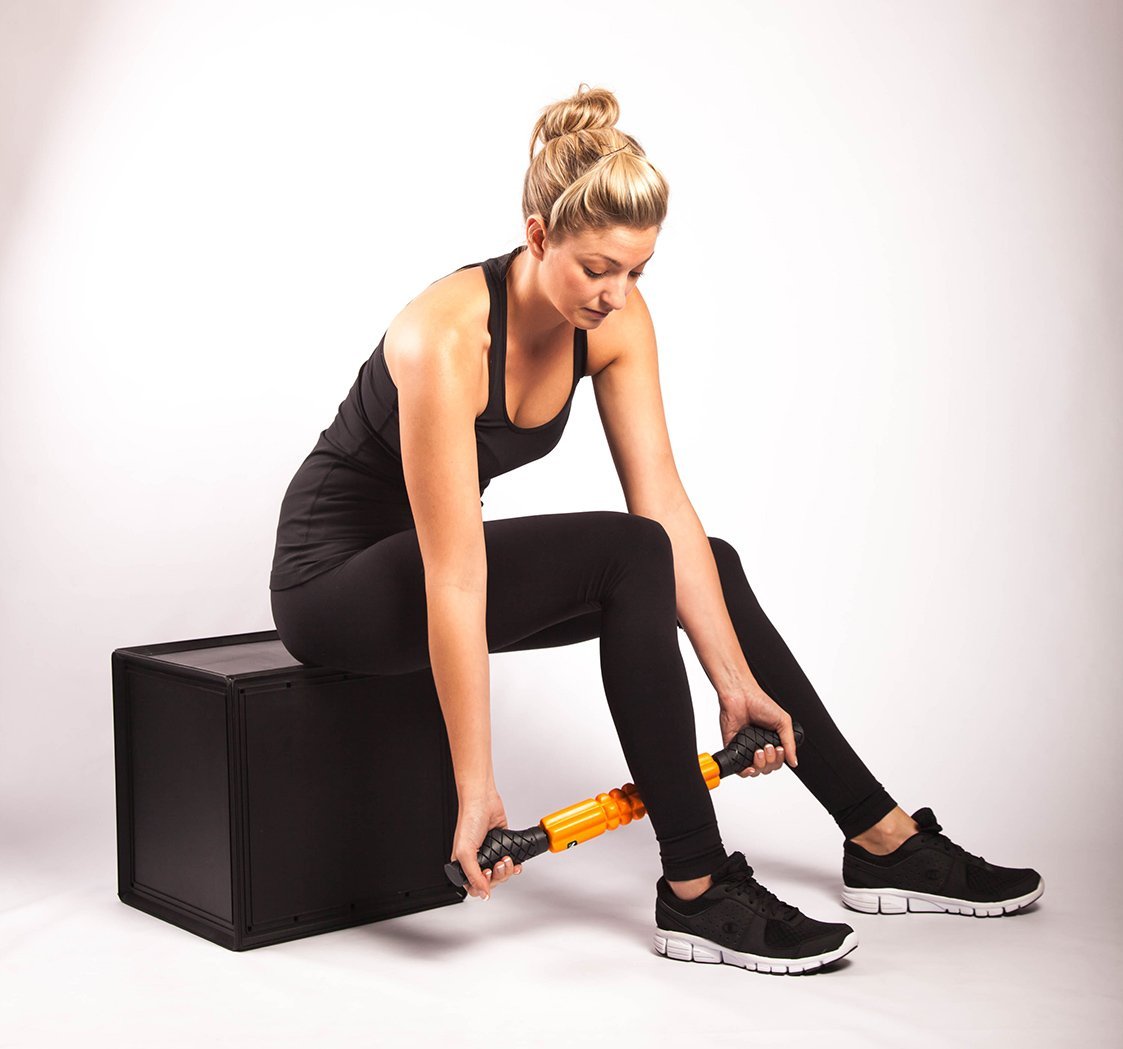
Self-massage tools are useful for short bouts of muscle comfort, warm-up, and winding down after ordinary activity. They are not a way to diagnose or treat an injury. For most people, start with a medium-density foam roller and a small massage ball. They are inexpensive, quiet, and give you direct control over pressure. Add a massage gun only when you know you will use it regularly and want an easier way to reach large muscles without putting body weight on the floor.
The Hypervolt 2 is the practical powered pick for people who want a light, quiet percussion device with three speeds and a long stated battery life. The Theragun Prime is the stronger upgrade for someone who values its triangle grip, five speed settings, and four attachments. Both can be overused. More force is not better, and neither belongs on bones, the front or side of the neck, a fresh injury, numb skin, or a painful swollen area. If pain is sharp, severe, follows trauma, causes weakness or numbness, or does not settle, stop using tools and get medical advice.
Quick picks
| Situation | Pick | Why it fits | Compromise |
|---|---|---|---|
| Most people starting a simple routine | A medium-density foam roller | Lets you vary pressure with body position and works for broad muscle areas. | Requires floor space and can be awkward for hard-to-reach places. |
| Small, targeted pressure at a desk or against a wall | A firm massage ball | Inexpensive and easy to position around the upper back, glutes, feet, and shoulders. | Easy to use too aggressively on a sensitive spot. |
| Everyday percussion in a light package | Hypervolt 2 | 1.8-pound design, three speeds, five attachments, and three-hour stated battery life. | Costs more than manual tools and still needs careful placement. |
| Higher-powered ergonomic massage gun | Theragun Prime | Five speeds, triangle handle, four attachments, and a 120-minute stated battery life. | Heavier and more expensive; deep percussion is not automatically more useful. |
Start with the problem you can actually describe
“Tight” can mean several things: a muscle that feels stiff after sitting, ordinary soreness after a new workout, a spot that feels tender during movement, or a pain that needs a clinician’s assessment. A self-massage tool is most appropriate for the first two situations, when the goal is temporary comfort or a gentle transition into movement. It is not appropriate for every ache. A tool cannot tell the difference between ordinary soreness and a condition that needs treatment.
Use the simplest tool that lets you control the pressure. A roller is broad and forgiving. A ball concentrates pressure in a small area. A powered massager works without floor work but can deliver more intensity than the area needs. The right choice is usually the one you can use lightly and consistently, not the one that creates the most dramatic sensation.
Before buying a device, pause if you have a current injury, broken bone, suspected blood clot, nerve symptoms, significant swelling, a bleeding disorder, reduced sensation, or a medical condition that affects circulation. Pregnancy and recent surgery also deserve a conversation with a qualified health professional before using deep pressure or percussion. Those limits are not cautionary fine print. They are the difference between a comfort tool and an avoidable problem.
Best first tool: a medium-density foam roller
A medium-density foam roller is the best first purchase because it teaches sensible pressure. You control the load by using more or less body weight, supporting yourself with your hands or feet, and choosing a wall instead of the floor. It works well for large muscle areas such as the glutes, calves, upper back, and thighs. A smooth medium-density roller is a better starting point than an extremely hard, aggressively textured model.
Begin with short, slow passes over the muscle rather than rolling quickly back and forth. If you find a tender area, reduce pressure first. Move around the surrounding muscle, breathe normally, and do not try to force a painful spot to “release.” Some discomfort can be normal, but sharp pain, tingling, numbness, or pain that worsens afterward is a reason to stop. Avoid rolling directly over joints, bony points, the lower back itself, and the outer knee.
Rollers are also the least fussy option. They do not need charging, software, or special attachments. They are easy to keep beside a mat and use for a few minutes before a walk, strength session, or bed. For a deeper comparison of sizes, firmness, and practical roller choices, see our foam-roller guide. The key decision here is not pattern or color; it is choosing a firmness you can use with measured pressure.
Best targeted tool: a firm massage ball
A firm massage ball offers more precise pressure than a roller without the expense or noise of a massage gun. It is a good fit for the muscles around the shoulder blade, the glutes, the soles of the feet, and other places where a roller is too broad. It also works against a wall, which is a useful way to manage pressure when lying on the floor would be too intense.
Start with the ball between your body and a wall. Lean in gradually, move an inch or two at a time, and keep the work on soft muscle tissue. This position makes it much easier to back off if a point is tender. Floor use creates more pressure and is better reserved for someone who already knows the area tolerates it. A simple ball is usually enough; elaborate vibrating balls and multi-textured gadgets add cost without changing the basic need for restraint.
Do not dig into the front of the throat, the spine, the inside of a joint, a bruise, or a varicose vein. The ball is a comfort tool, not a way to crush “knots.” If a small point remains exquisitely painful, keeps returning, or changes how you move, take that information to a clinician or physical therapist instead of applying more force.
Best everyday massage gun: Hypervolt 2
The Hypervolt 2 is the massage gun to choose when weight, battery life, and straightforward controls matter more than the strongest possible strike. Hyperice lists the unit at 1.8 pounds with a brushless 60-watt motor, three percussion speeds, five attachment heads, and up to three hours of battery life. The ergonomic handle and lower weight make it easier to reach a calf, quad, glute, or upper back without bracing yourself in an awkward position.
Use the lowest speed first. Rest the attachment lightly on the muscle and move slowly instead of pressing the device down. Cleveland Clinic guidance on percussion devices makes the same practical point: the tool provides the pressure, so extra force is unnecessary and can cause harm. Keep a session short, usually a minute or two on a muscle group, then reassess how the area feels. A long session is not proof of better recovery.
The included heads are useful when they make contact more comfortable, not when they invite you to target every sore sensation. A broad ball head is a sensible default for large muscles. A smaller attachment can be appropriate for a contained muscle area, but it should not be used to jab at joints, tendons, the spine, or tender nerves. The Hypervolt is a good buy for a person who dislikes floor-based tools and will keep the charger handy. It is unnecessary if a roller and ball already cover your needs.
Best upgrade: Theragun Prime
The Theragun Prime is the upgrade for a regular user who values handle design and more speed control. Therabody lists five massage speeds, four included attachments, a triangle grip, a 120-minute stated battery life, and a one-year limited warranty. Its handle gives several holding positions, which can make it easier to use on the back of the body without twisting a wrist or shoulder.
It is not the automatic pick for everyone. Its deeper percussion, extra settings, and higher cost do not make it medically superior to a careful roller routine. The added power is useful only if you can use it gently, reach the intended muscles comfortably, and have a real habit for it. If you want a device for occasional desk stiffness or a short post-workout routine, the lighter Hypervolt 2 is the less complicated purchase.
Pick the Prime when the triangle grip solves a real reach issue and you prefer a more configurable device. Skip it if the goal is a substitute for exercise, professional care, or sleep. No massage gun has been shown to improve speed, power, or endurance by itself, and a massage gun cannot repair a strain or a joint problem.
Choose pressure and reach, not gimmicks
Manual tools win when you want feedback. A roller tells you immediately when the pressure is too high because you control the load. A ball reaches small areas with very little setup. They are durable, quiet, and travel easily. Their main limitation is access: rolling the upper back, hamstrings, or calves may require a floor or wall position that some people do not enjoy.
Powered tools win when you need easy reach or prefer not to put body weight on the floor. Compare weight, grip, battery, noise, included attachments, and how the device charges. Do not buy based on an extreme amplitude number alone. The useful question is whether you can hold the device comfortably, use the lowest setting, and put it away without making it a chore.
Heated heads, app routines, and unusual attachment shapes are secondary. Heat can feel pleasant, but it is not a license to use percussion over an injured or swollen area. App routines can make a beginner less hesitant, but you should still stop if a prompt conflicts with symptoms or common sense. Spend on a feature only when it improves your ability to use the device carefully.
What to skip
Skip ultra-hard rollers as a first purchase. A roller that feels punishing tends to encourage bracing, holding your breath, and spending too long on one spot. Start with medium density, then use position and body weight to change the pressure. A firmer roller can be useful later for people who know they prefer it, but it is not evidence of a more effective routine.
Skip devices that promise to break up scar tissue, eliminate cellulite, replace professional treatment, or permanently correct posture in a few minutes. Those claims ask too much of a handheld tool. A massage device may help you feel more comfortable for a while; it does not rewrite anatomy or substitute for a plan to address work setup, training load, sleep, or an injury.
Also avoid buying a collection of attachments before you have used the basic tool. A broad head, a comfortable roller, or a simple ball covers most ordinary use. Extra heads are only worthwhile when the device manual identifies a use you can perform safely and the attachment makes contact more comfortable. The simplest setup is easier to clean, store, charge, and use with restraint.
A short routine is enough
For ordinary post-exercise tightness, pick one or two muscle groups and spend a few quiet minutes there. A roller can be used for several slow passes; a ball can be held gently against a wall; a massage gun can glide over the muscle without pressing. Follow it with easy movement, adequate food and fluids, and sleep. Tools are accessories to recovery, not the whole plan.
Use a roller before activity only as a brief warm-up component, then include the movement-specific preparation you need. Do not use an intense massage session as a replacement for a warm-up. After activity, self-massage can feel relaxing, but do not turn normal delayed soreness into an all-evening project. Lower intensity is usually the better first response.
Keep the tool clean and check it occasionally. Wipe down handles and attachments, inspect a roller for cracks, and charge a massage gun before a trip. A clean exercise mat gives manual tools a safer surface and makes the routine more comfortable. Avoid kneeling or rolling on a slippery rug where balance is uncertain.
For travel, a ball or short roller is usually the more realistic option. A full-size powered device is worth packing only when you already use it at home and can protect the battery, charger, and attachments. Do not buy a travel-sized tool simply because it is small. A tool that never leaves the pouch is less useful than a sturdy ball you will actually place against a hotel-room wall for a minute.
Know when to stop and seek help
Stop immediately for sharp pain, increasing swelling, bruising, numbness, weakness, dizziness, or a feeling that the tool is aggravating the area. Do not use percussion over an open wound, suspected fracture, or infected skin. Get prompt medical attention for symptoms that could indicate a serious problem, including new leg swelling with warmth or pain, chest symptoms, trouble breathing, sudden weakness, or pain after significant trauma.
For persistent pain, a clinician can help identify the actual source and advise on activity. A physical therapist may be able to show which movements and amounts of pressure are reasonable for your situation. The most helpful self-massage routine is the one that supports normal activity without masking a problem you need to assess.
Choose the least aggressive tool that lets you control pressure comfortably. A smaller or harder contact point concentrates force, so it is not automatically the better value. If a tool causes sharp pain, numbness, bruising, or symptoms that continue after you stop, set it aside and ask a qualified clinician what is appropriate.
How we researched this guide
We compared current manufacturer specifications for weight, speed settings, battery life, attachments, and warranty on the powered tools. We also reviewed current medical guidance on foam rolling and percussion devices, especially boundaries around pressure, bones and joints, symptoms that warrant evaluation, and the limits of recovery claims. We did not perform hands-on testing. Amazon links may earn SuperGrail a commission, which does not affect the recommendations.
Questions people ask about self-massage tools
Should self-massage hurt?
Mild, temporary discomfort can happen when working on a sore muscle, but sharp pain, numbness, tingling, bruising, or a worsening response are signals to stop. Begin with less pressure and avoid forcing a tender spot.
Is a massage gun better than a foam roller?
They solve different access problems. A roller is a low-cost way to control broad pressure. A massage gun is easier to use on some areas without getting on the floor. Neither is universally better, and neither is essential for recovery.
How long should I use a massage gun?
Keep it brief and reassess. A minute or two on one muscle group at low intensity is a sensible starting point. Follow the device’s manual and stop if the area becomes more painful or irritated.
Buy less pressure than you think you need
A medium-density roller and a small massage ball are enough for many people. Choose the Hypervolt 2 when you want a light, simple massage gun, or the Theragun Prime when its grip and controls solve a genuine access issue. The best tool is the one you can use gently and put down when your body tells you to stop.
Keep expectations modest, use the least intensity that feels useful, and let ordinary movement and recovery habits do the larger share of the work.