The right foam roller is usually smoother and less punishing than people expect. For most adults, the OPTP Silver AXIS 36-by-6-inch round roller is the sensible starting point: its moderate-density, closed-cell EPP foam gives enough resistance for the legs, back, and basic exercise without forcing a beginner onto an aggressively firm or textured surface. Choose the OPTP PRO-ROLLER Soft if pressure from ordinary rollers is already uncomfortable or you want a roller for gentle movement and balance work. Choose the OPTP Black AXIS 18-by-6-inch roller when you already like firm pressure and want a compact roller for targeted legs or travel.
Quick picks
| Pick | Best for | Main compromise |
|---|---|---|
| OPTP Silver AXIS 36 x 6 | General rolling, mobility drills, and basic core work | It is long and awkward to pack |
| OPTP PRO-ROLLER Soft 36 x 6 | Beginners, sensitive areas, and gentler balance exercise | It offers less intense pressure for people who want a very firm surface |
| OPTP Black AXIS 18 x 6 | Targeted legs, compact storage, and a firm feel | It is too short for stable full-back work |
Start with density, not texture
Foam rollers vary in density, shape, diameter, and length. Density is the characteristic that changes how the first minute feels. A soft roller spreads pressure across a wider area and is easier to control. A moderate roller gives more feedback while staying approachable for most general use. A firm roller resists compression and creates more pressure from the same body position. “Firm” is not the same as “better.” It is simply more intense.
Textured rollers add ridges, knobs, and grooves. Some people like the sensation; others tense up on them and stop using the tool. There is no requirement to buy a textured model to roll the calves, quadriceps, glutes, or upper back. A smooth roller is easier to clean, easier to use for core and balance exercises, and gives clearer control over how much body weight you apply. Start there unless you already know a textured surface is comfortable for you.
A roller can be a useful way to explore a tight-feeling area, warm up gently, or add movement to a routine. It is not a diagnosis, a cure for an injury, or a reason to push painful pressure into a joint, a bruise, a numb area, or acute swelling. Stop if you feel sharp pain, tingling, or symptoms that concern you. For a persistent problem, get individualized guidance from a qualified clinician instead of escalating to a harder roller.
The Silver AXIS is the practical first roller
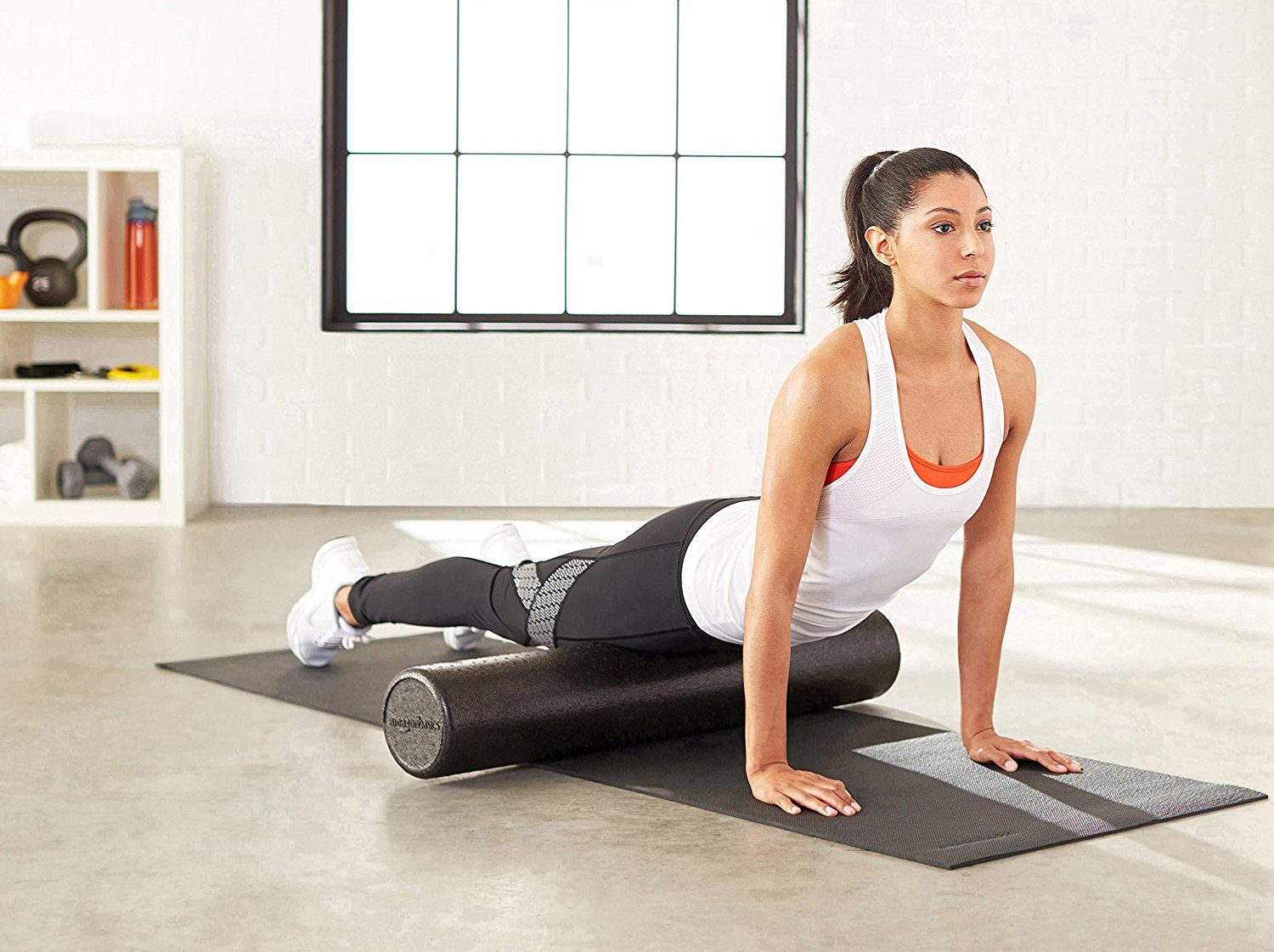
The OPTP Silver AXIS 36-by-6-inch round roller is the best starting point because the geometry is familiar and the density is moderate. OPTP makes it from heat-molded, closed-cell EPP foam and offers 12-, 18-, and 36-inch lengths plus half-round versions. The 36-by-6-inch round roller is long enough to support an upper back while lying across it, to sit along the spine for some balance work, and to keep both legs on the roller during a controlled mobility drill.
The smooth surface is useful. It does not imply a specific treatment effect, but it does make it easier to vary pressure by moving your hands, feet, and body weight rather than having a ridge dictate where contact happens. Moderate density is a good boundary for someone who wants a roller after strength training, long sitting, or an easy warm-up. It provides a clear surface without asking a newcomer to tolerate a very hard cylinder against a sensitive spot.
The 36-inch length is best at home. It takes up wall or closet space, but it is stable for core work and broad enough for an upper-back position. If you only want to roll one calf, thigh, or glute at a time, the 18-inch version can be enough. Avoid buying a 12-inch roller as a first and only roller if you expect to use it for a back-supported exercise; short rollers are portable, but their lack of length changes the exercise.
OPTP says the closed-cell EPP surface can be wiped with a damp cloth and mild detergent. That is simpler than trying to scrub deep grooves. Check the current Silver AXIS options on Amazon.
Choose the PRO-ROLLER Soft for gentle pressure
The OPTP PRO-ROLLER Soft is for people who have avoided rolling because it feels like punishment. It uses a soft-density EVA foam construction and comes in 18-by-6, 36-by-6, 36-by-4, and half-round configurations. The standard 36-by-6 model is the most versatile for gentle self-massage, simple mobility work, Pilates-style exercise, and a more forgiving balance surface.
Soft foam does not mean it wears out immediately. The point of an EVA product designed for repeated exercise is that it has a resilient, easy-to-clean surface while still compressing more than a firm EPP roller. The softer feel lets a beginner experiment with body weight and position without reflexively bracing against the roller. That matters because a tense, hurried roll rarely feels useful.
Choose this roller if you want to use it on a regular basis and comfort will determine whether you do. Skip it if you already prefer a dense roller and specifically want more direct pressure on large muscle groups. A person who presses very hard into a soft roller may simply need a firmer tool; a person who needs to press hard because an exercise is painful should reconsider the exercise instead.
The smaller 36-by-4 option sits lower to the ground and can feel more manageable for some balance or exercise movements. The 36-by-6 version is the better general purpose. See current OPTP PRO-ROLLER Soft listings on Amazon.
The Black AXIS is for firm, focused use
The OPTP Black AXIS 18-by-6-inch roller is the compact, firm pick. OPTP describes Black AXIS as its firmest high-density roller, made from closed-cell EPP foam. The 18-inch by 6-inch size is useful for targeted lower-body areas such as the quads, hamstrings, calves, and glutes, and it is easier to store or carry than a 36-inch roller.
Firm foam changes the experience quickly. It compresses less, so a smaller shift in body weight can create much more pressure. That can suit an experienced user who likes a dense surface, but it is not a gateway product. Begin on a carpet or exercise mat, support more of your weight with your hands or the opposite leg, and keep the movement slow. If the sensation makes you hold your breath or tense every muscle, it is too much pressure for that position.
The short length is a trade-off, not a flaw. It fits in a gym bag more easily and targets one leg well. It cannot provide the same full-width support as a 36-inch roller beneath the upper back. It is also less useful as a balance or Pilates prop. Buy it as a focused companion or travel roller, not as the single roller for every job.
Clean it with a damp cloth and mild detergent, then dry it completely before storing it. Find the Black AXIS firm roller on Amazon.
Length and diameter decide what you can do
A 36-inch by 6-inch round roller is the conventional full-size option. It gives enough length for upper-back support and basic floor exercise, enough diameter for broad contact, and enough stability for a beginner who is not trying to balance on a tiny cylinder. It is the right only roller for most home users.
An 18-inch by 6-inch roller is better for a small room, a gym bag, and targeted work. A 12-inch roller is even more compact, but it can feel unstable and is easy to outgrow. It is suitable when a specific small area is the goal, not when you need broad support. A 4-inch diameter sits lower than a 6-inch roller and can feel more controlled, while a half-round roller can be placed flat-side down for stability.
Choose a half-round model for balance drills, physical-therapy-directed exercise, or anyone who feels unsure on a round roller. Flat-side down reduces rolling. Round-side down allows a more dynamic movement. Do not turn a half-round roller into a challenge just because it can rock; the stable orientation is often the reason to own it.
Use pressure and time conservatively
Start with a short, controlled pass. Support your body with your hands, feet, or the opposite leg and move gradually. You do not need to sweep the whole body as quickly as possible. Stay off bony parts, directly over joints, the low back, the front of the neck, and any tender injury. For the upper back, keep pressure on the muscular area rather than rolling the neck or lumbar spine.
Breathing is a useful check. If you cannot breathe normally, back off. If your skin goes numb, you feel pins and needles, or pain is sharp and local, stop. More pressure does not prove that a session is more effective. Movement that leaves you feeling comfortable enough to continue with your normal day is the point.
A roller fits best beside other ordinary habits: a warm-up, a walk, a brief stretch, or a strength routine. For a more substantial home-workout decision, see our treadmill guide. The roller should support a routine, not become a ritual that replaces the activity you enjoy.
Care, storage, and what to skip
Wipe the roller after use if it has been on a shared gym floor or has sweat on it. Use mild soap and water only when the manufacturer permits it, and avoid saturating foam. Store it away from high heat, direct sun, pets, and anything sharp enough to puncture or gouge the surface. A roller that has permanently flattened, cracked, or developed an uneven hard edge is ready to replace.
Skip spiked balls, very aggressive textured rollers, and extra-firm products as a first purchase. They can be useful specialty tools for some people, but they offer less forgiveness and more ways to make an ordinary self-care routine unpleasant. Skip any roller altogether if a clinician has advised against pressure on a particular area or if you have an unresolved injury, circulation issue, nerve symptoms, or unexplained pain.
A modest smooth roller used twice a week is more valuable than a hard, flashy one that lives under a bed. Choose the density you can use calmly and the length that fits the exercises you plan to do.
Build a small routine you will actually repeat
Do not begin with a complicated twelve-area sequence. Choose one or two places that consistently feel better after gentle movement, such as the calves after a day of walking or the front of the thighs after a hard ride. Spend a brief, comfortable amount of time there, then move on to the activity or stretch you intended to do. That is enough to learn whether the roller is useful in your own routine.
For lower-body work, support yourself with your hands behind you or keep one foot on the ground to reduce pressure. For the upper back, keep the hips supported and move only across the broad muscular section rather than traveling toward the neck or low back. A roller can also sit under the feet during some floor exercises, but a stable position matters more than making every movement harder.
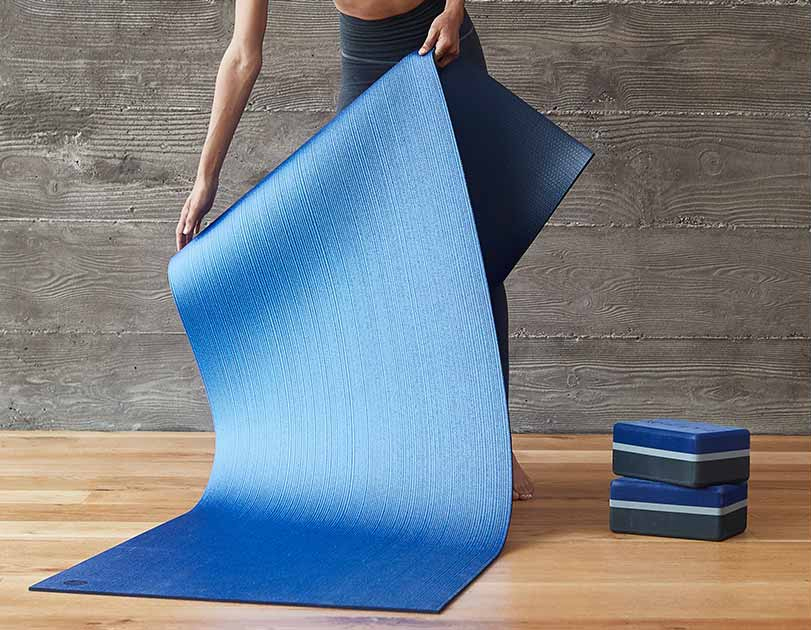
Use a thin exercise mat when a roller slips on a hard floor or when the floor is uncomfortable under your hands and elbows. Our yoga-mat guide explains the differences among surfaces for basic floor work. A mat does not make rolling medically safer, but it can make the setup more comfortable and reduce the urge to rush through it.
Pair a roller with ordinary progression. If you are returning to exercise, start with gentle walks, comfortable bodyweight movements, or a short mobility routine. A roller can be one piece of that process. It should not be used to “work through” pain so that you can immediately repeat an activity that is aggravating a problem.
Common buying mistakes
Buying too firm is the usual mistake. A very hard roller might look durable and athletic, but it can create an experience a new user avoids. The next mistake is buying too short. A compact 12-inch cylinder stores beautifully but cannot function like a full-width roller under the upper back. Buy the 36-inch moderate roller first if you have room.
Another mistake is treating a roller as a collection item. One smooth roller, one density, and an optional small ball later are enough for most people. Do not buy a complete bundle of different textures and diameters before you know what you will use. A roller does not need an app, vibration motor, or named pattern to be useful.
Finally, do not confuse sore with effective. A strong sensation may be acceptable, but sharp, electric, numb, or worsening pain is a signal to stop. The goal is controlled movement and a routine you can repeat, not a contest with the foam.
If several people share a roller, wipe it between uses and let it dry before putting it away. That small habit keeps the surface pleasant to touch and makes a light-colored foam roller last longer in a busy home or studio.
Mark the roller with a name if it travels between a gym, office, and home. It makes a basic piece of equipment easier to keep in a consistent routine and discourages accidental sharing when someone is unwell.
How we researched
We reviewed current manufacturer specifications for foam density, material, dimensions, available lengths, half-round formats, cleaning guidance, and intended exercise use. We chose a moderate full-size roller, a soft full-size roller, and a compact firm roller because they make different pressure and portability trade-offs. We did not conduct a medical or clinical outcome study and do not claim that rolling treats injuries. Confirm suitability with a qualified professional when pain, injury, or a medical condition is involved.
Foam-roller questions, answered
Should a beginner buy a textured roller?
Usually no. A smooth moderate or soft roller is easier to control and lets you adjust pressure with body position. Texture is optional, not a requirement.
What size foam roller should I buy?
Start with 36 by 6 inches for a versatile home roller. Choose 18 by 6 inches for targeted legs and easier storage. Choose a half-round for greater stability.
Is firmer always better?
No. Firm foam creates more pressure. It suits people who find it comfortable and need a dense surface, but a moderate or soft roller is more useful when it helps you move without bracing.
Can I roll directly on my low back?
Avoid direct pressure on the low back and other bony or sensitive areas. Use gentle, supported movement and get specific guidance for pain or injury.
Affiliate note: SuperGrail may earn a commission when you buy through an Amazon link. That does not affect our recommendations or the trade-offs we explain.