A yoga mat is not a universal cushion. The right one depends on where you practice, how much you sweat, whether you carry it anywhere, and how firm you want standing poses to feel. A thick mat can make kneeling more comfortable but feel unstable for balance work. A grippy natural-rubber mat can feel excellent on a dry floor but requires different care and may be unsuitable for a latex sensitivity. A travel mat saves space and gives up padding.
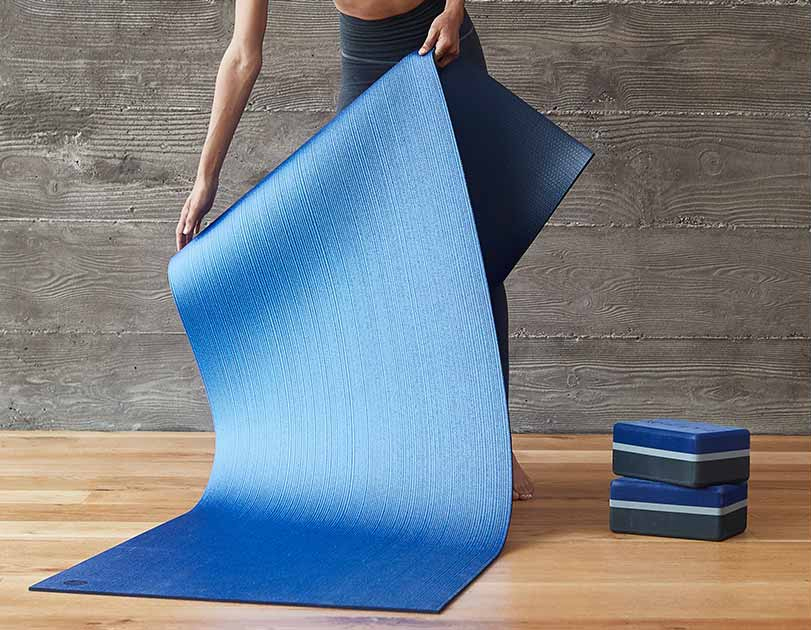
For a regular home or studio practice, the Manduka PRO 6 mm is the durable pick. Its dense 6 mm PVC construction gives firm cushioning, a closed-cell surface, a 26-inch width, and a lifetime guarantee, but the standard mat weighs 7.5 pounds. The Manduka eKO Lite 4 mm is for someone who wants a lighter natural-rubber mat with a textured dry-grip surface; it weighs about 5 pounds, but it is not recommended for latex sensitivities and still benefits from a towel in sweaty classes. The Manduka eKO Superlite 1.5 mm is the travel choice because it folds into a bag, not because it offers much knee padding. For a lighter version of the dense PRO feel, consider the Manduka PROlite.
Do not expect a mat to solve pain. If a pose causes sharp or persistent pain, stop and get appropriate advice. A yoga block, folded blanket, towel, or change to the pose may be more useful than buying the thickest mat you can find. A mat’s job is to give you a stable, cleanable surface that fits your practice.
Our picks at a glance
| For | Pick | Why it fits | Skip it if |
|---|---|---|---|
| Frequent home or studio practice | Manduka PRO 6 mm | Dense 6 mm support, 26-inch width, closed-cell surface, lifetime guarantee. | You carry your mat far or want immediate traction in a sweaty class. |
| Natural rubber and a lighter daily mat | Manduka eKO Lite 4 mm | Textured rubber surface, responsive 4 mm cushion, about 5 pounds. | You have a latex sensitivity, need a hot-yoga mat without a towel, or leave gear in a hot car. |
| Carry-on and hotel-room practice | Manduka eKO Superlite 1.5 mm | Thin foldable layer that is easy to pack. | You need cushion for knees, wrists, or hard floors. |
| Less weight than a full PRO | Manduka PROlite | PRO-family dense support in a thinner, easier-to-carry format. | Your main need is natural-rubber texture or a folding travel mat. |
Best yoga mat for most home practices: Manduka PRO 6 mm
The Manduka PRO 6 mm is a good choice when your mat mostly lives at home or in a studio locker and you want dense support rather than a soft foam feel. Manduka lists a 6 mm thickness, standard dimensions of 71 by 26 inches, a standard weight of 7.5 pounds, a closed-cell surface, and a lifetime guarantee. The dense construction keeps the mat more stable under standing and balance poses than a plush exercise mat that compresses heavily under a foot.
The trade-off is obvious the first time you carry it. Seven and a half pounds is substantial for a mat. It is also PVC, which may not fit someone who specifically wants natural rubber or another material. The closed-cell top is easy to wipe down, but it does not absorb sweat; Manduka says a sweaty practitioner may find the surface slick and recommends a hand towel or full mat towel for heated practice.
Buy the PRO for a consistent practice space, strength-oriented yoga, or anyone tired of thin mats that stretch or bunch. Skip it for a daily walk to a distant studio, travel, or hot classes where you refuse to use a towel. Its lifetime guarantee is valuable only if its density, weight, and care requirements suit your actual routine.
Best natural-rubber daily mat: Manduka eKO Lite 4 mm
The Manduka eKO Lite 4 mm is for a practitioner who wants a natural-rubber surface and a less bulky carry than a full PRO. Manduka lists a 4 mm thickness, 71-by-24-inch standard dimensions, and a standard weight around 5 pounds. Its textured natural-rubber surface is designed for dry traction, while the rubber layer has a more responsive, springy feel than a very dense PVC mat.
There are two important limits. First, Manduka says the eKO Lite is not recommended for people with latex sensitivities. Do not talk yourself past that warning because the material sounds more natural. Second, its closed-cell surface still does not absorb sweat. The company recommends a hand towel or full mat towel for hot practice. Natural rubber does not magically make a wet surface grippy.
Care also matters. Store it cool and dry, out of direct sunlight and away from a hot car. Do not soak it, use harsh chemicals, or roll it while damp. Natural rubber can oxidize, fade, or become brittle with heat and sun exposure. Choose this mat for dry practice and a person willing to handle the material properly; choose the PRO if long-term ruggedness and easier wipe-down care are more important.
Best travel yoga mat: Manduka eKO Superlite 1.5 mm
The Manduka eKO Superlite 1.5 mm is a travel layer, not a complete home mat. Its thin natural-rubber construction folds rather than needing to live outside a suitcase, and Manduka positions it as a travel option. That makes it useful in hotel rooms, over a borrowed studio mat, or on carpet where you want a clearer footing surface.
The price of portability is almost no cushioning. On tile, concrete, or a thin hotel carpet, knees and wrists will feel the floor. Pair it with a folded hotel towel under the knees for low-lunge or kneeling work, or use it on top of another mat. Do not buy it for a restorative practice, a hard-floor apartment, or any routine where joint comfort is the central concern.
The same natural-rubber cautions apply: avoid it for latex sensitivity, do not leave it in heat or direct sun, and dry it completely before packing. The Superlite solves a luggage problem; it does not eliminate the need to adapt a practice to the floor you find.
When a PROlite makes more sense than a full PRO
The Manduka PROlite is the middle option for someone who likes the PRO family’s dense support but resents carrying a 7.5-pound mat. Manduka’s PRO comparison describes the PRO and PROlite as sharing the same performance surface, dense support, and lifetime guarantee, with their meaningful differences in thickness, weight, and color options.
Pick it when a full PRO feels excessive for the commute, yet a 1.5 mm travel mat feels too thin. It will still be a closed-cell mat, so hot practice still calls for a towel. It is not a natural-rubber alternative, and it does not have the full PRO’s 6 mm cushion. The point is a smaller compromise, not a different category of mat.
Thickness is a decision, not a ranking
Thin mats around 1 to 2 mm pack easily and reveal the floor beneath you. They are best for travel and as a hygienic top layer. Around 4 mm is a useful middle ground for many flowing practices: enough cushion for a typical floor, still manageable to carry. A dense 6 mm mat can support knees and wrists without necessarily feeling unstable, but it becomes heavier and bulkier.
Material changes the feel as much as thickness. Dense PVC can feel firm and stable. Natural rubber can have a more textured, springy feel, but it requires care and may be unsuitable for latex-sensitive users. Foam exercise mats can feel soft but may not suit balance work or sweaty yoga. Read the material and the care section before deciding that one thickness number tells the whole story.
Grip changes when sweat enters the practice
A dry-grip surface is not the same as a sweat-management system. Closed-cell mats are easier to wipe because moisture stays on top; that also means sweat can make the surface slippery. A hand towel under the palms can help with a mildly sweaty practice. A full mat towel is the more reliable choice for hot yoga. Buy the towel separately and treat it as part of the setup rather than blaming the mat for physics.
Do not use a bath towel that bunches under a foot. Choose a yoga towel designed to lie flat, or test any towel at home before using it in a fast class. If a mat slides on the floor, clean the underside and check that the floor itself is dry. If your hands slide on the top, address sweat first, then decide whether the mat’s texture is truly a poor fit.
Size and portability decide whether you will use the mat
Most standard yoga mats are around 68 to 71 inches long and 24 inches wide. The Manduka PRO is wider at 26 inches, which can be pleasant for a broad-shouldered person or anyone who wants a little more room for seated work. Taller practitioners should compare their height with the listed length before buying. A long version can be worthwhile when feet or head routinely land at the edge, but an oversized mat is harder to fit into a studio cubby, car, or closet.
Weight is often ignored until the first commute. A 7.5-pound mat is reasonable when it stays put at home; it is much less appealing with a laptop, water bottle, and a long walk to class. A 5-pound mat is still substantial. A 1.5 mm travel mat can fold into luggage, but you trade away the cushion that makes a hard surface comfortable. Decide where the mat will live before clicking buy.
If you practice in more than one place, two mats can be more useful than a “perfect” compromise. Keep a durable home mat for routine sessions and a travel layer for the suitcase. That preserves the features each type is built for and costs less frustration than lugging a heavy studio mat through every trip.
Clean the mat in a way that matches the material
Read the maker’s care instructions, because a cleaning method that is fine for one material can shorten the life of another. Manduka says its PRO can be wiped with warm water or its own wash-and-refresh product, then dried before rolling. Do not soak the mat, leave it damp, or use an untested cleaner when the maker warns against it. A clean cloth and routine wipe-down are usually enough after an ordinary home practice.
Natural rubber needs more restraint. Manduka says not to soak the eKO series, use harsh chemicals or soap, expose it to long periods of sun, or pack it wet. Rubber can oxidize and change color; that is different from a dirty mat, and harsh cleaning can make the problem worse. Let it air dry completely before rolling and store it away from direct heat.
Clean a shared-studio mat before using it if the studio permits, and again after class if it is yours. Do not roll a sweaty mat tightly and leave it in a sealed car for days. A mat that smells or feels slippery may need a gentler cleaning, more drying time, or replacement. It does not need a bathtub, a washing machine, or a scented chemical experiment.
Give a new mat a fair first month
Use a new mat for several ordinary practices before deciding it was a mistake. Dense surfaces can feel different as they settle into regular use, and a new rubber mat can have a manufacturing scent that fades with proper airing. Practice on a clean, dry floor, keep a towel close if you sweat, and note whether the problem is traction, cushioning, size, or simply unfamiliarity. Return or exchange a mat that continues to slide, smell strongly, or feel wrong for the practice you actually do. A warranty is useful, but it does not make an unsuitable mat suitable.
Choose accessories only when they solve a real problem
A towel is the most useful yoga-mat accessory for a sweaty practice. A carrying strap helps with a heavier mat. Blocks can bring the floor closer in seated or standing shapes, and a folded blanket can make kneeling positions more comfortable. None of these accessories are mandatory for a person who practices simple movements on a stable mat at home. Buy the one that solves the problem you actually have.
For strength and recovery items that complement a home movement routine, see our guides to foam rollers and home core equipment. Those products serve different purposes from a mat. A foam roller changes pressure on muscle tissue, and a core machine is equipment for exercise; neither makes a poor mat more stable or gives a yoga pose better form.
How we evaluated yoga mats
We reviewed current manufacturer information for thickness, dimensions, weight, material, surface construction, care requirements, and warranty coverage. We divided the picks by the choices that materially affect practice: a dense mat for a fixed home space, a lighter rubber mat, a foldable travel layer, and a lighter version of a durable dense mat.
We did not treat a material claim as a universal recommendation. Natural rubber has latex and care limitations. Closed-cell mats can be easy to clean yet become slick with sweat. Thick mats can help some knees and wrists but can alter balance. The guide avoids fixed prices because color, size, and Amazon availability can change.
Questions before buying a yoga mat
What thickness yoga mat should I get?
Choose about 4 mm for a practical middle ground, 6 mm dense support for a home or studio mat you do not carry far, and about 1 to 2 mm only for travel or as a top layer. Thickness is only one part of the feel; material and density matter too.
Is natural rubber good for hot yoga?
It can feel grippy when dry, but a closed-cell rubber mat does not absorb sweat. Manduka recommends a towel for sweaty or hot practice. Avoid natural-rubber mats if you have a latex sensitivity.
Why does my new yoga mat feel slippery?
Some dense closed-cell mats need regular use before their surface feels more settled, and sweat can make any closed-cell surface slick. Clean the mat as directed, use a towel for moisture, and do not use harsh methods that damage the finish.
Can I use an exercise mat for yoga?
You can, but a soft exercise mat may compress or shift during standing balance work. A yoga mat is usually a better choice when you need a stable surface for transitions, hands, and feet.
Choose the mat that fits the floor and your routine
Buy the Manduka PRO for a durable 6 mm mat that stays at home or in a studio, the eKO Lite for a lighter natural-rubber option if latex and care requirements are not concerns, and the eKO Superlite when luggage space is the priority. Choose a PROlite when you want less weight than a full PRO but still prefer dense support. Add a towel for sweat, clean the material correctly, and let the floor and your commute decide more than the color.