The right sound machine is the one whose sound you can ignore. For a bedside machine that simply masks changing household or street noise, the Yogasleep Dohm Classic is our first pick. Its real internal fan creates a continuous mechanical sound instead of a recorded track, and two fan speeds plus an adjustable outer housing let you tune tone and volume without an app. Choose the LectroFan Evo if you want many non-looping digital fan, white, pink, brown, and surf sounds with a timer. For a clip-on machine that travels with a child or fits in a carry-on, the Yogasleep Hushh is the practical specialist.
Quick picks
| Pick | Best for | Main compromise |
|---|---|---|
| Yogasleep Dohm Classic | Steady bedside masking with no screens or recordings | It is corded, has no timer, and offers one fan-based sound family |
| LectroFan Evo | People who need choice among fan, noise, and surf sounds | Its digital sound is a different experience from a mechanical fan |
| Yogasleep Hushh | Strollers, hotel rooms, nurseries, and short trips | Its small speaker is for close-range sound, not loud room masking |
Choose the kind of sound before the feature list
“White noise” is often used as a catchall for any steady background sound. The choice is more specific than that. A mechanical fan machine has a physical fan moving air inside a housing. Its character is shaped by the fan speed and the openings around it. A digital machine generates fan, white-noise, pink-noise, brown-noise, or nature-style sound through a speaker. A portable machine tends to sacrifice speaker size and room coverage to gain a battery, a clip, and a small body.
None of these is inherently better. A person bothered by a repeating audio loop may prefer a mechanical Dohm. Someone trying to soften a high-pitched neighbor noise may prefer moving through several digital pitches. A family that needs consistent sound in a hotel room will value a USB-C rechargeable Hushh more than a corded bedside device. Buy for the environment and the sound you can live with, not for the largest number of settings.
Sound masking does not erase a disruptive noise. It adds a stable background that can make changes in the room less noticeable. It is most useful for ordinary, intermittent sound: a hallway door, a partner getting ready, traffic at a distance, or a television in another room. It does not make a loud apartment, unsafe workplace, or regular construction noise harmless. For sleep, use a comfortable volume rather than trying to overpower the whole environment.
The Yogasleep Dohm Classic is the simple bedside choice
The Yogasleep Dohm Classic is for people who want a steady sound, one switch, and little else. Yogasleep uses a real internal fan rather than a digital recording, so there is no sound file to restart. The Classic offers two fan speeds and a tone control created by rotating the outer housing. This lets you find a softer or more open fan character for the particular room without learning a menu or relying on Wi-Fi.
The device measures 5.6 by 5.6 by 3.5 inches, weighs 31.5 ounces, and uses a seven-foot 120V AC power cable. It is made for use in the United States and Canada, not an international voltage system. That makes it an easy choice for a permanent bedside table, office desk, or room where a nearby outlet is available. It is a poor travel choice for someone who needs a battery and wants to use it overseas without a voltage plan.
The mechanical sound is the whole appeal. You can alter the tone with the housing and set the volume with the control, but you cannot switch to rain, ocean, or a different digital noise color. Some sleepers will find that limitation calming: there are no choices to second-guess at 11 p.m. Others will want more control. The Dohm is a tool for a person who already knows that fan-like sound works for them.
Yogasleep lists a one-year limited warranty and a 30-night return window for direct purchases. Retailer terms can differ, so check the seller associated with the exact listing. Keep the cord clear of the bed and avoid placing the machine where a curtain or pillow can block its vents. Check current Dohm Classic availability on Amazon.
Choose the LectroFan Evo when sound choice is the point
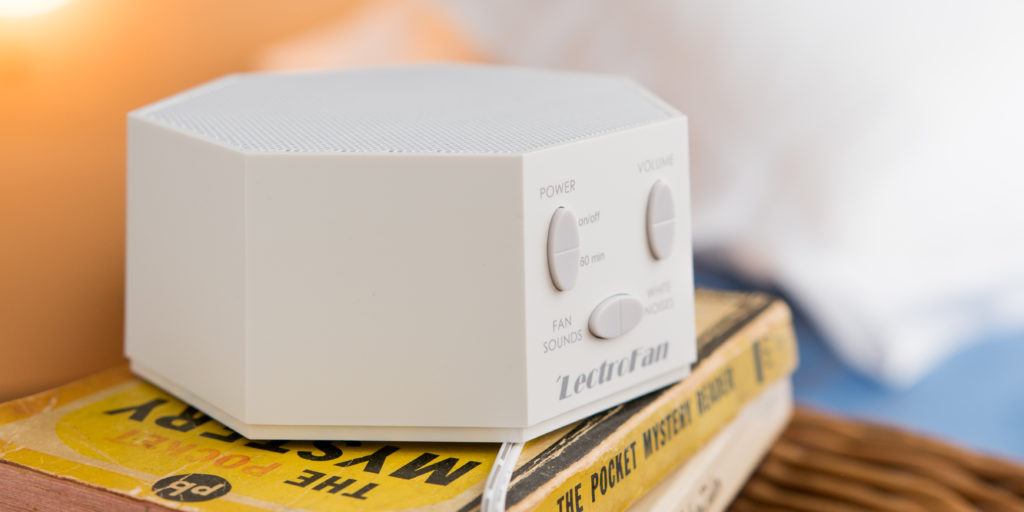
The LectroFan Evo is the better pick when one fan sound is not enough. Adaptive Sound Technologies lists 22 non-looping sounds: ten fan sounds, ten white/pink/brown noise variations, and two surf sounds. The point is not to use every one. It is to listen briefly and find the frequency range that sits behind the disturbance you are trying to soften. A low, rumbling sound and a hissy sound interact with a room differently.
The Evo is a digital generator rather than a fan. It does not rely on a short ambient recording, which avoids the obvious repeat some people notice in less carefully designed sound machines. It has a sleep timer and precise volume control. That makes it useful for a reader who wants sound while falling asleep but not necessarily all night, or for focused work where a specific fan tone helps cover office chatter.
The extra choice also creates a small amount of friction. A person who wants a single predictable sound may spend too long moving through options. Start with a fan setting or a neutral white/pink/brown option, give it a few nights, then adjust only if it is actively annoying. Constantly searching for the “perfect” sound can become another piece of bedtime screen-like behavior, even when the machine itself has no screen.
The LectroFan is compact enough for a bedside table or an overnight bag, though it is still a powered machine rather than a clip-on travel device. Check the exact kit for its power adapter and cable. It is a better choice than the Dohm for people who want a timer and a wider range; it is a worse choice for someone who wants the natural texture of a real fan. See current LectroFan Evo listings on Amazon.
The Yogasleep Hushh is the travel and nursery pick
The Yogasleep Hushh is designed for a different setting: naps, a stroller, a diaper bag, a car seat, or an unfamiliar hotel room. It has three sound options, a soft amber light, adjustable volume, a toddler lock, and a clip. Yogasleep lists it at 3.4 by 1.6 by 3.8 inches and 3.4 ounces. It recharges with USB-C; the cable is included, but a USB power adapter is not.
The toddler lock is practical because a small child can otherwise turn a sound machine louder, off, or onto a different setting with one curious hand. The clip is useful, but treat it as a way to keep the device nearby, not a reason to place a cord or device within a child’s reach. Put a sound machine according to current safe-sleep guidance and follow the manufacturer’s instructions. Sound is part of a routine, not a replacement for safe sleep practices.
The Hushh’s small size sets the boundary. It can provide familiar close-range sound and make a hotel room feel less unfamiliar. It does not have the speaker size or plug-in power of a full bedside machine, so it is not the strongest choice for a large bedroom, a busy living room, or masking a consistently loud street. Pack it for travel and use the Dohm or LectroFan at home when the goal is broader room masking.
Use a compatible five-volt USB adapter and recharge before a trip rather than assuming a small battery will last through a long travel day. For other small gear that earns its space in a bag, see our travel-adapter guide. Find the Yogasleep Hushh on Amazon.
Set the volume for comfort, not force
Start lower than you think. Put the machine where it will be used, turn it on, and adjust until it softens the most distracting change in the environment without taking over the room. You should be able to speak normally close to the device. If it needs to be turned up to an uncomfortable level to cover a specific noise, the better answer may be closing a window, adding a door sweep, moving the bed, or using ear protection appropriate to the situation.
Placement changes the result. A machine near the bed creates a more personal layer of sound. A machine closer to the noise source may spread sound across more of the room. Do not bury any sound machine in bedding, place it near water, or block a mechanical device’s vents. With a portable machine, keep charging cables out of walking paths and away from young children.
For a child, keep the volume conservative and the machine at a sensible distance. A sound machine should not be directly beside a head or attached inside a sleep space. Parents often prefer a sound that stays predictable through bedtime, but the correct position and setting depend on the room. When in doubt, lower the level and move the machine farther away.
Know what “non-looping” means
Mechanical fan noise is physically continuous: the fan keeps turning. A well-designed digital generator can create non-looping sound mathematically instead of playing a short recording over and over. Both can work. The problem is a short recording with a seam that becomes obvious after several minutes. Once you hear the seam, it can be harder to ignore than the original room noise.
The Dohm avoids the digital question entirely with its fan. The LectroFan Evo offers digitally generated, non-looping options. A cheap device may still be enough for occasional travel, but listen to it before the return window closes. Run it at the volume and distance you plan to use at bedtime, not just for ten seconds on a kitchen counter.
Do not worry too much about the marketing names attached to noise colors. White noise generally sounds brighter. Pink and brown noise often put more energy lower in the audible range, so they can feel softer or deeper. The label matters less than whether the sound is comfortable and works with the interruption you hear. Pick one and give your ears time to adapt.
Timers, lights, and apps are optional
A timer is useful for someone who wants sound for the period of falling asleep or a focused work session. It is less useful if the machine must keep masking a hallway or early-morning traffic all night. The LectroFan’s timer is a reason to choose it; its absence is not a defect in the Dohm, which is deliberately simple.
A night light can help with a diaper change or a hotel-room path to the bathroom. It can also add a light source you do not want in a dark bedroom. The Hushh’s amber glow is intentionally modest, but turn it off if it draws your attention. App control can be convenient when it solves a real placement issue, but it is unnecessary for most adults who can reach the device. Fewer controls usually mean fewer things to troubleshoot at bedtime.
When a sound machine is the wrong purchase
Skip a sound machine if the main problem is a physical one you can fix directly. A rattling vent, a door that slams, a loose window, or a television running late in the next room may have a simpler remedy. Soft furnishings, a door sweep, a conversation about quiet hours, or moving the bed can reduce the source instead of adding another sound layer. A machine works best after those obvious steps have been considered.
Also skip the category if steady sound makes you more alert or if you already sleep well in silence. There is no virtue in adding white noise because it is popular. A small fan that serves another purpose can be enough in a warm room, provided it is placed safely and its airflow is comfortable. Buy a dedicated machine when its control, placement, and sound are genuinely more useful than an appliance you already own.
Care and ownership
Dust a mechanical sound machine’s exterior and vents gently while it is unplugged. Do not spray cleaning liquid into the housing or attempt to oil a device unless the manufacturer tells you to. For digital units, keep speaker openings clear and inspect the power cable occasionally. A machine that hums differently, gets unusually hot, smells of overheating, or has a damaged cable should be unplugged and checked through the manufacturer’s support process.
For a portable device, charge it before travel and avoid leaving it in a hot car. Store the cable with the machine so the device does not become a charged but unusable object. A small hard case can make sense if it travels in a packed bag. The Hushh is light enough to clip to a bag, but a clip does not make it weatherproof or invulnerable to drops.
Sound can be part of a fuller wind-down routine, but it cannot fix every sleep problem. A dark room, a comfortable temperature, and regular timing often make a bigger difference than swapping between ten noise colors. If you are looking at other simple bedroom improvements, our sleeping-mask guide covers the light side of the same problem.
How we researched
We compared current manufacturer specifications, power sources, dimensions, weights, sound types, timers, lights, locks, warranties, and intended settings. We chose a mechanical bedside machine, a digital multi-sound machine, and a portable clip-on option because they solve different problems. We did not conduct a clinical sleep study or claim medical effects. Sound preference and room acoustics are personal, so confirm the exact model and its power compatibility before ordering.
White-noise machine questions, answered
Is a real fan better than digital white noise?
Neither is universally better. A real fan produces a continuous mechanical sound and simple physical controls. A digital machine offers more pitches, sound types, and often a timer. Choose the sound you can ignore.
Can I use a portable sound machine in a nursery?
Yes, when it is used conservatively and placed safely outside the sleep space. Keep the volume comfortable, keep cords out of reach, and follow the manufacturer’s directions and current safe-sleep guidance.
Should the sound run all night?
It can if the sound is needed to mask interruptions all night. Use a timer when you only need it to settle down. Start at a low volume either way.
Is white noise useful for focus?
A steady fan or noise texture can make changing office sounds less noticeable for some people. It cannot replace a quiet workspace or headphones when privacy and concentration require them.
Affiliate note: SuperGrail may earn a commission when you buy through an Amazon link. That does not affect our recommendations or the trade-offs we explain.