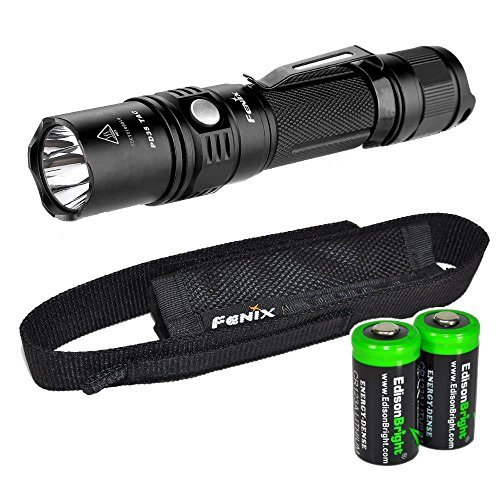
A rechargeable flashlight earns its keep when it is easy to put back into service. That sounds obvious, but it rules out a surprising number of lights: a tiny built-in cell that takes all night to recharge, a charging connector you do not otherwise carry, or a turbo setting that looks great on a box and lasts only briefly. For most homes, the Fenix E35R is the sensible long-term pick. It uses a removable 21700 battery, charges through USB-C, has a magnetic tail for hands-free jobs, and offers a useful range of lower modes before its 3,100-lumen maximum becomes relevant.
If your flashlight mostly lives in a pocket, glove box, or work bag, the Streamlight MacroStream USB is easier to carry and easier to operate. It is less weather-resistant and uses an older Micro-USB connection, but its straightforward two-mode tail switch and removable hat clip are practical. The Wurkkos FC11C is the lower-cost choice for people who care about how objects and wiring look under the beam: its high-CRI Nichia LED produces more natural-looking color than the cool, high-output emitters common in this class. Each pick has a different compromise. That is more useful than chasing the largest lumen number.
Quick picks
| Pick | Who it suits | What you give up |
|---|---|---|
| Fenix E35R | One capable, USB-C rechargeable light for home, travel, and outdoor use | It is heavier and thicker than a small pocket light |
| Streamlight MacroStream USB | A compact light for pockets, tool bags, and occasional hands-free use | Micro-USB charging and an IPX4 water-resistance rating |
| Wurkkos FC11C | Close-up work, repairs, and budget-conscious buyers who value high-CRI light | Less peak output and fewer brand-support assurances than the Fenix |
The Fenix E35R is the rechargeable flashlight to buy first
Fenix E35R makes sense for the person who wants a flashlight to be a dependable household tool, not a gadget that needs special attention. Fenix specifies a 5,000 mAh 21700 lithium-ion battery in the box and a USB-C port on the light. That combination matters more than the headline brightness. The larger removable cell gives the light enough reserve for routine tasks and makes eventual battery replacement possible; USB-C means the cable in your laptop bag or car is likely to work.
The E35R’s stated maximum is 3,100 lumens, with a maximum beam distance of 260 meters. Treat the top mode as a short-term tool for a large yard, a trail junction, or finding the source of a sound outside. A high-output light reduces its output as heat and battery state demand it, so the lower modes are the ones that determine whether it is comfortable to own. Fenix lists modes down to a 30-lumen Eco setting and a stated runtime as long as 69 hours there. That is the mode range that turns this from an occasional emergency light into something you can use to check a breaker panel, walk a dog, or find a dropped screw without feeling wasteful.
The body is about 4.7 inches long and weighs roughly 5.2 ounces with its battery. Those numbers keep it out of the ultralight pocket category, but they are reasonable for a light with a 21700 cell. The magnetic tail is one of the features that justifies the size: set it on the side of a steel appliance, electrical panel, or car body and you can aim the beam at your work. The side switch also makes it easier to change output while the light is stationary. A one-way clip gives it a secure place in a jacket pocket or bag.
Its compromise is straightforward. The E35R uses a cool-white Luminus SST70 emitter, so it is built around output and reach rather than making paint shades, wire colors, or food look especially natural. It also uses Fenix’s 21700 battery family, and the manufacturer says its battery-level behavior applies with compatible ARB-L21 cells. That is not a problem if you intend to keep the supplied battery in the light, but it is a reason to buy a spare from the same battery family instead of treating every loose 21700 as interchangeable. If you are buying it for a vehicle or storm kit, label the light and spare cell and refresh them together.
Check the Fenix E35R and compatible spare-battery options on Amazon. Do not buy an additional battery until you know whether you will actually use the light often enough to justify one. A single maintained rechargeable light is better than a drawer of cells with unknown histories.
Choose the Streamlight MacroStream USB when pocket size wins
Streamlight’s MacroStream USB is a compact alternative for people who will carry a flashlight only if it disappears into a pocket. It measures 4.5 inches long and weighs about 2.2 ounces with its built-in lithium-ion battery. Its high mode is rated at 500 lumens for two hours, while the 50-lumen low mode is rated for eight hours. Those are modest specifications beside the Fenix, but that is exactly why the light is easy to understand. You have a bright short-duration mode and a lower mode that is appropriate for ordinary nearby work.
The control scheme is equally direct. Use the tail switch for momentary or constant light, then double-tap to change modes. The clip can attach to a pocket or hat brim, a small convenience that matters when you are looking under a sink or holding a box with both hands. The charging port is protected by a sliding metal sleeve, with red and green indicators for charging state. Streamlight states a four-hour charge time and includes a USB cord.
The oldest part of this design is its Micro-USB port. It still works, and a protected port is better than an exposed one, but it means you must keep a second cable in circulation if the rest of your equipment has moved to USB-C. The MacroStream is also IPX4 water-resistant rather than submersible. It is fine for rain or a wet driveway; it is not the light we would deliberately drop into a stream or leave in an uncovered boat compartment. Its built-in battery is another boundary. When that cell eventually loses capacity, this is less serviceable than a light with a standard removable cell.
Those limits are not hidden costs if you buy it for its actual role: a small, recognizable, limited-lifetime-warranty light for everyday carry. The MacroStream is not the right purchase for a multi-day outage kit. It is a good purchase for the person who needs a better light than a phone and wants to use it routinely. See the MacroStream USB on Amazon.
The Wurkkos FC11C makes close work easier to see
The Wurkkos FC11C is the value-minded choice for a desk drawer, repair kit, or bedside table. Its central appeal is the Nichia 519A high-CRI LED. High color rendering does not make a flashlight brighter. It makes reds, browns, labels, and insulation colors easier to distinguish than they can be under a stark cool-white beam. That difference is useful when you are matching a small part, looking for a spill on upholstery, checking plant leaves, or trying to tell two wires apart.
Wurkkos specifies USB-C charging, a magnetic tail, and a stated maximum output of 1,200 lumens. It is a practical list of features for this price tier: you can charge it with a common cable, attach it to a metal surface, and step through outputs with a side switch. The 18650-size rechargeable battery is a more manageable size than the Fenix’s 21700 cell, which helps keep the overall light compact without shrinking it into a keychain novelty.
There are two reasons not to choose it as the one flashlight for every situation. First, the FC11C does not offer the same long-established support reputation or high-output range as the Fenix. Second, higher-CRI light prioritizes useful color and a comfortable beam, not maximum distance. That is a good trade for close work. It is a poor trade if you regularly need to identify an object at the far end of a field or driveway.
Buy the FC11C when you want an affordable light you will actually use inside. It is also a smart second light beside a more powerful primary flashlight. Find the FC11C in the Nichia 519A version on Amazon; check the listing carefully, since flashlight makers sometimes sell similarly named versions with different emitters.
What makes a rechargeable flashlight worth owning?
Start with the charging system, then work outward. USB-C is the least complicated choice because it is common across newer phones, power banks, and laptops. A removable battery adds another layer of resilience because the light can be restored with a charged spare when mains power is unavailable. A built-in battery can be perfectly reasonable for a small carry light, but it turns the flashlight into a device that must be recharged, not a tool with a field-replaceable energy source.
Battery size changes the experience. A 21700 cell holds more energy than a typical 18650 cell, which gives a light like the E35R room for long low-level use and higher-output bursts. It also makes the body and pocket carry less discreet. The right answer is not automatically the largest battery. For a jacket-pocket light you use several times a week, a smaller body can be the reason it is present when needed. For a household emergency kit, capacity matters more than carrying comfort.
Then look at the beam, not just the lumen figure. Lumens describe total light output. Candela and beam shape help explain how concentrated that output is. A broad beam is pleasant around the house and better for finding items nearby. A concentrated beam reaches farther, but it can create a bright center with less useful peripheral light. A listed maximum output also comes with a runtime condition. Heat management and battery voltage mean that most compact rechargeable lights cannot hold their brightest setting indefinitely. Read the low and medium modes before you compare turbo figures.
Water resistance is another place where labels matter. IPX4 means protection from splashing water. IP68 indicates a stronger sealed rating for dust and water immersion under the maker’s stated conditions. Neither number is permission to ignore a damaged O-ring, a loose charging cover, or saltwater exposure. If the light will live in a kayak bag, winter car kit, or exposed work site, choose the more protected body and inspect its seals periodically.
Use one light for the job it can do
For most homes, put the E35R in a predictable location—near the electrical panel, emergency supplies, or entryway—and charge it after any extended use. A powerful flashlight is much more helpful when you can find it in the dark. Add a second, smaller light only if it solves a different problem: one in a work bag, one in a car, or one beside the bed. Redundancy works when the tools are placed where the problem occurs, not when they are stored together.
If you are building a preparedness kit, pair a rechargeable flashlight with a more complete emergency-supplies plan. The light itself is only part of the system. You need charging options, spare cells if the model supports them, and a way to locate the light during an outage. A charged power bank can keep a USB-C light going, but it should not be the only source of power in a multi-day event. Separate battery-powered lanterns, headlamps, and radio needs are worth planning on their own terms.
For travel, a small rechargeable flashlight is often more useful than a huge high-output model. Make sure its charging cable fits your trip’s power setup, keep it out of checked baggage when airline rules or battery design require it, and do not assume every hotel room needs a tactical-strength beam. Our travel charging checklist explains how to build the adapter, cable, and power-bank side of that kit without carrying duplicate gear.
Good alternatives that did not take a main slot
The Fenix PD36R Pro is a good option for buyers who want more runtime and a more distance-oriented beam than the E35R. Its 5,000 mAh battery, USB-C charging, and IP68 rating are compelling for outdoor use. It is a better fit for someone who knows they need that capacity and beam behavior; for general household duty, the E35R’s magnetic tail and smaller profile are easier to live with. Compare the Fenix PD36R Pro on Amazon.
A headlamp may be the better answer when both hands need to stay free. Headlamps spread their weight differently, put the beam where you look, and tend to be more comfortable for extended repair, camping, or walking tasks. They are less pleasant as general-purpose lights to hand to someone else. If you buy a flashlight for close vehicle or home work, a magnetic tail and clip can bridge some of that gap without adding another device.
Keychain lights are convenient backup tools, but their tiny cells and short high-output runtimes make them poor replacements for a real flashlight. On the other end of the scale, large tactical or search lights can be impressive, but they are costly, awkward to store, and excessive for most indoor work. Buy those only when the use case requires their beam distance or long-duration output.
Care and battery habits that prevent disappointment
Recharge lithium-ion flashlights before a long trip or storm season, then check them a few times a year. Do not leave a light permanently on a charger in a hot car or sunny window. If a removable cell is damaged, swollen, leaking, or unusually hot, stop using it and follow local battery-recycling guidance. Keep loose spare cells in a protective case so coins, keys, and other metal objects cannot bridge their terminals.
Clean the threads and O-rings gently when you notice grit, especially after sand, rain, or workshop use. A small amount of appropriate silicone lubricant can preserve an O-ring, but excess grease attracts dirt. If charging becomes unreliable, check the cable and port before assuming the battery has failed. The mundane maintenance is what makes a rechargeable light more trustworthy after the first year.
How we researched
We compared current manufacturer specifications, including battery type, charging connector, listed run times, size, weight, water-resistance rating, controls, and warranty terms where available. We favored lights with a clear charging arrangement and a recommendation that makes sense beyond a maximum-output claim. We did not treat a manufacturer’s turbo number as a promise of sustained brightness, and we did not claim hands-on testing. Availability and variants can change, so confirm the exact model and emitter in the Amazon listing before buying.
Rechargeable flashlight questions, answered
Is USB-C enough, or should I buy a flashlight with a removable battery?
USB-C is enough for a light you recharge at home after ordinary use. A removable battery is worth paying for when the light has an emergency, travel, or regular outdoor role. It lets you carry a safely stored charged spare and replace the cell when it ages.
How many lumens do I need?
A few hundred lumens is plenty for most close household tasks. More output becomes useful outdoors, across a yard, or when you need a wide area lit briefly. Choose a flashlight with useful medium and low modes; those are the settings you will use the most.
Should I choose a cool-white or high-CRI LED?
Choose cool white when you value maximum output and reach. Choose high CRI when distinguishing colors around the house, during repair, or on materials matters more than the longest possible beam. Neither is universally better; they solve different problems.
Can a rechargeable flashlight replace a battery-powered emergency light?
It can be part of the plan, but it should not be the whole plan. Keep it charged, add a compatible power source or spare cell, and consider a separate battery-powered light or lantern for outages that last longer than your stored charge.
Affiliate note: SuperGrail may earn a commission when you buy through an Amazon link. That does not change which products we recommend or how we explain their trade-offs.