A gas can should make a small-engine refill controlled and uneventful. It should not become a long-term fuel plan, a workaround for an awkward fill port, or an excuse to use an unapproved container. For most homeowners, the No-Spill 1450 five-gallon can is the practical choice for a mower, snow blower, or generator because its push-button spout gives the user control over the flow. If five gallons is too heavy to lift confidently, buy the smaller 2.5-gallon version instead. A can that is theoretically efficient but awkward in your hands is the wrong can.
For a workshop or another use case where a listed steel safety can is specifically appropriate, choose a Justrite Type I steel safety can. It is far more expensive and less convenient for ordinary lawn care, but it is a different class of product: a steel can with a self-closing lid and approvals that matter in settings governed by workplace or fire-safety requirements. Do not buy a metal safety can merely because it looks more serious. Buy it when its format, approvals, and handling method fit the job and the local rules that apply to you.
Every portable fuel container deserves the same non-negotiables: use the fuel stated on the label, keep it closed when not in use, store it in a cool, well-ventilated place away from children and ignition sources, and follow the container, equipment, and local instructions. Never pour gasoline into a hot engine, never smoke near fuel, and do not substitute a water jug, improvised bottle, or “utility” container for an approved fuel container. This is a buying guide, not a substitute for fire-code, equipment, or emergency guidance.
Quick picks
| Use case | Pick | Why it fits | Compromise |
|---|---|---|---|
| One can for mowers and other small engines | No-Spill 1450 | Five-gallon capacity, rear handle, and push-button flow control. | A filled five-gallon can is heavy; the spout requires an intact seal and deliberate use. |
| A lighter can that is easier to carry and tip | No-Spill 1415 | The same general spout idea in a smaller capacity. | More trips to the station or more containers for the same amount of fuel. |
| A shop where a Type I steel safety can is appropriate | Justrite 7150100 Type I | Steel construction, self-closing lid, and manufacturer-listed FM/UL/OSHA-related approvals. | Cost, weight, and a separate funnel for many fill ports. |
| Awkward or recessed equipment fill ports | Justrite Type II safety can | A separate fill port and flexible metal hose can make a targeted transfer easier. | It is specialized, costly, and not a casual upgrade for every garage. |
Choose capacity for the person lifting it
Five gallons is the familiar gas-can size, but capacity is only useful if you can move it safely from the vehicle to the equipment and hold it steady while pouring. Gasoline is heavy enough that a filled five-gallon can can become awkward for people with limited grip strength, a high mower fill port, a step between the driveway and garage, or a narrow generator opening. A 2.5-gallon can is less efficient for station trips, yet it is often the better buy for one person because it is easier to carry, place, and control.
Start by identifying the actual transfer: a walk-behind mower at ground level, a riding mower, a portable generator, a chainsaw, or a shop container. Then look at the space around the opening. A big handle and a long flexible hose can be an advantage in one situation and unnecessary complication in another. Do not buy capacity based on an imagined fuel outage or a generic idea of preparedness. Fuel ages, storage rules vary, and a portable can is not a replacement for a carefully planned fuel-storage system.
If your need is emergency power, the generator’s manual determines fuel type, fueling procedure, and maintenance. Keep any fuel plan within its stated limits and your local requirements. Our emergency-supplies guide can help organize the rest of a household kit, but the fuel container itself needs to be the right one for the fuel and the equipment.
Best everyday choice: No-Spill 1450
The No-Spill 1450 is the choice for a homeowner who wants one full-size gasoline can for outdoor power equipment. Its defining feature is the push-button control: rather than relying on an always-open old-style spout, you hold the can in place and use the button to start and stop fuel flow. The 1450 also has a rear handle to help control a filled can. That does not eliminate the need to support the can’s weight; it makes a common transfer less clumsy when the opening is reachable.
The main benefit is control, not speed. A controlled spout can help a careful user avoid the casual overfill that stains a driveway, runs down an engine, or sends fuel onto gloves. The trade-off is that the spout, cap, button, seals, and venting system need to stay clean and undamaged. Check the exact current listing and label before purchasing, inspect the can before every use, and stop using a container with a damaged body, failed cap, leaking seam, or spout that no longer closes correctly.
This pick is not for somebody who cannot safely lift a filled five-gallon can. It is also not a universal replacement for every workplace-required safety can. Its job is simple: take approved gasoline from the station to a compatible small engine with as much control as a consumer can offers. Keep the cap closed, do not overfill the equipment, and never try to modify the spout to defeat its safety design.
Best for easier handling: No-Spill 1415
The No-Spill 1415 is a smarter answer for an occasional mower user, a person who has to carry fuel farther, or anyone who knows a full five-gallon can is too much to hold steady. The smaller capacity reduces the load and the consequence of a bad angle. That is not a glamorous distinction, but it often determines whether a can is used carefully or reluctantly.
You give up capacity. A larger property, a generator, or several gas-powered tools may require more station trips or a pair of smaller containers. For many users that is a fair trade. Two containers can also provide some practical resilience if one spout or cap has a problem, provided each is inspected, labeled, stored correctly, and still within the amount you can responsibly manage.
Choose the smaller can because it fits the handling task, not because it lets you be casual about storage. Empty and clean is not the same as safe to toss into a hot vehicle or near an ignition source. Follow the label and keep the container in the cool, ventilated location appropriate to your home and local rules.
When a steel Type I safety can makes sense
A Justrite 7150100 Type I safety can serves a different buyer. The manufacturer identifies it as a five-gallon steel Type I can with a self-closing lid and FM, UL, ULC, TUV, OSHA, and NFPA-related listings or compliance details for the model. Those designations matter in a shop, facility, or other context where a recognized safety-can format is required or desired. They do not make the can maintenance-free or automatically suited to every fuel-transfer task.
Type I refers to the basic one-opening arrangement used for filling and pouring. That simplicity has an advantage: fewer moving pieces and a straightforward format for storage and transfer. It also means that a side-mounted or recessed equipment opening can be awkward. Some Type I versions are offered with a funnel; check whether the exact Amazon listing includes one and whether it works for your equipment. Do not assume a funnel, hose, or accessory shares every approval that applies to the can itself.
The compromises are obvious. Steel adds weight, the can costs substantially more than a consumer plastic can, and the mechanism is less convenient for a quick mower top-up. It is the right buy for someone whose setting and procedures call for this category, not for a buyer looking for the cheapest can at the pump.
When a Type II can is worth the extra complexity
A Justrite Type II safety can has a different arrangement: a fill opening plus a separate dispensing hose. This can make a controlled transfer into a small or awkwardly located opening easier without tipping a large metal can directly over the equipment. It is a specialist tool, so evaluate the exact hose length, nozzle size, capacity, model approvals, and handling instructions before buying.
Do not assume “Type II” means better for every person. The hose adds cost, hardware, and another component to inspect. A simple consumer can may be easier for a walk-behind mower. A Type II can earns its place when you routinely need targeted dispensing and the safety-can format fits your local, workplace, or storage requirements. If you are uncertain, ask the facility manager, fire official, or qualified local source about the specific rule instead of guessing from a product description.
Read the can before you choose the color
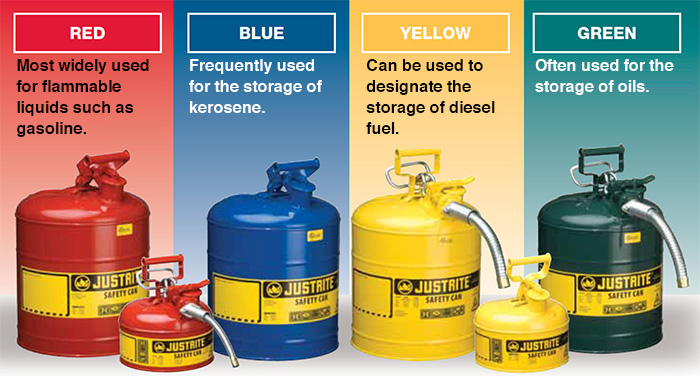
Fuel-container colors can help separate fuels, but color conventions are not a substitute for labels. Red is commonly used for gasoline, yellow for diesel, and blue for kerosene, yet the important instruction is the container’s actual label and the fuel specification for your equipment. Mark containers clearly if more than one fuel exists in the same garage or shed. Never pour an unknown liquid into an engine because a cap color looked familiar.
Portable fuel containers sold for gasoline, diesel, and kerosene in the United States are subject to specific safety requirements, including child-resistant/adult-friendly packaging for certain capacities and flame-mitigation requirements for applicable liquid fuels. Those rules are a reason to buy from a legitimate source and leave the container’s safety components intact. A cheap, unmarked container, a “utility jug” not intended for fuel, or a modified spout is not a clever alternative.
Before you buy, confirm four things: the exact fuel the can is designed for; the capacity you can lift; the spout or hose arrangement that reaches your equipment; and any local, homeowner-association, workplace, or fire-code restrictions on storage. If the retailer listing is vague on model number, approvals, or intended fuel, find a clearer listing instead.
Use and storage choices that matter more than the brand
Fuel transfers should be deliberate. Let equipment cool as instructed before refueling, use the can on a stable surface when possible, keep the spout secure in the opening, and stop at the equipment’s fill limit. Gasoline vapor and spills are hazards; do not rush because a storm is coming or because the lawn is half-finished. Keep children and ignition sources away. Do not smoke at a station or near any fuel container.
When the transfer is done, close the can completely and clean up any spill according to applicable safety guidance. Do not leave a cap loose because you expect to use the can tomorrow. Keep containers in the cool, well-ventilated location required by their labels and applicable local rules, away from occupied living spaces and heat sources. A garage setup that feels convenient can still be wrong for fuel; local codes and the manufacturer’s instructions are the authority.
Inspect the can each time you use it. Look for swelling, cracks, stains, worn seals, damaged caps, a loose spout, and fuel odor where there should be none. Do not patch a gasoline can with tape, glue, or a replacement part that is not specified for that model. Follow the manufacturer and local hazardous-waste guidance for a failed container and old fuel. The correct answer to a damaged can is replacement or proper disposal, never a homemade repair.
Make the station trip part of the purchase decision
A fuel can is used before it reaches the mower. Think through the full station trip: carrying the empty can to the vehicle, placing it where it can stay upright and protected, handling it at the pump according to the station’s instructions, securing its cap, and moving it to its proper storage location after you arrive home. A container with a large capacity is a poor match if you have no stable way to transport it or have to lift it over obstacles after filling.
Keep the exterior clean enough that you can spot a new leak or damaged seal. Do not leave fuel containers loose among tools, groceries, or loose cargo. Avoid buying extra containers because a single difficult trip suggested you need permanent volume; first ask whether a smaller can, a more regular refill rhythm, or an approved storage solution is the better answer. Fuel is not water, but the habit of labeling containers and planning a rotation applies to both. Our water-storage guide is useful for organizing household reserves without confusing water and fuel systems.
If an item is damaged while traveling, do not keep driving and hope the odor disappears. Put safety first, follow applicable emergency and local guidance, and do not attempt a roadside repair with tape or a replacement cap from another brand. The best time to inspect the can is before you fill it, when replacement is easy and no fuel is involved.
What not to buy
Skip old cans with unknown condition, unmarked jugs, decorative containers, and aftermarket modifications designed to bypass a safety spout. Skip a five-gallon can if you need help carrying it on a normal day. Skip any container sold for a different liquid just because it has a convenient shape. A cheap container becomes expensive the first time it leaks fuel in a vehicle or onto equipment.
Also skip the idea of treating several portable cans as permanent bulk storage. The more fuel you keep, the more important quantity limits, ventilation, rotation, approved storage, and local code become. If your need goes beyond a mower or a modest generator reserve, pause and plan the system with the relevant requirements rather than accumulating cans.
How we researched this guide
We reviewed current federal Consumer Product Safety Commission information on portable fuel-container requirements and basic handling, then checked current manufacturer materials for the No-Spill consumer can and Justrite steel safety-can categories. We compared capacity, flow-control arrangement, steel versus plastic construction, and the intended role of Type I and Type II cans. We did not conduct hands-on fuel transfer tests, and product availability or exact included accessories can change. Verify the model, label, and instructions before ordering.
Questions before buying a gas can
Is five gallons always the best size?
No. Five gallons is efficient when you can comfortably carry and pour it. A 2.5-gallon can is the better choice when handling control matters more than reducing trips to the station.
Can I use the same can for gasoline and diesel?
Do not switch fuels casually. Use a container designed and labeled for the fuel you are carrying, follow the equipment manufacturer’s fuel requirement, and keep each container clearly identified.
Do I need a metal safety can?
Most casual small-engine users do not need one. A Type I or Type II steel safety can becomes sensible when the use case, handling need, workplace rule, or local guidance calls for that category. Otherwise, a current, approved consumer container that you can lift and control is the more practical tool.
For most homeowners, buy the No-Spill 1450 if five gallons is manageable, or the No-Spill 1415 if it is not. Keep the can labeled, closed, clean, and used only for its intended fuel. That is a better gas-can decision than chasing the largest capacity or the most complicated spout.