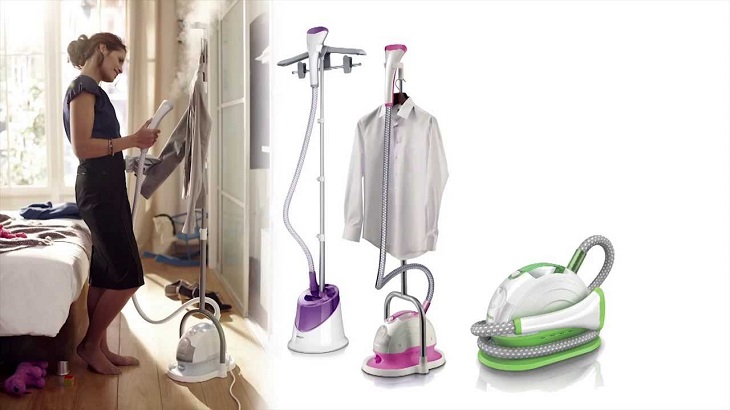
A clothes steamer earns its place when you want a shirt, dress, knit, or curtain to look presentable without setting up an ironing board. For most homes, the Conair Turbo ExtremeSteam GS59X is the sensible place to start: it warms up in 40 seconds, has five steam settings, and includes a heated plate and a three-part attachment for smoothing, delicate fabrics, and heavier materials. It is still a fairly substantial handheld, though. If you need a crisp trouser crease or a flat shirt placket, an iron remains the better tool.
The right steamer is mostly a question of volume and location. Buy the Conair for several garments at a time at home. Choose the Jiffy J-2000 if steaming is part of a regular routine and you have a closet-sized place to park a floor model. Pack the Rowenta Origin Travel DR1050U1 if you need a steamer that works on 120V and 240V outlets abroad. A tiny travel unit is convenient, but its short run time makes it a poor substitute for a home steamer.
How SuperGrail is supported: We may earn a commission when you buy through an Amazon link. That does not change our recommendations.Quick picks
| Pick | Buy it for | Skip it if |
|---|---|---|
| Conair Turbo ExtremeSteam GS59X | Regular at-home touch-ups, mixed fabrics, and people who want a heated plate without a floor model. | You want the lightest possible travel tool or need to steam a whole household’s laundry in one session. |
| Jiffy J-2000 | Large batches, dresses, curtains, and a dedicated garment-care corner. | Storage space and a roughly 14-pound appliance sound excessive. |
| Rowenta Origin Travel DR1050U1 | International trips and brief, last-minute touch-ups. | You need more than about four minutes of steam before refilling. |
| BLACK+DECKER HGS200 | A simpler handheld with a continuous-steam lock and household attachments. | You specifically want variable steam levels or a heated plate. |
The home pick: Conair Turbo ExtremeSteam GS59X
Conair’s Turbo ExtremeSteam GS59X is the most versatile shape of home steamer. It is meant to hang beside the closet or laundry area, not disappear into a weekend bag. That distinction matters. A more generous tank and a steadier grip are more useful when you are doing two shirts, a dress, and a jacket than a tiny footprint is.
Conair lists a 40-second heat-up, up to 20 minutes of continuous steam, five steam settings, and an 1,875-watt generator. Its aluminum plate can be used for a little pressure against the fabric, while the silicone band in the attachment helps keep a hanging garment taut. The other two attachment pieces are intended for delicate trims and for helping steam move through thicker fabrics. Those details make it easier to tailor the approach to a blouse, wool blend, or wrinkled cotton shirt instead of treating every item exactly the same.
The compromise is weight and scale. Conair lists the GS59X at 3.2 pounds, before water. Holding that at shoulder height for a long stretch is work. It also needs a normal outlet and is not a dual-voltage travel device. Think of it as a fast finishing tool for a hanging garment, not an appliance to use on a bed or a way to recreate a dry-cleaning press.
Start with the lower setting on an unfamiliar fabric and keep the head moving. The manufacturer’s instructions for its handheld steamers caution against holding hot steam over one spot for too long; that is a good habit even on durable fabric. Read the garment’s care label first, especially around embellished, coated, leather, suede, or heat-sensitive items. Steam can relax fibers; it cannot make an unsuitable fabric suitable for heat and moisture.
The floor-model pick: Jiffy J-2000
The Jiffy J-2000 is for a different job. A floor steamer removes the hand-held fatigue from a large batch and puts a long hose, a stable base, and a clothing hanger in one place. It makes sense for someone who often steams dresses, work clothes, drapes, bedding, or a family’s worth of garments. It is also much easier to leave ready near a closet than to keep pulling a small appliance from a cabinet and refilling it.
Jiffy specifies a 0.75-gallon water caddy, a 5.5-foot hose, a six-inch head, a 1,300-watt heating element, and a one-minute warm-up. The company estimates up to 1.5 hours of steam per filling and backs the machine with a three-year limited warranty. Those are practical advantages, not magic performance numbers: the capacity reduces refills, the hose lets you work from a comfortable position, and the upright hanger solves the problem of where to put a wet or delicate garment while you steam it.
The J-2000 is still a commitment. Jiffy lists an assembled footprint of 15 by 10 inches and a 64-inch height; the unit weighs about 14 pounds assembled. It rolls on casters, but it is not a travel appliance and will look out of place in a small apartment without a storage plan. It warms more slowly than a handheld. The cost also makes little sense if you only de-wrinkle one shirt on Friday morning.
Choose the J-2000 when the capacity changes your behavior. If a small tank means you avoid steaming curtains or put off a pile of clothes, the floor model solves a real problem. If you want a small appliance for occasional use, the Conair is better value and easier to own.
The travel pick: Rowenta Origin Travel DR1050U1
For travel, the Rowenta Origin Travel DR1050U1 has a feature that matters more than an impressive wattage number: it is built for 120V to 240V power. That makes it a better international companion than a U.S.-only handheld paired with a plug adapter. A plug adapter changes the shape of the plug. It does not safely change an appliance’s voltage requirement. If you are packing for another country, confirm the exact voltage setting and plug arrangement for the unit you buy before leaving.
Rowenta lists a foldable body, a travel bag, a removable tank, 25-second heat-up, and a weight of 1.57 pounds. Its continuous steam output is listed at up to 20 grams per minute. The main limitation is honest and important: Rowenta quotes four minutes of steam per fill. That is enough for a shirt or a quick pass on a dress after it comes out of a suitcase. It is not enough to take on several linen items, an extended wardrobe reset, or a curtain.
The travel pick is therefore about avoiding creases from a carry-on, not bringing an at-home routine on the road. Fill it after you arrive, use it near a place where a garment can hang freely, then empty it after it has cooled. Do not pack it full of water in the hope of saving a minute later. Leaks turn a tidy packing plan into a damp one. For more useful power planning, see our guide to travel adapters for international travel.
A simple alternative: BLACK+DECKER HGS200
The BLACK+DECKER HGS200 is worth considering when a basic handheld is all you need. It has a trigger that can lock for continuous steam, a burst option, and attachments for upholstery, delicate fabrics, and lint. It also has a 15-minute inactivity shutoff. That is a more straightforward control scheme than the Conair’s multiple levels, which some people will prefer when the job is one shirt and a jacket.
BLACK+DECKER lists a 3.6-pound unit, so do not buy it expecting a featherweight travel tool. It also does not offer the Conair’s heated plate or five-level control. The choice comes down to how much adjustment you value. The HGS200 is a reasonable lower-complexity alternative for everyday fabrics. Spend more on the Conair if a heated pressing surface, longer stated run time, and delicate-fabric spacer would change what you can comfortably steam.
What a steamer can do—and what it cannot
Steam works by adding heat and moisture to fibers so wrinkles can relax. That makes it especially convenient for hanging garments and items that are awkward on an ironing board. It is often a faster choice for rayon blends, knits, unstructured jackets, dresses, curtains, and clothes that have picked up suitcase folds. It can also freshen a garment between washes, but it does not wash the garment, remove grease, or replace stain treatment.
A steamer is not the right tool for a sharp crease, a crisp collar point, a pressed trouser seam, or a very flat cotton dress shirt. An iron applies pressure as well as heat; a steamer generally does not. Some handheld models add a heated plate, which helps with smaller areas, but it is not the same as a full-size iron and board. If the look you want is tailored and exact, buy an iron first and treat a steamer as a complement.
You may not need either appliance if wrinkles are rare and you already own an iron that you are happy to use. Hanging clothes promptly after drying, packing garments with a little room around them, and choosing fabrics that suit your routine solve more of the problem than another gadget. A steamer is worth buying when those habits still leave you repeatedly wanting a faster way to reset a hanging item.
Do not use either tool as a reason to ignore the care label. Start at a seam or other inconspicuous area when the fabric is unfamiliar. Keep a hand behind the fabric only if you can do so safely and away from the steam path; a thick hanger or a door press pad is often a more sensible way to create tension. Never point hot steam toward skin, and give the device time to cool before changing attachments or emptying it.
How to choose a clothes steamer
Decide how many garments you will steam in one session
Capacity changes convenience more than marketing copy. A short-run travel model is appropriate for one outfit. A handheld with 15 to 20 minutes of stated steam is more relaxed for a small load. A standing machine earns its floor space only when you steam enough garments, curtains, or bedding to appreciate a long session without frequent refills. Think about your actual Sunday routine, not the occasional formal event.
Buy for the outlet you will use
Most U.S. handheld steamers are not dual voltage. That does not make them inferior; it makes them home appliances. A dual-voltage model is a separate purchase decision for overseas travel. Check the label on the appliance itself, not just an online listing. A travel adapter can be useful for a compatible dual-voltage device, while a voltage converter may be required for a U.S.-only device abroad. When in doubt, leave the home steamer at home.
Choose attachments for a real use, not for a fuller box
A delicate-fabric spacer is useful if you steam items with trims or fine material. A brush can help steam reach through heavier fibers. A creaser attachment may create a more defined line, though it will not replace a properly pressed crease. If you will never use upholstery or lint attachments, they should not decide the purchase. Tank size, comfortable handling, and a spot to hang the garment matter on every use.
Consider the shape and water behavior
A model that can stand securely on a counter is easier to pause with. A removable tank is simpler to fill and empty. A floor model removes weight from your wrist but occupies a closet corner. Those are ownership details, not minor footnotes. The most capable steamer is a poor buy if it ends up in a high cabinet because setting it up feels fussy.
Getting better results without damaging clothes
Hang the garment so the fabric can fall freely. Button a shirt near the collar, use a sturdy hanger, and work in sections from the top down. A gentle pull on the hem or side seam can help create tension, but do not stretch knitwear. Start with the inside of a delicate garment if that makes it easier to keep the steam head away from decorative details. On thicker fabric, several patient passes usually make more sense than lingering in one area.
Empty the tank once the appliance has cooled. Water left in a small tank can leak in storage, and mineral buildup is a long-term maintenance issue. Follow the maker’s cleaning directions for your exact appliance rather than using a homemade descaling method that the manual does not approve. If the clothing care question is really about a wrinkled sheet set, our bed-sheets guide can help you choose a fabric that fits your laundry routine in the first place.
What we considered
We compared current manufacturer documentation for warm-up time, stated steam duration, water capacity, dimensions, included attachments, voltage, and warranty coverage. We looked for models that address different buying situations instead of listing near-identical handhelds. We also checked that the recommended models were findable on Amazon at the time of this update. We did not conduct laboratory wrinkle-removal tests or represent manufacturer performance figures as independent testing.
The newer Rowenta AeroSteam Twist is a notable alternative for someone who wants a premium handheld that uses steam plus suction to hold fabric in place. Rowenta says it has a heated ceramic head and up to 12 minutes of use. It is a different, higher-cost idea rather than an automatic upgrade for every buyer. Its extra mechanism and price are easier to justify if you routinely want more iron-like control from a handheld. For occasional touch-ups, the Conair handles the more ordinary task with fewer reasons to overspend.
Clothes steamer questions answered
Can a steamer replace an iron?
Not completely. A steamer is quicker for hanging garments and soft wrinkles. An iron is still better for crisp collars, sharp creases, and flat woven shirts. Many households get the best result by using each for its natural job.
Do I need distilled water?
Use the water guidance in the manual for the model you own. Jiffy says its units can use ordinary tap water, while Rowenta provides scale-care instructions for its steamers. Water hardness varies, so the appliance maker’s maintenance instructions are more useful than a one-size-fits-all rule.
Can I take a handheld steamer on an international trip?
Only if the exact model supports the destination voltage or you have the correct approved voltage conversion setup. The Rowenta Origin is designed for 120V to 240V use; a typical U.S.-only steamer is not automatically safe abroad just because its plug fits an adapter.
How long should a handheld steamer run?
For a quick touch-up, a few minutes can be enough. For repeated home use, a longer stated run time reduces refill interruptions. The quantity that matters is the number of garments you expect to steam at once, not the largest number printed on a box.
The practical choice
Buy the Conair GS59X if you want one capable handheld for ordinary home use. Step up to the Jiffy J-2000 when steam sessions are frequent enough to justify the floor space and large tank. Pack the Rowenta Origin when international voltage compatibility matters more than endurance. That leaves the iron where it belongs: on the jobs that need pressure and a precise crease.