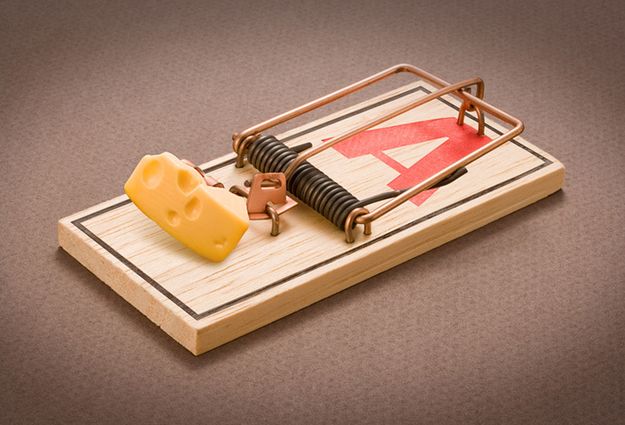
One mouse in the kitchen is a reason to act, not a reason to buy a cart full of pest-control products. Start by closing the route it used, put several snap traps along the active runways, and keep checking for fresh signs. For most homes, the Victor Power-Kill Mouse Trap is the sensible first purchase: its large bait cup and broad pedal make it less fussy to set than a bare wooden trap, and it can be reset after a catch. The compromise is that it is still an exposed snap trap, so it belongs only where children and pets cannot reach it.
If the hands-on cleanup is the part you dread, choose the Tomcat Press 'N Set. It is a lower-cost, disposable snap-trap option with a grab tab for no-touch disposal. For an enclosed indoor spot that you can check regularly, the Victor Electronic Mouse Trap M250S keeps the catch inside a chamber. It costs more and needs four AA batteries, so it is a convenience upgrade rather than the automatic answer.
A trap solves the mice already inside. It does not solve the gap around a pipe, the pet food left down overnight, or the open bag of birdseed in the garage. That is why this guide puts prevention and placement ahead of flashy trap features. Glue boards and live traps are deliberately absent from our recommendations: public-health guidance favors traditional snap traps and advises against glue and live traps.
Quick picks
- Best starting point: Victor Power-Kill Mouse Trap. A reusable plastic snap trap with a one-click set bar, large bait trough, and oversized trip pedal. Choose it if you want a straightforward trap that is easier to handle than the old wooden style. Check the Victor Power-Kill Mouse Trap on Amazon.
- Best low-fuss disposable option: Tomcat Press 'N Set Mouse Trap. A two-trap pack with a press-to-set mechanism and grab tab for disposal. It suits a small, accessible mouse problem when you would rather discard the trap after a catch than clean and reset one. Check the Tomcat Press 'N Set Mouse Trap on Amazon.
- Best enclosed electronic option: Victor Electronic Mouse Trap M250S. An indoor battery-powered trap with a removable kill chamber. It makes sense for a pantry, utility room, or another dry location where the device can sit on a flat surface against a wall. Check the Victor Electronic Mouse Trap M250S on Amazon.
Our pick: Victor Power-Kill Mouse Trap
The right everyday mouse trap is the one you can set correctly, place in numbers, and check daily. Victor's Power-Kill M142B is a plastic snap trap designed for mice. It has a large bait trough, an oversized trip pedal, and a kill bar that locks with one click. Those details matter because the frustrating part of a traditional spring trap is often not the mechanism itself; it is loading a tiny bait point, setting a tense wire arm, then trying to carry the armed trap into a tight space without setting it off.
The Power-Kill's bait cup gives peanut butter a defined place, and the wide pedal gives a mouse a reason to contact the trigger on its way to the bait. That does not make placement optional. Put the baited end against the wall so the trap makes a T with it, then use more than one trap where signs are concentrated. Mice tend to travel alongside walls, behind appliances, and through the sheltered edges of cabinets. One trap in the middle of an open room is a poor bet.
Choose the Power-Kill if you want something reusable and less fiddly than a classic wooden snap trap. It is also the better value when you need a small group of traps for a kitchen, basement, or garage instead of one single trap. The material is plastic and metal, so clean the mechanism only after you have handled the catch safely and follow the maker's directions if debris is preventing the pedal from moving freely. A trap that will not latch should be replaced, not forced into service.
There are two important limits. First, this is not a rat trap or a squirrel trap; buy a trap rated for the animal you are trying to control. Second, a snap trap can injure a curious child or pet. Use it only in a protected area they cannot access. In a household where that cannot be guaranteed, the first move is to remove food sources, seal openings, and ask a qualified pest professional about a safe site-specific plan.
See the Victor Power-Kill Mouse Trap on Amazon.
For a quick, disposable setup: Tomcat Press 'N Set
Tomcat's Press 'N Set is the pick for someone who wants a conventional snap trap without the usual close contact at either end of the job. The two-pack uses a spring-loaded mechanism, a bait well, a set bar that clicks into position, and a grab tab intended for disposal. The product is designed to be thrown away with the catch rather than washed and rearmed. That makes it useful for a short, contained problem under a sink, behind a refrigerator, or in a garage cabinet that can be closed off from pets and children.
Its advantage is simplicity, not magical performance. Put a pencil-eraser-sized amount of peanut butter in the bait well, then place the trap perpendicular to the wall with the bait facing the wall. The maker suggests spacing traps roughly five to ten feet apart in active areas; use the evidence in your home to decide where that means. Fresh droppings, gnawed packaging, smudge marks along a baseboard, and nesting material are more useful than guessing from the room where you first spotted a mouse.
The drawback is recurring waste. If you expect to keep a few traps in service during a seasonal mouse problem, a reusable Power-Kill is the more sensible buy. The Tomcat is also still a snap trap, not a childproof object. The reduced chance of pinched fingers while setting it is helpful, but it does not change where it may safely be placed.
Skip it if you need an enclosed chamber, are dealing with a larger animal, or need a trap that can sit outdoors in wet weather. Never treat a trap's plastic housing as permission to put it within reach of a pet. See the Tomcat Press 'N Set Mouse Trap on Amazon.
For enclosed indoor cleanup: Victor Electronic Mouse Trap M250S
The Victor M250S is for the person willing to pay more to avoid an exposed kill bar and to keep the catch inside a removable chamber. It is an indoor electronic trap that runs on four fresh AA batteries. The maker directs owners to bait the cup before inserting batteries, place the trap on a flat surface against a wall with the entrance nearest the wall, and keep it out of dust and debris. A brief green light and buzz indicate that the unit has armed; the light does not stay on continuously in order to conserve battery life.
This is a good fit for a dry pantry, enclosed utility room, or other indoor location where you can protect the device from children and animals and inspect it every day. The chamber is the useful part of the design: after a catch, you remove it and empty it into a bag rather than releasing a spring bar. It is not an excuse to skip protective gloves or the cleanup steps below. The electronic components also mean it cannot be used outdoors or where moisture is likely.
Buy this model for the enclosed handling and its tidy footprint, not because electronics make it a better strategy. It needs batteries, costs more than a snap-trap bundle, and must be kept dry. If you need a few traps across several rooms, several simple snap traps normally cover more active routes for the money. If you have just one known indoor runway and strongly prefer a contained catch, the M250S is the more comfortable option.
See the Victor Electronic Mouse Trap M250S on Amazon.
Pick the trap type before you compare brands
Most buyers do not need a specialty trap. They need a trap type that fits the location and the cleanup they are willing to do. Start with a snap trap. A spring-loaded snap trap is inexpensive, compact, and suitable for the wall edges that mice use. It works best when you deploy several at once and can make the area inaccessible to children and pets.
Choose an electronic trap when the catch needs to remain inside an enclosed unit and the location is dry, indoors, and checked regularly. The trade-offs are batteries, a higher purchase cost, and a smaller number of traps for the same budget. Electronic does not mean hands-off. A caught mouse must still be dealt with promptly, and a trap with depleted batteries is not a working trap.
We would not buy glue boards or live traps for a home mouse problem. Public-health guidance warns that these options can frighten rodents and cause urination, and recommends traditional snap traps instead. That is a strong enough practical reason to leave them out of this guide. Avoid poison as the casual next step, too. If a persistent infestation requires a bait station, use an EPA-registered product only as its label directs and keep it completely away from children and animals. A pest-control professional is the better next call when you cannot control access or cannot identify the source of activity.
Placement beats bait variety
Set traps where a mouse already feels safe moving: next to walls, behind a stove or refrigerator, inside the back of a cabinet, beneath a sink, near a utility-room penetration, or along an attic or basement edge. Use the trap's baited end against the wall, creating a T shape. In a narrow cabinet or passage, place the trap so the mouse meets the trigger as it follows the wall. Always read the particular product's instructions; the orientation of the entry or bait cup can differ.
Use a small amount of bait. A pea-sized dab of peanut butter is enough for many snap traps. Too much can let an animal lick at the bait without leaning into the trigger. Keep food preparation surfaces clear of traps, and do not touch baited surfaces with bare hands after handling rodent waste. If a trap has had no interest after two or three days, move it to a location with more recent evidence instead of endlessly changing bait flavors.
Check traps daily. That keeps a catch from sitting unseen and tells you whether the evidence is moving from one part of the home to another. Continue trapping until there are no fresh droppings, gnaw marks, or captures for at least a week. Activity that persists after a week of proper trapping is a clue to reassess the species, entry points, and coverage. Rats are more wary than house mice and require traps sized for rats; large amounts of droppings, chewed wiring, activity in inaccessible voids, or repeated catches all justify professional help.
Close the invitation: food, water, and entry points
Trapping without exclusion is a loop. Mice can pass through an opening about the width of a pencil, so inspect the unglamorous spots: behind the stove, around pipes under sinks, utility lines, dryer and floor vents, the foundation, crawl-space vents, door sweeps, attic openings, and the corner where a garage wall meets the slab. Small gaps can be packed with steel wool and held in place with caulk; larger openings need durable materials such as metal mesh, hardware cloth, cement, or metal sheeting. Match the repair to the opening and do not block a required vent.
Then remove the reasons for a mouse to stay. Put pantry food, birdseed, and animal feed in hard containers with tight lids. Wipe spills promptly, keep indoor garbage covered, and put pet food and water away after use. If you are reconsidering a feeding setup, our guide to dog bowls and slow feeders can help with the bowl itself, but the important mouse-control habit is not leaving food out overnight. Store garage supplies and pantry staples off the floor where practical, and keep compost, woodpiles, brush, and outdoor feed sources away from the house.
Regular crumbs are worth cleaning, but rodent waste needs a different approach. Do not sweep or vacuum dry droppings, urine, or nesting material before disinfecting them. A household handheld vacuum is useful for ordinary pantry debris after the affected area has been safely cleaned; it is not the first tool to reach for when you find signs of rodents.
Safe cleanup after a catch
Put on rubber or plastic gloves before touching a dead mouse, trap, nest, or droppings. Spray the mouse, the trap, and the surrounding area with disinfectant and let it remain wet for the product's stated contact time (public-health instructions commonly specify five minutes, or the label's direction). Put the mouse and any disposable trap into a plastic bag, seal it, place that bag inside a second bag, seal that one too, and discard it in a covered garbage container that is emptied regularly. Wash gloved hands before removing the gloves, then wash bare hands with soap and warm water.
For a reusable snap trap, disinfect it as directed before resetting it. Do not carry an uncovered trap across the kitchen to rinse it in a food-preparation sink. Let the trap dry fully before re-baiting it. For an electronic model, follow its specific cleaning instructions and keep water away from its electrical components.
A closed-up cabin, shed, garage, attic, or vacant home with substantial evidence calls for more caution. Ventilate the space before cleaning, avoid stirring up dry waste, and follow current public-health guidance for the level of infestation. Rodent evidence in heating and cooling ducts, extensive contaminated insulation, or a large recurring infestation is not a weekend cleanup project. Bring in a qualified pest professional and, when appropriate, consult local or state health guidance.
What we left out
Old-style wooden snap traps still work, and they are inexpensive. We did not make one our primary pick because many buyers find the wire setting mechanism awkward, especially when several traps need to be placed in tight locations. If you already set them confidently and can use them safely, there is no need to replace a working approach. The plastic picks above merely make baiting, carrying, and reset handling easier.
Smart traps sound attractive for an attic or vacation property, but a notification feature only helps if the product and its service remain supported, the Wi-Fi signal reaches the location, and somebody can respond to the alert. We prefer a simple trap that is checked on schedule to an app-dependent system for a basic home mouse problem. A camera does not seal a gap; several correctly placed traps and a repaired entry point do more.
How we researched this guide
We reviewed current manufacturer instructions and specifications for the recommended models, including their trap type, setting method, intended environment, battery requirements, and cleanup design. We also reviewed current public-health guidance for rodent exclusion, trap placement, safe handling, and cleanup. We did not conduct hands-on product testing, and we do not treat a manufacturer's performance language as proof that a trap will solve every infestation. The recommendations reflect the designs that make the day-to-day job clearer, plus the limits a buyer should know before ordering.
When to stop buying traps and call for help
Call a qualified pest-control professional when you have repeated activity despite sealing and trapping, signs in a wall, duct, crawl space, or another area you cannot safely reach, or evidence that the animal is not a house mouse. Seek help sooner if you have small children, pets, or wildlife exposure that makes safe placement unrealistic. The goal is not to leave more traps around forever. It is to remove the current mice, deny the next ones a route inside, and return the house to a routine that does not feed them.
Amazon links on SuperGrail may earn us a commission. That does not change the products we include or the trade-offs we explain.