For most dogs, a plain stainless-steel bowl that is easy to wash is the best answer. The Basis Pet stainless-steel bowl is our pick for that job. It is made in the United States from 304-series stainless steel, comes in four genuinely useful sizes, has a wide stable base, and can go in the dishwasher. It costs more than a thin grocery-store dish, and it does not have a rubber ring to stop sliding. Those are sensible trade-offs for a bowl with no bonded plastic or rubber parts to manage.
Dogs that push a bowl across the floor may be better served by the YETI Boomer 4 or Boomer 8. Its 18/8 stainless-steel body and fixed non-slip ring are durable and dishwasher safe, but the YETI price is hard to justify if a simple bowl already stays put. For a dog that gulps dry food, start with the shallow Outward Hound Fun Feeder Slo Bowl, choosing the maze depth and capacity that match the portion. For soft, wet, or spreadable food, the LickiMat Wobble creates a different kind of feeding task in a bowl-shaped form.
Pick for the food, the dog, and the cleanup routine. Avoid treating a bowl as a cure for a health problem. If fast eating, vomiting, choking, appetite changes, weight change, or a new feeding difficulty worries you, call your veterinarian instead of simply buying a more complicated dish.
Quick picks
- Best simple everyday bowl: Basis Pet stainless-steel dog bowl. Heavy 304 stainless steel in four sizes, with an open rim and rounded inner corners that are easy to wash. Check Basis Pet stainless-steel bowls on Amazon.
- Best non-slip premium bowl: YETI Boomer 4 or Boomer 8. Dishwasher-safe 18/8 stainless steel with a fixed BearFoot non-slip ring; choose four or eight cups based on the bowl's intended use. Check YETI Boomer dog bowls on Amazon.
- Best first slow feeder for kibble: Outward Hound Fun Feeder Slo Bowl. A non-slip, top-rack dishwasher-safe plastic maze offered in different capacities and challenge levels. Start with the shallow “Slow” design. Check the Outward Hound Fun Feeder on Amazon.
- Best for wet food and licking: LickiMat Wobble. A dishwasher-safe, bowl-shaped enrichment feeder for soft, wet, or liquid food and treats. Check the LickiMat Wobble on Amazon.
Our pick for ordinary meals: Basis Pet stainless-steel dog bowl
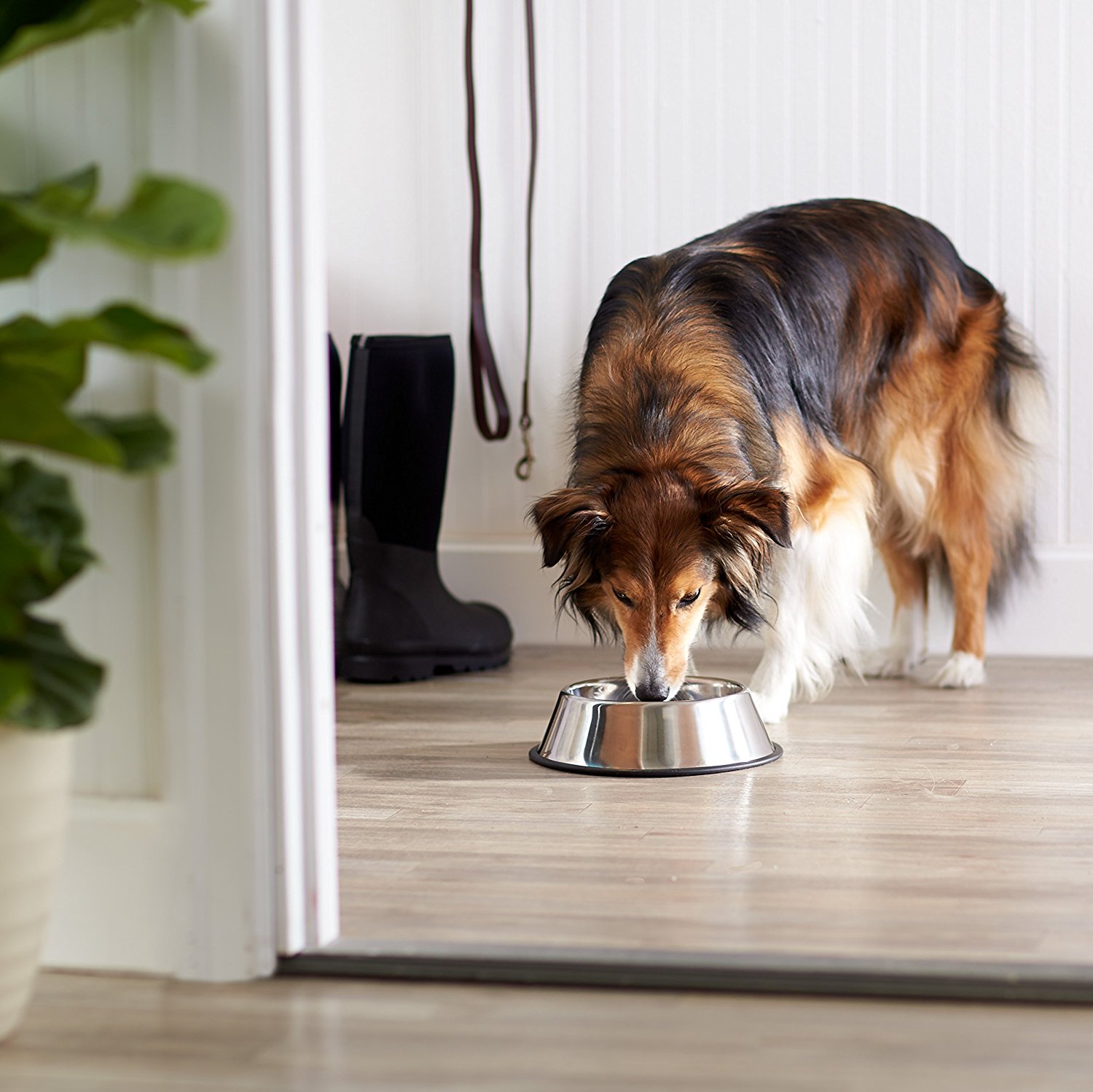
A dog bowl does not need a gadget to be good. It needs to fit the dog and the portion, sit securely enough for normal use, and be cleaned without drama. Basis Pet's stainless-steel bowls do that well. The company makes them from 304-series stainless steel in the United States, uses a flat bottom for stability, and leaves the upper rim open instead of folding it tightly around a hidden seam. The rounded inside corners are easier to reach with a sponge than a bowl with sharp, cramped angles.
The size range is unusually useful. The small bowl is intended for toy and miniature dogs and holds roughly a cup and a half with room; the medium has room for about three cups; the large about six; and the extra-large about twelve. Those are filling guidelines, not a feeding prescription. A small dog can need a wide bowl for comfort, and a large dog may need a shallow water dish in a travel crate. Look at the actual diameter and depth as well as the stated capacity.
Material is the core reason to choose this bowl. The bowl can be hand washed or run through the dishwasher, it has no decorative coating to chip, and it is sturdy enough that it does not flex like a thin, stamped dish. Basis Pet recommends daily cleaning and cleaning food bowls after each use where practical. That routine matters more than chasing a label with vague promises about “antibacterial” materials. Wash food and water bowls with mild dish soap, rinse them well, and let them dry between meals.
There are limits. This bowl has no rubber base, so a determined eater can nudge it on a smooth floor. Place it on a washable mat or use a non-slip bowl if that is your dog. Stainless steel is corrosion resistant, not invulnerable: do not scour it with steel wool, leave it in bleach solutions, or stack it wet against other metal. If your water is hard, a wipe after washing keeps spots from becoming an eyesore.
Choose Basis Pet for the dog who simply needs a well-made food or water bowl and for the owner who wants a dishwasher-friendly daily routine. Skip it if a non-slip base is essential or your dog needs a feeding system at a specific height because of veterinary advice. See Basis Pet stainless-steel dog bowls on Amazon.
For an active eater who slides bowls: YETI Boomer 4 or Boomer 8
The YETI Boomer bowl is a splurge for a simple problem: a dog that shoves a light dish around the floor. It uses 18/8 stainless steel and a BearFoot non-slip ring fixed around the base. The four-cup Boomer 4 holds 32 ounces; the Boomer 8 holds eight cups or 64 ounces. Both are dishwasher safe and have a five-year warranty from YETI.
The fixed ring is a practical feature, not just a styling choice. It helps the bowl stay where you placed it while a dog eats or drinks, which can reduce the daily chase across tile or hardwood. The stainless body is also rugged enough for a porch, RV, or travel setup where a ceramic bowl would be a poor fit. Choose the capacity with restraint. A larger bowl holds more water, but it also tempts people to leave old water standing for too long. Fresh water and a clean bowl matter more than maximum volume.
The downside is price. The Boomer is far more expensive than a basic stainless bowl, and the non-slip ring cannot be removed. That is not a defect; it simply means you should check that the whole bowl fits comfortably in your dishwasher and that you are happy with the cleanup design before paying the premium. It is also heavier than a light dish, which is an advantage on the floor and a minor inconvenience when packing a bag.
Buy the YETI if movement is the specific issue and you want a durable stainless bowl with a built-in grip. Skip it if your dog eats calmly from a regular bowl or you would rather put a less expensive stainless bowl on a washable feeding mat. See YETI Boomer dog bowls on Amazon.
For dry-food gulpers: Outward Hound Fun Feeder Slo Bowl
A slow feeder changes the mechanics of a meal. Instead of taking a mouthful from an open dish, a dog has to work kibble from around ridges or channels. That can make the meal take longer, and the American Veterinary Medical Association notes that a special bowl or food puzzle may help slow a pet's food consumption. It is a feeding-management tool, not a diagnosis or a treatment plan. If a dog is suddenly eating differently or frequently brings food back up, a veterinarian should be involved.
The Outward Hound Fun Feeder is the version to start with because it comes in multiple sizes and slow levels. The shallow “Slow” maze is a reasonable first step; a very deep, complicated maze can turn dinner into frustration for a dog with a short muzzle, limited tongue reach, dental discomfort, or no interest in puzzles. The brand lists small bowls at three-quarters of a cup, medium at two cups, and large at three to four cups. Measure the dog's normal portion instead of choosing by breed label alone.
The bowl has a non-slip base and is top-rack dishwasher safe. Outward Hound says its feeding products are food-grade plastic free of BPA, PVC, lead, and phthalates. Those are useful documented details, but they do not eliminate the need to inspect the bowl. Replace it if it gets chewed, cracked, or develops damage that cannot be cleaned thoroughly. Do not leave a slow feeder full of wet food for hours and assume the maze somehow makes it safe.
Introduce it gradually. Fill only part of a familiar meal the first time, watch how the dog uses the channels, and choose a simpler design if the dog is pawing, flipping, or giving up. Do not use a feeder to make a hungry dog “work” for every meal when it is clearly creating stress. A slow feeder is successful when the dog can calmly finish an appropriate portion and you can actually clean it afterward.
Choose the Fun Feeder for dry food and a dog whose normal open bowl encourages very rapid eating. Skip it if you feed mostly wet food, need a completely smooth surface for easy cleanup, or your dog cannot comfortably navigate maze ridges. See the Outward Hound Fun Feeder Slo Bowl on Amazon.
For soft food, purées, and deliberate licking: LickiMat Wobble
The LickiMat Wobble is not a conventional food bowl. It is a bowl-shaped feeder with a flexible, dimpled licking surface inside. That design suits wet food, softened kibble, plain dog-safe purées, and treats that can be spread thinly. The wobbling movement makes it different from a flat lick mat, while the bowl shape helps contain food that would slide off a mat.
It is a better choice than a dry-food maze for a dog that eats mostly canned food or for a small portion you want to spread over time. The brand says Wobbles are dishwasher safe, microwave safe, and freezer safe. Those properties are convenient, but the important operational detail is still cleanup: wash it after each use, especially after sticky food. Frozen food can turn an occasional enrichment session into a longer task, but it does not make an unsuitable ingredient appropriate.
Check every food before spreading it into the dimples. Never use a product containing xylitol, and do not improvise with heavily seasoned human leftovers. The exact portion, calorie plan, and safe ingredients should follow your dog's usual food plan or veterinarian's advice. Pick the Wobble up after the feeding session instead of treating it as an all-day chew object.
The compromise is that it is more work than a stainless bowl. It has texture to scrub, does not suit every dry-kibble meal, and some dogs may try to chew at a new feeder instead of licking it. Start under supervision. If the dog damages the product or cannot use it appropriately, remove it rather than assuming the product will teach the behavior away.
See the LickiMat Wobble on Amazon.
Choose bowl size, shape, and height with the dog in front of you
Start with the portion and muzzle, not a marketing breed chart. A small bowl filled to the rim makes a mess; an oversized, deep bowl can force a small dog to reach farther than necessary. For food, a bowl that holds the measured portion with room for stirring is usually right. For water, choose enough capacity for the time between refills, then refresh it often rather than relying on a huge reservoir.
Shape matters. Wide, shallow bowls work for a dog with a short muzzle and for food that needs mixing. Narrower bowls can reduce splash for water, though a deep rim may make it harder for a small dog to reach. An open rim and rounded interior make it easier for you to reach every surface with a sponge. For a long-eared dog, use a narrower water bowl or a dedicated water-bowl design if ears repeatedly fall in; do not assume a tall raised stand is the universal solution.
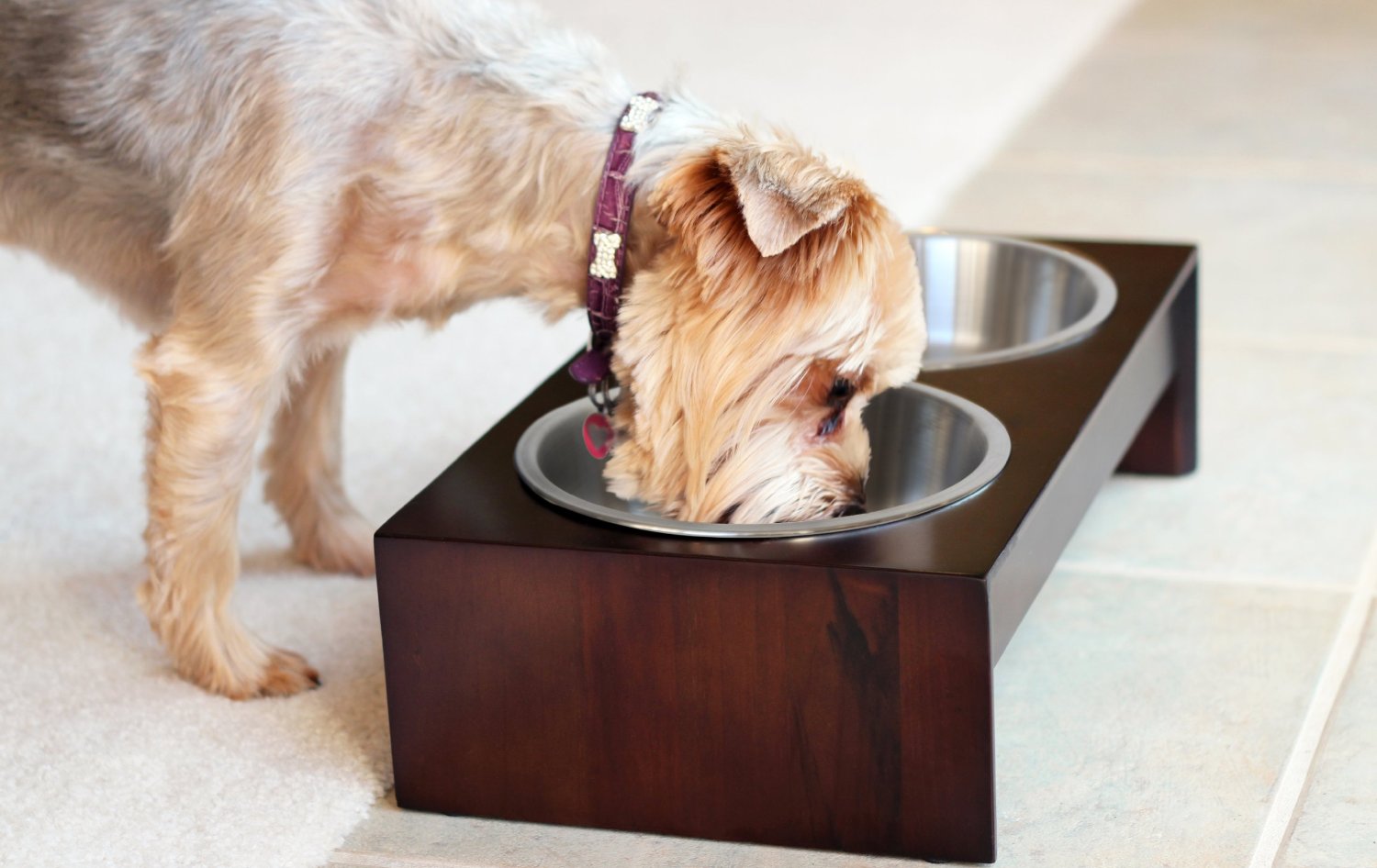
Raised feeding stations are a case-by-case decision. They can be useful for a dog with a particular mobility or comfort need, but height changes the dog's eating posture and a stand is not automatically an upgrade. Discuss a specific concern with a veterinarian. If you are comparing the hardware after that conversation, our guide to raised pet bowls explains the physical differences among common stand styles.
Keep bowls and the feeding area clean
Food and water bowls deserve regular washing. Empty leftover food promptly, wash the food bowl after meals when possible, and clean the water bowl often enough that it never develops a visible film or stale smell. Mild dish soap and warm water are usually sufficient. Rinse well. A dishwasher is handy for bowls the manufacturer rates as dishwasher safe, but do not let the dishwasher setting become a reason to postpone cleaning a sticky bowl for days.
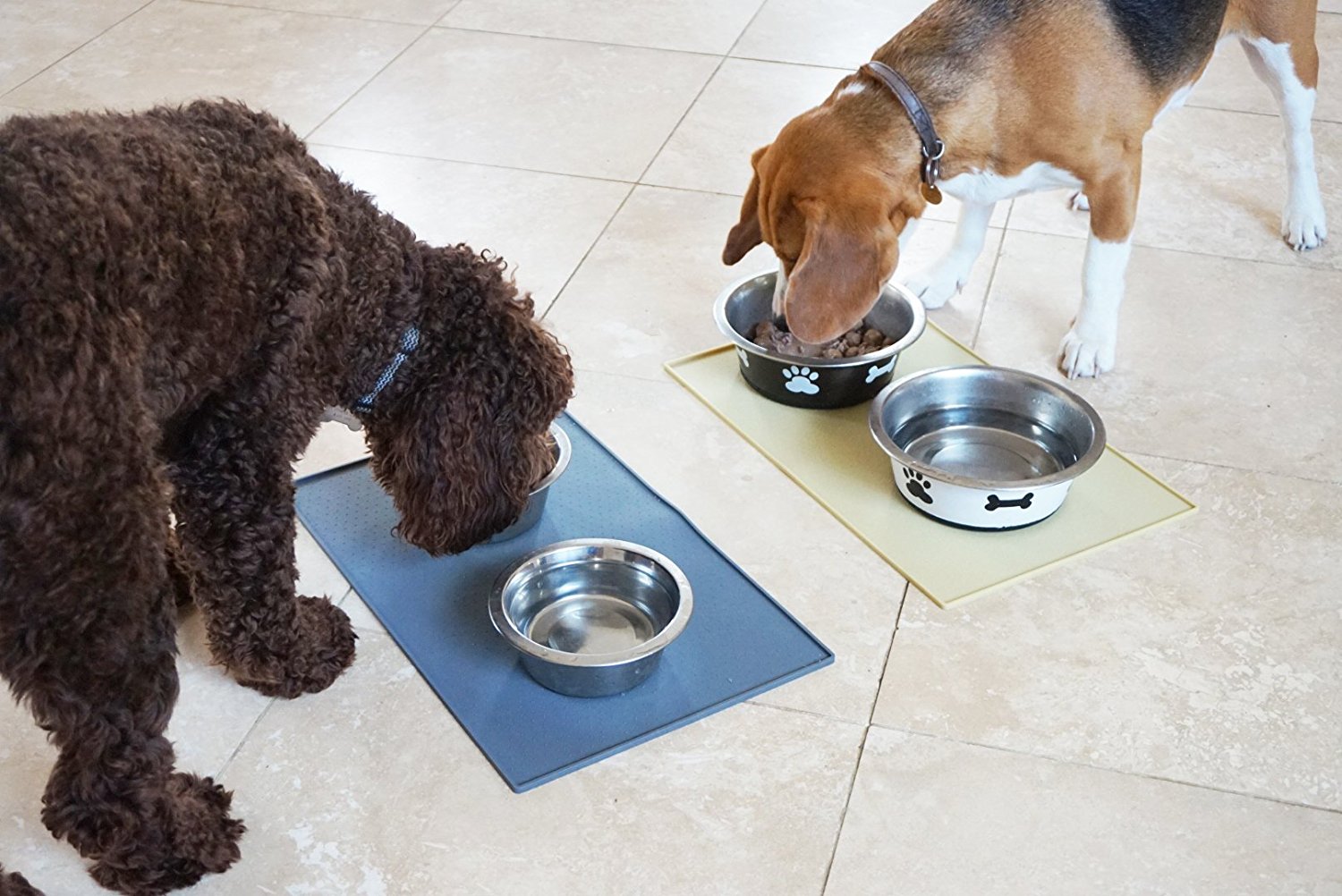
Plastic deserves closer inspection because scratches and bite marks are hard to scrub fully. Ceramic is easy to clean when its glaze is intact, but replace it if it chips or cracks. Stainless is durable, though it should not be treated with steel wool or chlorine-containing cleaners that can damage its surface. Keep the floor below the bowl dry, too. A feeding mat catches drips and crumbs, which makes daily cleanup faster and can keep water away from flooring.
For a separate look at containing spills and choosing a mat material, see our guide to pet feeding mats. A mat is a support for a good bowl, not an excuse to leave old kibble and water around it.
What we left out
We did not make ceramic our default bowl material. A well-made, intact ceramic bowl can be perfectly serviceable, and some dogs benefit from its weight. But stainless is lighter, less likely to break, easy to wash, and simple to replace when a bowl is damaged. Decorative ceramic also varies widely in glaze, weight, and cleaning advice, which makes it harder to recommend one universal choice.
We also did not recommend an elevated feeder as a default. A taller setup can look more polished and can help solve a particular placement issue, yet the right height depends on the dog and the reason for changing it. Do not buy a stand because a product page suggests every large dog needs one.
Automatic feeders have a role for a household that needs scheduled dry-food portions, but they add batteries, moving parts, cleaning chores, and a new point of failure. They are not a replacement for deciding how much and how often to feed. A simple bowl is usually the better starting point unless the schedule itself is the problem you are trying to solve.
Keep a spare basic bowl if your dog relies on a slow feeder or an enrichment bowl for a meal. It gives you a clean fallback while the primary feeder is in the dishwasher, and it means a cracked maze or damaged rubber surface does not turn into a reason to serve food in an unwashed dish. Replacement is straightforward: if a bowl's surface is chipped, deeply scratched, chewed, cracked, or impossible to clean, retire it. There is no prize for stretching the life of a damaged feeding tool.
How we researched this guide
We reviewed current manufacturer specifications for material, capacity, dishwasher guidance, non-slip construction, feeder type, and intended food use. We also reviewed current veterinary guidance on feeding management. We did not conduct hands-on testing and we do not claim that a bowl can prevent, diagnose, or treat a medical condition. The recommendations focus on the practical differences that change an owner's day: cleaning, stability, food type, portion fit, and the dog's ability to use the feeder comfortably.
Amazon links on SuperGrail may earn us a commission. That does not change the products we include or the trade-offs we explain.