A cooler earns its place in the garage when it fits the trip you actually take. For picnics, day games, and car camping where you will open the lid often, the Coleman Chiller 48-Quart is the sensible purchase: it is light enough to carry empty, tall enough for upright two-liter bottles, and costs far less than a rotomolded box. Choose the RTIC 45 QT Ultra-Tough if a cooler will spend several days outside or take a regular beating in a truck bed, boat, or campsite. Its insulation, gasket, latches, and rotomolded shell ask more of both your budget and your back. If the route from car to camp is long, the YETI Roadie 48 Wheeled solves a different problem: it rolls a large load, but its tall shape and price make it a specialized upgrade.
The capacity number on the label is only the start. A 45- to 52-quart hard cooler is a good middle size for two people on a weekend or a small group on a day out, but the same box becomes a two-person lift once food, bottles, and ice are inside. Ice retention claims also assume good ice, a pre-cooled cooler, a mostly closed lid, and a reasonable amount of ice. Treat them as a design comparison, not a promise that food can be ignored for a set number of days.
Quick picks
- For most day trips: Coleman Chiller 48-Quart. A light, straightforward hard cooler for drinks, groceries, games, and one-night camps. It has two-way handles, a drain, room for upright two-liter bottles, and a modest price. Check the Coleman Chiller 48-Quart on Amazon.
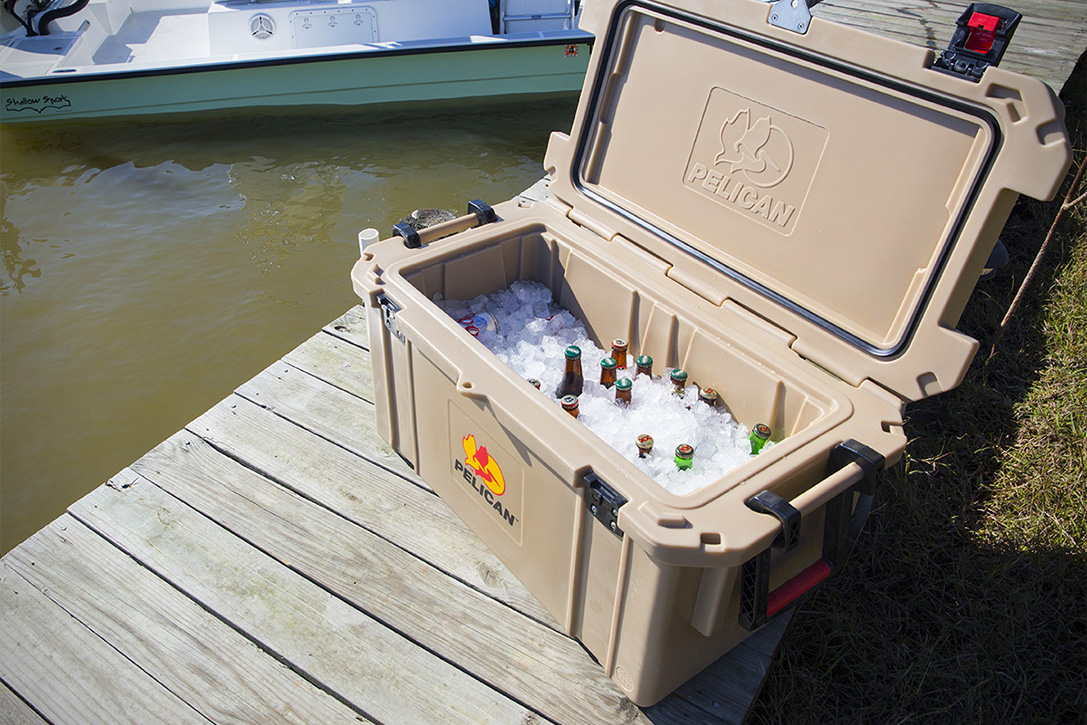
- For multi-day and rough use: RTIC 45 QT Ultra-Tough Cooler. A rotomolded option with a freezer-style gasket, secure T-latches, lock points, and a 60-can stated capacity. It is heavy before you add ice. Check the RTIC 45 QT Ultra-Tough on Amazon.
- For rolling a full cooler: YETI Roadie 48 Wheeled. The right splurge for paved paths, docks, and tailgates where lifting a loaded cooler is the limiting factor. Its wheels do not make it a sand cart. Check the YETI Roadie 48 on Amazon.
- For a premium fixed-location hard cooler: YETI Tundra 45. A durable, 24.6-pound rotomolded box with a dry-goods basket and a five-year warranty. Buy it for hard use and a long ownership horizon, not because every beach afternoon needs a premium cooler. Check the YETI Tundra 45 on Amazon.
Buy the Coleman Chiller 48-Quart for ordinary outings
The Coleman Chiller 48-Quart does most of the unglamorous jobs well. Coleman lists an 8.1-pound empty weight, 76-can capacity, two-way swing handles, a drain, and enough interior height for upright two-liter bottles. Those details are more useful than an ambitious ice-retention number when the plan is a cookout, a soccer tournament, a road trip, or a night at a campground with nearby ice. It is large enough to divide between drinks and food, yet it does not impose a premium-cooler penalty every time you move it.
It is also a better fit for people who will not manage a cooler like expedition equipment. With any cooler, warm cans and a sun-baked lid use up ice quickly. That matters more with a conventional model, so pack it cold, use block ice when you can, and keep the food section closed. The Chiller's value is that its limitations are honest: it is intended for cold drinks and food over a normal outing, not for leaving on a hot dock for days. If a trip calls for reliably holding ice through several nights without a resupply plan, start with the RTIC instead.
The light empty weight comes with a trade-off. The shell, lid, handles, and insulation are not meant to compete with the thick, rotomolded bodies of premium coolers. The Chiller is easy to recommend for a car-based trip because it is inexpensive, uncomplicated, and does not occupy much of the budget that could go toward food, fuel, or a good folding chair. It is not a bear-resistant food locker, a secure truck-bed box, or a cooler to use as a step stool all season.
Choose the RTIC 45 QT Ultra-Tough when cold retention and durability matter
RTIC's 45 QT Ultra-Tough Cooler is the pick for the person whose cooler gets used hard enough that latches, a gasket, and wall construction are part of the purchase decision. RTIC lists a rotomolded shell, up to 2.8 inches of closed-cell foam insulation, a freezer-style gasket, silicone T-latches, two lock holes, non-skid feet, and a dual-plug drain. It also lists capacity for 60 cans or 41 pounds of ice, with an empty weight of 29.5 pounds. The claimed five-day ice retention is conditional on RTIC's cooling guidance; it should not be read as a food-safety schedule.
That specification sheet explains the appeal. Thick insulation and a good lid seal reduce the rate at which a properly packed cooler warms, while latches make the seal more dependable after repeated opening. The lock points can be useful when a cooler is in an open vehicle, though a lock is only one part of securing gear. The drain arrangement is useful after a wet weekend, and the optional divider and dry-goods basket can make a packed cooler easier to live with. Those accessories are extra, so include them in the cost before deciding it is a bargain.
The compromise is not subtle. Twenty-nine and a half pounds is the starting weight. Add 25 to 40 pounds of ice, bottles, and food and one person may be able to lift it only awkwardly. Measure the cargo opening and floor area before buying. RTIC lists the exterior at 26.35 by 18.19 by 15.75 inches, so it is not a small box just because the name says 45 QT. Two people, one reasonably level path, and a car trunk are a good fit. Carrying it down a rocky beach or up several flights of stairs is not.
Choose this model if you make longer camping trips, fish from a boat, or need more protection from rough handling than a basic cooler provides. Skip it if most use is a few hours at the park. In that case, its extra weight and cost will not make lunch taste better. A travel mug or an insulated water bottle is often the more useful addition for an everyday commute.
The YETI Roadie 48 Wheeled is a transport upgrade, not a universal answer
The Roadie 48 earns its place when the hard part is moving a full cooler after it leaves the car. YETI lists it at 28.3 pounds empty, with capacity for 76 cans or 54 pounds of ice and one removable dry-goods basket. It uses a telescoping handle and wheels, plus a quick-release latch designed for one-handed opening. The tall interior can take most standard wine bottles and two-liter soda bottles upright, which is handy for a party, picnic, or a long day at the field.
Wheels change the handling calculation, but they do not erase it. Rolling a loaded cooler across pavement, a dock, compacted campground ground, or a firm trail is far easier than lifting it. Soft sand remains difficult; YETI itself notes that its wheeled coolers can have trouble rolling through it. The body is also tall, roughly 20 inches in two directions, so it can be harder to fit under a cargo cover or in a shallow trunk than a conventional chest. Check the opening height, not only the footprint.
There are two other limits to understand. Hard coolers are generally leak-resistant rather than completely leakproof because they need to relieve pressure when used with dry ice. Do not lay a loaded Roadie on its side in a car and expect zero water loss. Second, the wheels make it more useful on an accessible route, not more suitable for a remote campsite. If your cooler is carried over roots, stairs, or beach sand, a smaller two-hand cooler may be the easier object to manage.
This is a premium pick, so the purchase makes sense only when it removes a problem you regularly have. For tailgaters who haul ice, food, and bottles over asphalt, it can. For a two-person car campsite where the cooler moves once, the RTIC or Tundra offers similar hard-cooler usefulness for less complexity. For a casual picnic, the Coleman remains the practical choice.
The YETI Tundra 45 is a premium fixed-location cooler
The Tundra 45 is a classic rotomolded hard cooler: strong shell, thick insulation, rope-style handles, a gasketed lid, tie-down points, and a large drain. YETI lists a 24.6-pound empty weight, exterior dimensions of 25.6 by 15.9 by 15.5 inches, capacity for 54 cans or 37 pounds of ice, and a removable dry-goods basket. With suitable padlocks, it is approved by the Interagency Grizzly Bear Committee. YETI gives its hard coolers a five-year warranty.
These are ownership advantages more than day-one conveniences. The hard shell is reassuring for a truck bed, boat, hunting camp, or a garage where gear gets stacked on it. Tie-down points help keep a cooler from sliding. The dry basket keeps bread, fruit, or a sandwich above pooled meltwater. The empty weight is lighter than the RTIC 45, though a fully loaded Tundra is still a shared lift. It is best treated as a durable chest that lives near the vehicle or camp table rather than something to carry far by yourself.
It is not automatically the smartest pick for every buyer. The Tundra's price sits well above a basic Coleman and often above RTIC's comparable hard cooler. Its rope handles are tough but do not turn a 50-pound load into an easy carry. The classic chest shape is less convenient than the Roadie 48 for rolling across a parking lot. Buy it if its construction, warranty, tie-down features, and long-term use case matter to you. Do not buy it simply because a premium cooler is the familiar choice.
How to choose a cooler without getting distracted by the ice-retention claim
Start with the trip length and access to ice
For a few hours outside, a basic hard cooler works when you start with cold food and drinks and keep the lid shut. For an overnight trip, a 48- to 52-quart cooler gives a couple enough room to separate meal ingredients from drinks. Multi-day trips shift the decision toward thicker insulation, better latches, and a gasket, but they also require better packing. A cooler packed half full of warm air loses its advantage quickly. Buy ice at the destination if possible, use a mix of block and cubed ice, and keep food sealed so it does not sit in meltwater.
Capacity is not the same as usable food space
Can capacity is measured under an optimistic, product-only arrangement. A real trip includes bags of ice, produce, containers, and awkward items such as a bottle of dressing or a package of meat. Keep one cooler for food and another for drinks if the group will open the drink lid constantly. In a single-cooler setup, put the first meal on top, raw food in sealed containers low in the box, and a small dry basket above ice. A 45- to 52-quart cooler is sensible for a couple, but a group of four for a full weekend may need two coolers instead of one enormous chest.
Take empty weight seriously
A cooler is easiest to buy when it is empty in a store. It is hardest to use when it is full at the end of a hot day. Coleman’s 48-quart Chiller starts at about 8 pounds; the RTIC 45 starts at 29.5 pounds; the Roadie 48 starts at 28.3 pounds; the Tundra 45 starts at 24.6 pounds. Add ice and contents before you decide a large premium box will be a one-person item. Wheels are excellent on firm ground but useless on stairs. Rope handles and molded handles both work better with two people than one.
Match the shell to the abuse it will see
Conventional coolers are appropriate for normal car, backyard, and field use. Rotomolded coolers cost more because the body and insulation are built for repeated rougher use. That can be worthwhile for a boat, a truck bed, long camp trips, or frequent outdoor work. It is not a moral upgrade. A lighter cooler that gets carried, cleaned, and stored properly will serve many people better than a heavier model whose performance is never needed.
Do not confuse cold retention with food safety
Ice on top is not proof that every item below is at a safe temperature. Use a small appliance thermometer if the cooler will hold perishable food for more than a day, keep raw items sealed, drain water only when you need dry storage, and replenish ice before it is gone. Keep the cooler out of direct sun and avoid using it as the group’s open drink bin. A separate drink cooler is one of the least expensive ways to help the food cooler stay cold.
What we did not pick
Very large 70- to 100-quart chests can make sense for a big group, a multi-family camp, or a hunting trip, but they become punishingly heavy when filled. Buy two moderate coolers if different people need to carry them or if food and drinks need separate access. Small personal coolers are excellent for lunch, medicine, or a six-pack, but they are not substitutes for a 48-quart family box.
Soft coolers deserve a separate decision. They are easier to carry and often fit better in a compact car, but they usually have less capacity, can be more awkward to clean, and are not the right answer for several days of food. A wheeled cooler can help only on firm ground, and powered coolers are a different category entirely because they need a power source and temperature management. Do not pay for wheels, rotomolding, or extreme size until the trip has demonstrated a real need.
Set up and care for a cooler
Pre-chill the cooler the night before with inexpensive ice or frozen water bottles, then dump that ice before packing. Load already-cold food and drinks; a cooler is an insulator, not a fast refrigerator. Use a two-to-one ice-to-contents ratio by volume as a starting point for longer trips, then add more ice for hot weather or frequent opening. Block ice lasts longer than loose cubes, while cubes fill gaps around food. Keep a small towel handy for condensation and wipe the gasket area before storing the cooler.
After the trip, empty water, wash the interior with warm soapy water, rinse it, and let the lid stay open until it is dry. This is how you prevent the stale smell that makes a cooler unpleasant next season. Do not store it sealed in a hot garage. Check the drain cap, hinges, handles, and latches before a big trip, especially after the cooler has been in a vehicle or shed for months.
How we researched
We compared current manufacturer specifications for capacity, empty weight, dimensions, insulation design, latches, drainage, warranty coverage, and stated limitations. We looked for models that serve different trip types instead of declaring one cooler superior for everyone. Manufacturer ice-retention claims are treated as conditional performance information, not independent laboratory results. Prices, colors, and stock change often, so check the listing and measure the space in your vehicle before ordering.
Cooler questions answered
What size cooler is right for two people?
A 40- to 55-quart hard cooler is a useful range for two people on an overnight or weekend car-camping trip. It has enough room for ice and simple meals, but it can still fit in most trunks and be carried by two people. If one person must carry it, move down a size or choose a wheeled model for firm surfaces.
Are rotomolded coolers worth the extra money?
They are worth it when a cooler routinely holds food for several days, rides in a boat or truck bed, or gets used hard enough that a gasket, strong latches, thick insulation, and a tough shell matter. They are poor value for a few hours at the park. Spend based on the longest regular trip, not the most ambitious trip you might take once.
How can I make ice last longer in a cooler?
Pre-cool the cooler, put only chilled items inside, use plenty of ice, keep it shaded, and open it as little as possible. Separating drinks from food helps because people tend to open a drink cooler much more often. A thermometer is the better tool for judging perishable food than looking at how much ice remains.
Should I get wheels on a cooler?
Get wheels when you regularly move a full cooler across pavement, docks, compacted ground, or long parking lots. Skip them for soft sand, stairs, rocky trails, or a cooler that moves only from car to campsite. Wheels add height, cost, and parts without helping on every route.