A coffee grinder is the purchase that decides whether good beans turn into good coffee or a daily argument with your brew method. The useful question is not “Which grinder has the most settings?” It is whether the grinder produces a repeatable grind for the way you make coffee, fits the amount you brew, and is simple enough that you will actually adjust it when a bag of beans changes.
For most households making drip coffee, pour-over, French press, and occasional cold brew, we recommend the Fellow Opus 2 Conical Burr Grinder. Its stepless adjustment, 48-mm conical burrs, and single-dose workflow cover a wide range without asking you to become a grinder technician. If espresso is a serious part of the routine, choose the Baratza Encore ESP, which is built around a dedicated fine adjustment range. If you want a capable, portable manual grinder for filter coffee and travel, get the Timemore Chestnut C3.
All three use burrs. That is the first meaningful dividing line. Burr grinders cut beans into more even particles than a spinning blade grinder, which makes extraction easier to control. From there, choose based on your coffee, not the colour of the machine.
Our picks at a glance
- Best coffee grinder for most people: Fellow Opus 2 Conical Burr Grinder. A single-dose electric grinder with 48-mm conical burrs, stepless adjustment, low-retention design, and separate catch cups for brewed coffee and espresso.
- Best entry point for espresso and brewed coffee: Baratza Encore ESP. A 40-mm conical-burr grinder with an espresso-oriented fine range, a 300-g hopper, and tool-free burr access.
- Best manual grinder for travel and small brews: Timemore Chestnut C3. A compact hand grinder with 38-mm steel burrs and a 20- or 30-g catch-cup option.
- Best if you only make brewed coffee and value clarity: an electric brew-focused flat-burr grinder can be worthwhile, but skip it if espresso is on your agenda. A grinder that does not go fine enough cannot become an espresso grinder through optimism.
Best coffee grinder for most people: Fellow Opus 2
The Fellow Opus 2 Conical Burr Grinder is the best starting point for a household that switches between common brew methods. It uses 48-mm conical burrs, a smooth stepless side dial, a single-dose bean bin that holds up to 100 grams, and an internal impeller designed to reduce retained grounds. It includes a standard catch cup, an espresso dosing cup compatible with 54- and 58-mm portafilters, and a magnetic cleaning brush.
The practical benefit is range without a complicated routine. You can grind for a drip brewer on Tuesday, pour-over on Wednesday, and cold brew at the weekend without treating every change as a major recalibration project. Fellow says the Opus 2 is designed for espresso through cold brew, but that does not mean you will find one perfect setting printed on the box. Espresso still requires small adjustments as coffee ages, humidity shifts, and the dose changes. The point is that the grinder gives you the control to make those adjustments.
Single dosing also suits people who buy a variety of coffees. You weigh the beans for the brew you are making, pour them in, grind, and move on. There is no hopper full of beans going stale while you decide whether you feel like decaf. It is a cleaner workflow for modest home use, though a large hopper may still be more convenient for a family that makes the same pot every morning.
Choose Opus 2 when versatility is your real need. Skip it if you make only big drip batches and want the simplest timed hopper machine, or if you want a specialised high-end espresso workflow. It is the balanced middle: enough precision to grow with your coffee habit without asking you to reorganise the kitchen around it.
Best entry point for espresso and brewed coffee: Baratza Encore ESP
The Baratza Encore ESP is the right choice when espresso is not an occasional experiment but a regular part of breakfast. It uses 40-mm M2 conical steel burrs, has a 300-g hopper, and separates its fine espresso adjustment range from its coarser brewed-coffee settings. Baratza includes a 58-mm portafilter adapter, and the grinder’s burr has quick-release access for cleaning.
Espresso needs finer adjustments than drip coffee because small changes in grind size can alter the shot time and flow noticeably. The Encore ESP’s purpose is to make those small changes more usable without eliminating the ability to grind coarse for a French press or cold brew. It is not an automatic espresso machine. You still need to weigh the dose, time or measure the shot, and adjust based on the taste in the cup. But it gives you a sensible adjustment path instead of leaving you between two unsuitable clicks.
The hopper is a good fit for a stable routine: one or two people using the same beans for a week, perhaps with a timed or manual morning workflow. It is less ideal for someone who constantly rotates coffees or uses decaf at night. Baratza offers a compatible single-dose hopper separately, but buy the grinder for the workflow you actually want today rather than accessories you might buy later.
Choose the Encore ESP if espresso matters, you appreciate approachable service and burr access, and you still need a grinder for brewed coffee. Choose the Fellow if you want a single-dose all-rounder with a stepless dial. Choose a plain Encore or a filter-focused grinder if espresso is nowhere in your future; there is no prize for paying for precision you will never use.
Best manual grinder for travel and small brews: Timemore Chestnut C3
The Timemore Chestnut C3 is the manual grinder to buy when you want fresh coffee away from an outlet or you make one or two cups at a time. The C3 line uses 38-mm stainless-steel burrs, an all-metal body, and a click-based adjustment dial. Standard versions include a 20-g catch cup, while larger versions reach about 30 grams; an espresso-dial version offers finer click spacing for people who need it.
The appeal is simple: it is compact, quiet apart from the hand-cranking, and avoids the counter space, cable, and static of an electric machine. It makes sense with an AeroPress, a pour-over cone, a compact French press, or a travel kit. It also forces a useful habit—measuring beans by the brew rather than filling a hopper with an unplanned amount.
The limitation is effort. Grinding enough coffee for a large drip pot with a hand grinder takes time and can become tedious. Standard click spacing is fine for many brewed methods, but a serious espresso setup is less forgiving. If espresso is your daily drink, choose an electric grinder designed for it or the C3’s espresso-oriented dial only when you understand the manual workflow you are signing up for.
Use it as a purposeful small-batch grinder, not a cheap substitute for a household electric appliance. In the right role, it is more pleasant than an entry-level blade grinder and far more portable than a countertop burr grinder.
Why burrs matter more than a long settings list
A blade grinder chops beans through repeated impacts. You can pulse it more or less, but the result contains a wide mix of fine dust and large chunks. When those uneven particles brew together, the small pieces can over-extract while the large pieces under-extract. The coffee becomes harder to dial in because every change affects a messy blend of particle sizes.
Burr grinders crush beans between two surfaces set at a controlled distance. Conical burrs use a cone inside a ring; flat burrs use two parallel rings. Both can make excellent coffee. The important thing is consistency, adjustment range, and how the grinder fits your brew method. Flat burrs are common in brew-focused grinders and can emphasise a clearer cup; conical burrs are versatile and common across affordable all-purpose and espresso-capable machines. Do not buy based on burr geometry alone.
A grinder with 100 marked settings is not automatically more useful than one with 40. The question is whether the steps—or stepless adjustment—are close enough in the range you use. Espresso benefits from fine control. French press and cold brew are more forgiving. A good grinder gives you enough meaningful movement where you need it, rather than a decorative number printed around a dial.
Match the grinder to your brew method
- Drip coffee: a consistent medium grind is the priority. Almost any good burr grinder can handle this, so value ease of dosing and cleaning.
- Pour-over: adjustment and consistency become more noticeable. A single-dose workflow is useful when you change coffees often.
- French press and cold brew: start coarse. Capacity matters if you make big batches; a manual grinder is better for a couple of cups than a family-sized batch.
- Espresso: buy a grinder made to adjust finely in the espresso range. This is the method that punishes vague adjustment most quickly.
One grinder can cover several methods, but changing methods means changing settings and clearing out some retained grounds. Write down a setting that works for each coffee and brew method. A note that says “Ethiopia, pour-over, 4.2” is more valuable than guessing from scratch every weekend.
Single dosing versus a bean hopper
Single dosing means weighing the exact beans for one brew and grinding them immediately. It is tidy for people who use multiple coffees, make decaf sometimes, or enjoy experimenting. It also makes it easy to see when the grinder has delivered the full dose. The Fellow Opus 2 is designed around this approach.
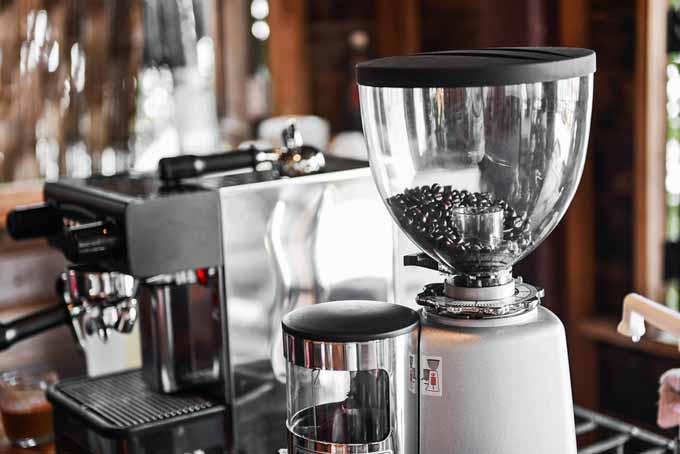
A hopper stores a supply of beans above the burrs. It is convenient for the same morning routine: scoop or press a button, then brew. The Encore ESP’s 300-g hopper is useful here. The trade-off is that beans are exposed to air in the hopper and changing to a different coffee takes more effort. Neither workflow is objectively superior. Buy the one that has the fewest annoying steps on a weekday.
How to adjust a grinder without losing the plot
Start with the manufacturer’s brew-method guide or a saved setting from a trusted recipe. Brew one cup, then taste it once it has cooled enough to evaluate. If it tastes sour, thin, or weak, you may need a finer grind, more coffee, or a different brew time. If it tastes harsh, bitter, or dry, you may need a coarser grind, less coffee, or a shorter brew. Taste is not a diagnostic machine, so change one thing at a time.
For espresso, use shot time and yield as part of the feedback. For pour-over, use the drawdown and cup taste. For cold brew, make smaller adjustments across batches because the steep time makes each test slow. Our cold-brew guide explains how to keep grind, ratio, and time from changing all at once.
Keep the beans fresh, but do not obsess over perfect numbers. A simple repeatable routine beats a technically perfect setting that is too irritating to recreate.
Capacity, retention, static, and cleaning
Capacity is about the amount you grind at once, not only the size of a hopper. A 20-g manual-grinder catch cup is enough for a single large pour-over but not a big cold-brew batch. A 100-g single-dose bin is ample for most home brewing, while a 300-g hopper works for several days of the same coffee. Choose the amount that fits your normal week.
Retention is the small amount of coffee left in the grinder after a dose. It matters most when you switch beans or brew methods, because old grounds can land in the next cup. Low-retention design helps, but no ordinary grinder is a perfectly empty pipe. A tap, a bellows accessory where supported, or a small purge can be part of the workflow. Avoid turning this into a ritual unless it noticeably improves your coffee.
Clean the burr chamber and grounds path regularly with a brush. Do not wash steel burrs under water unless the manufacturer explicitly instructs you to do so. Coffee oils and stale fragments can affect flavour over time, but aggressive cleaning can misalign or damage parts. Follow the manual, take a photo before removing components, and return the adjustment collar carefully.
A five-minute grinder buying check
Before ordering, answer five unglamorous questions. What do you brew most days? How many grams of coffee do you grind at once? Will espresso be part of the routine within a year? Do you switch between regular and decaf? And where will the grinder sit when you clean it? Those answers usually decide the category faster than a long feature list.
A hopper makes sense for a fixed morning drip routine. A single-dose grinder makes sense for variety. A hand grinder makes sense for one or two cups and travel. Espresso requires real fine adjustment. If the chosen grinder fails one of those simple tests, buy the option that matches the routine instead of hoping an accessory or a new habit will repair the mismatch.
What we would avoid
- A blade grinder as the centre of a coffee hobby. It can work in a pinch, but uneven particles make every brew method harder to improve.
- An espresso grinder chosen solely for a large hopper. Fine adjustment and repeatable dosing matter more for espresso than a giant bean supply.
- A manual grinder for a large cold-brew habit. It is excellent for a small brew and laborious for a family-size batch.
- Changing grind, coffee amount, and brew time together. You will not know what made the cup better or worse.
- Ignoring cleaning until the grinder smells stale. A quick regular brush is easier than a major teardown later.
How we chose
We prioritised burr consistency, useful adjustment range, real-world workflow, capacity, cleaning access, and the type of coffee each grinder is designed to support. The Fellow Opus 2 is the flexible choice for varied home brewing. The Baratza Encore ESP is the more espresso-conscious recommendation with an approachable hopper workflow. The Timemore C3 is the small-batch manual option for travel and one- or two-cup brewing.
We update this guide when a grinder’s construction, availability, or compatibility changes. Prices change more frequently than the underlying decision, so use the Amazon links as current availability checks rather than fixed price references.
Coffee grinder questions, answered
Do I need a burr grinder?
If you want repeatable coffee and the ability to improve a recipe, yes. Burr grinders give you more even particles and more useful control than blade grinders.
Can one grinder do espresso and drip coffee?
Yes, but choose one with fine enough adjustment for espresso. A grinder that is excellent for drip coffee may not offer the small changes espresso requires.
Should I leave beans in the hopper?
It is convenient when you use the same beans every day. Single dosing is better if you rotate coffees, use decaf, or want to measure each brew. Pick the workflow that you will sustain.
How often should I clean a coffee grinder?
Brush out loose grounds regularly and clean more deeply when retention builds up, you change coffee, or the grinder starts to smell stale. Follow the manufacturer’s instructions for burr removal and cleaning.
What grind should I use for cold brew?
Start coarse and adjust gradually. A consistent coarse grind filters more easily and usually produces a cleaner cold-brew batch. See our cold-brew guide for the rest of the recipe variables.