A good pour-over setup is smaller than most coffee shopping lists suggest. You need coffee ground consistently, a dripper and filter that you can use the same way every morning, a way to add water with control, and a scale if you want repeatable results. The Hario V60 Plastic Dripper 02 is the right first brewer for most people. It is inexpensive, light, makes one to four cups, and its paper filters are easy to understand. Spend the extra money on a capable grinder before buying a ceramic brewer or a designer server.
For the grinder, the Baratza Encore ESP is a durable all-purpose step up for someone who wants to make pour-over now and retain the option of espresso later. Its 40 mm conical steel burrs, 300 g hopper, and 120 g grounds bin give it the capacity and adjustability of a real countertop grinder. The OXO Adjustable Temperature Pour-Over Kettle is the useful upgrade for a person who already enjoys the ritual; controlled flow and a chosen water temperature make it easier to repeat a recipe. A scale such as the Acaia Pearl is the precision option, though a less expensive 0.1 g scale is sufficient for a new brewer.
Quick picks
| Pick | Who it suits | What it gives up |
|---|---|---|
| Hario V60 Plastic 02 | Most first-time pour-over brewers | It rewards a little attention to grind and pour technique |
| Baratza Encore ESP | People ready to improve their grinder and keep options open | More counter space and cost than a simple hand grinder |
| OXO Adjustable Temperature Kettle | Brewers who want repeatable water delivery and temperature control | It is an upgrade, not a substitute for fresh coffee and a sound grinder |
| Acaia Pearl | People who value a responsive, rechargeable precision scale | A basic scale can perform the essential job for less |
Start with the Hario V60 Plastic 02
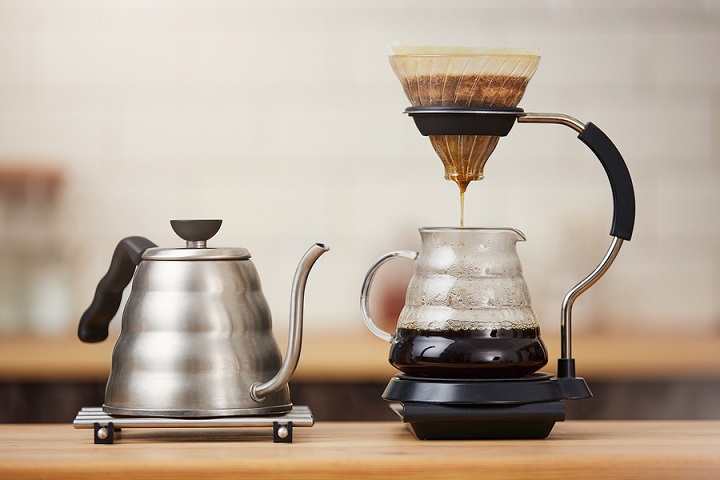
Hario’s V60 Plastic Dripper 02 is the most practical entry point because it makes the process visible. The conical shape, spiral ribs, and open bottom let you control the brew with grind size and pouring speed. Hario says the 02 size has a one-to-four-cup capacity. That gives it enough range for a large single mug or a small shared pot without making the setup bulky.
Choose plastic intentionally. It is light, durable, and less fragile around a morning kitchen than glass or ceramic. The material is also forgiving of a casual setup: you do not need a preheated heavy ceramic cone to begin brewing. A more expensive dripper is not inherently more precise. What makes the V60 valuable is its familiar filter format and broad recipe ecosystem, not an illusion that a different material automatically creates better coffee.
The V60 does ask you to participate. Because water can flow quickly through the open bottom, a very coarse grind can taste thin and a very fine grind can stall or taste harsh. That sensitivity is the reason some people love it and others abandon it. Do not treat it as a flaw. Use the same dose, water amount, and rough pouring pattern for several brews, then change one variable. A grinder adjustment is easier to evaluate when every other part of the process stays put.
Buy the 02 size unless you know you only make one compact cup. The 01 is smaller, while the 02 leaves room for a normal morning dose and a carafe. Make sure your filters match the dripper size. Find V60 02 paper filters on Amazon, and rinse one with hot water before brewing. Rinsing warms the vessel and helps remove paper taste; it also settles the filter against the dripper so water does not find an easy path around the coffee.
The grinder changes the cup more than the dripper does
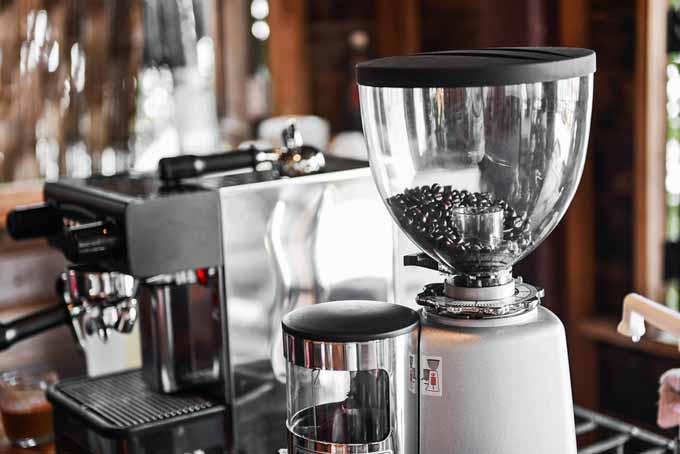
The Baratza Encore ESP is the capable long-term grinder in this guide. Baratza specifies 40 mm M2 conical steel burrs, a 300 g bean hopper, a 120 g grounds bin, and a quick-release burr arrangement. It is designed with espresso in mind as well as other brew methods, which means it can be more grinder than a pour-over-only household requires. But it is a defensible purchase for someone who values support, repairability, and the possibility of changing brewing methods.
For pour-over, consistency matters more than a huge number of adjustment markings. A grinder that produces fewer very fine particles and fewer oversized chunks gives water a more predictable path through the coffee bed. That makes flavor easier to tune. Start at a medium setting appropriate for your brewer. If a drawdown finishes unusually fast and the coffee tastes weak or sour, move a little finer. If it finishes slowly and tastes dry or bitter, move a little coarser. Change one small step at a time.
The Encore ESP has a 70 W motor and a stated grinding range of roughly 1.3 to 2.2 grams per second across listed settings. Those are useful context numbers, not a brew recipe. Coffee density, roast level, humidity, and how full the hopper is will still influence what you see. Its one-year manufacturer warranty is another practical detail: a grinder has moving parts, and support matters more than a fashionable body shape.
Do not feel forced to buy this grinder to make good pour-over coffee. A hand grinder with stable burrs can be a better value for one or two cups at a time, and it takes no counter space. The cost is effort. An inexpensive blade grinder is a poor substitute because it chops coffee into an uneven mix. If the budget allows one meaningful upgrade, put it into the grinder before buying a premium kettle or scale. Our coffee-grinder guide goes deeper on that choice.
Add an adjustable kettle when control becomes enjoyable
An OXO adjustable-temperature pour-over kettle is the upgrade that makes a recipe easier to repeat. Its purpose is not to make water more special. It gives you a controlled, narrow stream and lets you select a temperature instead of guessing after a full boil. Those two things help when you are trying to change a grinder setting or coffee dose and want the rest of the process to stay stable.
A gooseneck spout slows the water down. That makes it easier to wet the grounds evenly at the beginning and to add water in small circles without splashing the paper. It does not require a theatrical pouring pattern. A calm, consistent pour is enough. The objective is to avoid leaving dry pockets of coffee or blasting a channel through the bed.
Temperature control is useful because coffee, roast level, and preference differ. Start with water just off the boil for many light and medium roasts, then adjust only when the cup tells you to. A lower temperature can be worth trying for a dark roast that tastes rough at higher heat. Do not overstate the degree-by-degree difference: grind, dose, water amount, and freshness tend to create larger changes. The kettle is a control tool, not a correction for stale beans.
If you already own a kettle that pours steadily, keep using it. A thermometer and patience can get a beginner close enough to learn the fundamentals. The OXO is for the brewer who wants a dependable daily workflow and sees value in setting the same variable each time. It does use counter space and electricity, and it will not make a rushed recipe suddenly consistent.
Acaia Pearl is a luxury scale with real precision benefits
The Acaia Pearl is a refined coffee scale for the person who enjoys timing and weighing every pour. Acaia lists 0.1 g readability and repeatability, a 2,000 g maximum capacity, a rechargeable lithium-ion battery, Bluetooth connectivity, a heat-resistant pad, and USB-C charging for the 2021 Pearl. Those are strong usability details. The display is responsive, the scale is wide enough for a server, and the platform is designed for hot brewing equipment.
A basic 0.1 g kitchen scale can still make excellent pour-over coffee. It will let you weigh coffee, tare the brewer, track water, and use a timer. That is the essential job. Choose the Pearl when you care about a polished display, rechargeable power, consistent responsiveness, and its extra modes and connectivity. Do not buy it because you believe an expensive scale will identify the perfect recipe. It records the process; you still have to taste the cup.
For a first recipe, weigh both coffee and water. A common starting ratio is about 1 part coffee to 16 parts water, such as 20 g coffee and 320 g water. Treat that as a starting point, not a rule. Make several cups with the same ratio before changing it. If the cup feels too concentrated, use a little more water or a little less coffee. If it feels weak, reverse that. A scale makes such changes legible.
Filters, water, and coffee matter more than accessories
Use filters made for the brewer you own, and keep a spare pack before the current one runs out. Paper filters trap more oils and fines than metal filters, usually giving a cleaner cup and less sediment. Metal filters let more oils through and can taste fuller, but they require cleaning and do not replace the paper-filter experience. There is no universal winner. Choose paper if you want a clear, repeatable first setup.
Water deserves some attention. Extremely hard or heavily chlorinated water can make coffee taste flat or harsh. You do not need a laboratory water recipe to begin; clean-tasting filtered water is a good practical default. Avoid distilled water as a universal solution because water chemistry is part of extraction. If your tap water tastes good enough to drink, it is reasonable to start there and change only if the coffee repeatedly tastes off.
Buy coffee in a size you will finish while it still tastes lively, and grind shortly before brewing. Fresh coffee cannot solve a poor recipe, but old coffee makes every adjustment less informative. Store beans in a cool, dry, closed container away from direct sun. Do not fill a large hopper with weeks of coffee just because the grinder holds it. If pour-over is not the weekday routine you want, our budget coffee-maker guide covers more automated options.
A simple repeatable method
Start with a clean V60, rinsed filter, and server on a scale. Add 20 g of medium-fine coffee and tare the scale. Pour enough water to wet all the grounds, around twice the coffee weight, then wait about 30 to 45 seconds. This bloom gives trapped gas a chance to leave and helps water contact the coffee evenly.
Continue pouring slowly until you reach 320 g total water. You can divide that into two or three calm pours; the exact number matters less than doing it consistently. Let the brewer finish. If it tastes sour or weak, make the next brew slightly finer. If it tastes harsh, dry, or drags on too long, make it slightly coarser. Record the change in a notebook rather than relying on memory. A small written adjustment is more valuable than five simultaneous tweaks.
Do not stir aggressively unless a recipe calls for it. Some agitation can help even extraction, but too much can send fine particles down and slow the drawdown. Keep the first few brews boring. Once you can make a cup you like, experiment with temperature, pour patterns, or a different coffee. This is how the V60 becomes flexible instead of fussy.
What to skip at first
Skip a large station, a premium server, and several dripper geometries at the start. They may be pleasing objects, but they create more variables and consume counter space. A plastic V60, filters, scale, grinder, and kettle are enough. The V60 Drip-Assist can be a helpful later accessory because it disperses water through different-size holes, but it is not required to learn an ordinary pour.
Skip specialty water chemistry kits until you can identify a persistent problem with the water you already use. Skip a scale that reads only whole grams if the price difference to a 0.1 g scale is small. And skip buying a grinder only for espresso if pour-over is the actual daily habit. Equipment should make the routine easier, not turn one cup into a collection project.
When a hand grinder is the smarter purchase
A hand grinder is a strong choice for one or two cups a day, a small kitchen, or travel. It usually costs less than a capable electric grinder and lets you dose only the beans you need. The price is time and effort: grinding a light roast can take a few minutes, and that work becomes less appealing when you are serving several people. Choose a hand grinder for its compactness and simple single-dose routine, not because it is automatically more precise. A good burr set matters in either format.
Care and setup notes
Rinse the V60 after every brew and wash it with mild soap as needed. Replace a stained or torn filter holder only if it affects function; plastic coffee gear need not look pristine to work. Wipe grinder grounds from the chute and bin, and follow the manufacturer’s instructions before removing burrs. Do not put water into an electric grinder hopper. Descale the kettle according to its instructions if mineral buildup appears.
Keep one bag of filters, a scale charged, and the grinder setting written down for your current coffee. Those three habits prevent most weekday frustration. When you open a new coffee, expect to adjust the grind slightly. Different beans have different densities and roast levels, so a number that works for one bag is a starting point for the next.
How we researched
We compared current manufacturer specifications for the V60’s size and format, the Encore ESP’s burrs, hopper, capacity, speed, and warranty, the Pearl’s scale resolution and power system, and pour-over kettle controls. We selected gear with separate roles and did not claim hands-on testing. The guide favors repeatable fundamentals over claims that any one accessory creates a better cup by itself.
Pour-over questions, answered
Do I need a gooseneck kettle?
No. It makes controlled pouring easier, but a steady ordinary kettle is enough to learn. Add a gooseneck when repeatability and flow control matter to you.
What is the first upgrade I should make?
For most people, a burr grinder. Grind consistency changes the brew more than a more expensive dripper or server.
Do I need a coffee scale?
A scale makes recipes repeatable and is strongly worthwhile. A simple 0.1 g scale is enough; premium scales add speed, durability, and workflow features.
Why does my V60 coffee taste sour or bitter?
Sour, weak coffee often needs a slightly finer grind or more complete extraction. Bitter, dry coffee often needs a slightly coarser grind or less extraction. Change one small variable at a time.
Affiliate note: SuperGrail may earn a commission when you buy through an Amazon link. That does not affect the products we recommend or the trade-offs we explain.