An affordable coffee maker should make the kind of coffee you actually drink without creating a more expensive routine. That rules out a surprising amount of cheap gear. A single-serve machine can be convenient but locks you into pods. An oversized 12-cup brewer can be a poor fit for one person who throws half the pot away. A simple manual brewer can make excellent coffee but does not solve a rushed weekday. The best low-cost choice is usually a basic drip machine sized to your daily volume.
For most households, choose the BLACK+DECKER 12-Cup Programmable Coffeemaker CM2020B. It has a programmable start time, a 1–4 cup setting, regular and strong brew options, a washable basket, and a two-year limited warranty. The smaller Mr. Coffee 5-Cup Mini Brew Switch is the better fit for a dorm, apartment, or two-mug routine: it makes up to 25 ounces, uses a compact footprint, and has a simple on/off switch. If you make a full pot but do not want coffee sitting on a heated plate, spend more for the BLACK+DECKER CM2035B Thermal Coffeemaker.
Quick picks
| Pick | Best for | Main compromise |
|---|---|---|
| BLACK+DECKER CM2020B | Households that want a timed 12-cup morning pot | Glass carafe and warming plate are not ideal for all-day coffee |
| Mr. Coffee 5-Cup Mini Brew Switch | One or two drinkers in a small kitchen | No timer or advanced control |
| BLACK+DECKER CM2035B | People who want brewed coffee to stay hot without a hot plate | Costs and weighs more than a basic glass-carafe brewer |
The BLACK+DECKER CM2020B is the affordable full-pot pick
The BLACK+DECKER CM2020B is a strong budget choice because it covers the jobs a household drip brewer should cover without adding a complicated ecosystem. It has a 12-cup glass carafe, a programmable clock and timer, a brew-strength selector, a 1–4 cup option, a removable filter basket, and a time-since-brewed display. BLACK+DECKER also lists a two-year limited warranty.
The 1–4 cup setting is more important than it sounds. A typical 12-cup machine measures its “cups” at roughly five ounces, not a modern 12-ounce mug. Brewing a small amount in a large machine can run water through the grounds differently from a full carafe. A dedicated small-batch setting will not make the machine a specialty brewer, but it gives a smaller weekday brew a fairer chance. Use it when you need two mugs, and do not fill a huge basket with coffee just because the machine can hold it.
The programmable start time is another real convenience. Set the water and grounds the night before only if your routine makes that sensible and the coffee will not sit exposed to humidity for too long. Otherwise, prep the filter and dose at night, then add coffee in the morning. The point of a timer is to remove a step, not to make coffee into an overnight science experiment. Keep the clock correct, replace the filter or clean the reusable basket, and you have a predictable weekday machine.
The CM2020B uses a glass Duralife carafe and keep-hot plate. That keeps coffee hot during a normal breakfast, but a heated plate changes coffee as it sits. It is fine for a first round of cups. It is not the best way to keep a pot pleasant through a long workday. If you routinely return for coffee an hour or two later, the thermal-carafe alternative below is worth the extra money. If you brew, pour, and finish the pot promptly, a glass carafe is simple and easy to see.
Its strengths are ordinary in the best sense: clearly marked controls, a washable basket, automatic cleaning support, and parts that do not demand an app or proprietary consumable. Check current CM2020B availability on Amazon, but do not buy a model solely because the listing calls it “12 cup.” Compare the water capacity, carafe type, and settings against how many mugs your household really uses.
The Mr. Coffee Mini Brew is better when five cups is enough
The Mr. Coffee 5-Cup Mini Brew Switch is the low-cost answer for a small counter and a modest routine. Mr. Coffee says it makes up to 25 ounces, about two 12-ounce cups, and has a compact design, water-level window, removable filter basket, automatic pause for a mid-brew pour, and a simple illuminated power switch. The carafe includes ounce markings, which makes it easier to avoid measuring by guesswork.
Its simplicity is the feature. There is no schedule to program, no menu, and no false promise that a small machine needs a dozen modes. Add water, add coffee, turn it on, and clean the basket when you are done. That makes it a sensible dorm, studio, guest-room, or one-person machine. It is also useful for a couple who want two fresh mugs rather than a full pot that sits untouched.
Do not buy it for a household that regularly serves more than two cups. Brewing twice is not a bargain if it makes every morning slower, and the small carafe is not a thermal holding vessel. It also lacks the CM2020B’s timer and small-batch option because its whole job is already small batch. The machine suits people who value counter space and a fast, direct workflow over programming.
Pay attention to the word “cup.” The 25-ounce capacity is a more useful number than the five-cup label. If your normal mug holds 16 ounces, the Mini Brew is one large mug plus a smaller second cup, not five servings. That is still a good amount for many people. It just needs to be understood before you buy it. Find compatible filters and the Mini Brew on Amazon, and confirm whether you prefer paper or a reusable filter before ordering extras.
Choose a thermal carafe when coffee waits for you
The BLACK+DECKER CM2035B is the better affordable upgrade for households that brew a larger pot and drink it gradually. BLACK+DECKER lists a stainless-steel thermal carafe, 1–4 cup setting, strength options, QuickTouch programming, auto-brew, auto shutoff, and a fresh-brew timer. The thermal carafe avoids holding coffee on a heated plate, which is the important difference.
A thermal carafe does not guarantee restaurant-quality coffee all afternoon. It preserves heat better than a hot plate, but the coffee will still change with time. The benefit is that it has a gentler holding environment. If you brew a pot for two people working from home, returning for another cup within a couple of hours is more pleasant from a thermal carafe than from a scorched glass pot.
This is not the pick for everyone. It costs more, is heavier, and the carafe’s opaque body means you cannot see exactly how much coffee remains at a glance. A glass carafe is easier to inspect and often easier to replace. Choose thermal only when the time between cups is part of your normal day. If you finish coffee during breakfast, the extra expense is not necessary.
How to make cheap drip coffee taste better
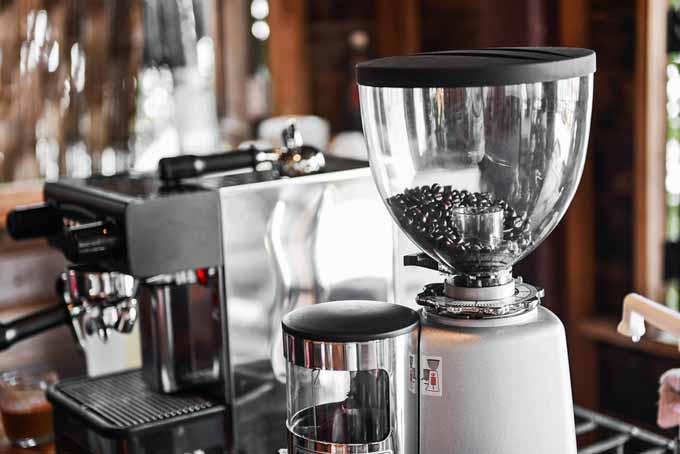
Use a burr grinder if your budget can absorb one. Grinding just before brewing gives you a much clearer starting point than pre-ground coffee that has been open for weeks. You do not need an espresso-oriented grinder for a drip machine; a stable medium grind is the goal. Our coffee-grinder guide explains the trade-offs between inexpensive hand grinders and countertop burr grinders.
Measure coffee and water. A good starting point is roughly one part coffee to 16 parts water by weight. For a 24-ounce brew, you might begin around 42 grams of coffee and adjust from there. This is not a rule carved into the machine. If the coffee tastes too weak, use slightly more coffee or a finer grind. If it tastes dense or harsh, use slightly less coffee or a coarser grind. Change one thing per brew.
Use water that tastes clean. A heavily chlorinated or unpleasant tap water source will be noticeable in a cup made mostly of water. A basic filter pitcher can be sufficient where tap water tastes off. Descale the coffee maker on the schedule in its manual, especially in a hard-water area. Mineral buildup can slow brewing, affect temperature, and eventually create a machine problem that readers mistake for bad beans.
Replace paper filters as needed and rinse reusable filters carefully. A paper filter generally produces a cleaner cup with less sediment. A reusable mesh filter lets more coffee oils through and reduces recurring filter purchases, but it needs a thorough wash to avoid stale residue. Neither is universally better. Pick paper for simple cleanup and a lighter body; pick a reusable filter only if you are willing to clean it well.
What matters before programming features
Capacity comes first. Calculate using ounces, not the maker’s cup count. If two people each drink a 14-ounce mug, a 25-ounce machine will be a little short and a 60-ounce “12 cup” machine may produce too much. It is fine to buy a larger machine with a good small-batch option, but it is not fine to assume a cup label matches a mug.
Carafe type comes next. Glass is inexpensive, visible, and easy to pour from, but it generally relies on a warming plate. Thermal costs more and takes up more space, yet it is the right choice for a pot that will be sipped over time. A single-serve brewer is practical for one cup at a time but creates a different purchasing system, particularly when it uses proprietary pods. Do not choose it merely because it looks compact.
Finally, ask whether you will use a timer. A delayed brew is helpful for a fixed weekday schedule. It is irrelevant for someone who makes coffee at different times every day or prefers fresh ground coffee in the basket. The simpler Mini Brew is often the better buy in that case. Extra features are not free if they make a machine harder to operate or clean.
What we did not make a main recommendation
We did not make a pod machine the default affordable pick. Pods are fast, and they can be useful for a specific one-cup routine, but the machine price does not show the continuing pod cost, waste, or limited control over dose. A basic drip machine plus ground coffee is more flexible for most people and can brew more than one cup without a sequence of individual capsules.
We also did not treat a thermal carafe as an automatic upgrade. It is better for holding a pot, not necessarily for the person who drinks coffee immediately. Likewise, a premium certified brewer can be a good purchase for a coffee enthusiast, but it is not required for reliable daily coffee. Start with capacity, cleanup, water, and fresh coffee before paying for temperature claims you cannot use.
Buy for the weekday you actually have
If you leave the house at the same time every morning, choose a programmable 12-cup brewer and use the timer. The value is not that it makes coffee without you; it means the machine can finish while you are getting dressed, packing lunch, or helping someone else. Use a larger model only when the pot will be shared or taken in a travel mug. A smaller machine is not a downgrade when it eliminates leftover coffee.
If mornings are unpredictable, a timer may be one more thing to reset. A compact manual-switch brewer is a better fit when you make coffee at different hours or have limited counter space. It heats only the water you need, has fewer settings to forget, and is easier to move or store. The downside is that it gives you no head start. Decide which inconvenience you would rather avoid: setting a program, or waiting a few minutes while it brews.
If the same pot must cover a long breakfast, a work-from-home morning, or two people on different schedules, budget for a thermal carafe. It is the purchase that changes holding behavior. If everyone pours during the first ten minutes, stick with glass. Coffee makers are best chosen from a daily pattern, not a feature comparison chart.
Finally, leave space beside the machine for the basket to swing or lift out and for the carafe to pour cleanly. A coffee maker that technically fits under a cabinet can still be annoying if there is no clearance to fill the reservoir. Measure the routine as well as the counter.
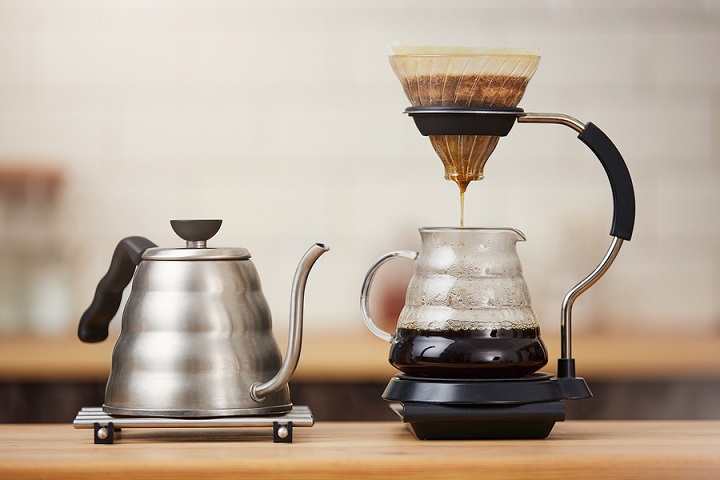
There is also no shame in using more than one method. A small five-cup drip brewer can handle weekdays, while a pour-over setup can be kept for the coffee you make when you have time to pay attention. Our pour-over coffee guide explains that second setup without treating it as a required upgrade.
Care, replacement parts, and daily habits
Wash the carafe and filter basket after each use. Let wet parts dry instead of closing them in a damp machine. Run the manufacturer’s cleaning cycle or descaling process when recommended, and do not ignore a coffee maker that is suddenly slower. Keep replacement paper filters near the coffee, not in a separate drawer where they are forgotten.
Use enough coffee for the water you add; underdosing is a common reason cheap coffee makers get blamed for weak coffee. Do not leave brewed coffee on a warming plate longer than necessary. Brew a smaller amount if the pot repeatedly goes stale before it is finished. A simple machine works best when the routine matches its size.
How we researched
We compared current manufacturer information for capacity, carafe design, small-batch settings, timers, cleaning features, power-off behavior, compatible filters, and warranty coverage. We selected models with distinct use cases and did not claim hands-on testing. Coffee taste still depends heavily on water, coffee freshness, grind, dose, and cleaning, so the guide concentrates on decisions a buyer can control.
Affordable coffee maker questions, answered
What is the best cheap coffee maker for one person?
A five-cup model like the Mr. Coffee Mini Brew is a practical answer when you usually make one or two mugs and have limited counter space.
Is a thermal carafe worth it?
It is worth it when the same pot is consumed over more than an hour. For coffee finished during breakfast, a glass carafe is simpler and less expensive.
Can a low-cost coffee maker make good coffee?
Yes. Use fresh coffee, clean water, an appropriate dose, and a clean machine. A better grinder can improve the cup more than many machine upgrades.
Should I buy reusable or paper filters?
Paper filters are easy and tend to produce a cleaner cup. Reusable filters reduce paper use but must be washed thoroughly and can produce a fuller-bodied result.
Affiliate note: SuperGrail may earn a commission when you buy through an Amazon link. That does not affect our recommendations or the trade-offs we explain.