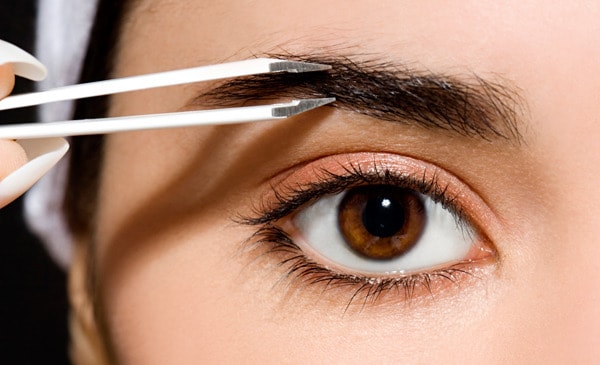
The best tweezers for most people are a full-size stainless-steel slant pair with tips that meet evenly. That shape is forgiving enough for brow cleanup, chin hairs, and the occasional stray hair, yet precise enough that you do not have to pinch the skin or pull at the same hair repeatedly. The Tweezerman Classic Slant Tweezer is the pick to start with because its 25-degree slant, hand-filed stainless tips, and moderate size make it a good single tool for routine grooming. It costs more than a basic drugstore pair, but it is designed for a job most people do often enough to notice poor alignment.
The Revlon Slant Tweezer is the lower-cost alternative for a drawer, travel kit, or someone who wants a straightforward slant tip without paying for a premium tool. Buy the Tweezerman Point Tweezer only when you need to catch baby-fine hairs or a visible ingrown hair close to the surface. Its pointed tips are less forgiving around brows and can puncture skin if used carelessly. For a small kit or carry-on, the Tweezerman Mini Slant Tweezer has the same basic slant-tip idea in a shorter body.
Do not buy a giant set of tip shapes unless you know why you need each one. A slant pair does nearly all ordinary grooming. A point pair is a specialized second tool. Sharp tweezers are not a substitute for medical care: do not dig into a deep splinter, attempt to remove a lesion, or keep picking at an inflamed ingrown hair. When a problem is painful, deeply embedded, bleeding, spreading redness, or showing signs of infection, stop and get appropriate care.
Our picks at a glance
| For | Pick | Why it fits | Skip it if |
|---|---|---|---|
| Everyday brow and stray-hair cleanup | Tweezerman Classic Slant Tweezer | Stainless-steel, hand-filed tips with a 25-degree slant that suit routine grooming. | You need the smallest possible travel tool or a lower-cost backup. |
| Value-focused basic grooming | Revlon Slant Tweezer | Comfortable-grip stainless slant tips aimed at both thick and fine hairs. | You want a premium tool with a sharpening option. |
| Baby-fine hairs and visible surface ingrowns | Tweezerman Point Tweezer | Fine, hand-filed pointed tips give more precise access than a slant pair. | You are only shaping brows or are tempted to dig under the skin. |
| Travel and a compact kit | Tweezerman Mini Slant Tweezer | Shorter stainless slant tool that is easier to pack. | You have large hands or want the stability of a full-size handle. |
Best tweezers for most people: Tweezerman Classic Slant Tweezer
The Tweezerman Classic Slant Tweezer is a sensible buy for the person who wants one tool that works without much thought. Tweezerman specifies a stainless-steel tip with aligned, hand-filed edges that close evenly and a 25-degree slant intended to line up with the brow bone. Those details matter more than the color or the marketing language. When the two faces meet consistently, the tool can grip a hair instead of snapping it halfway down its length.
The slanted edge gives you two useful working surfaces. Use the broad part of the edge to hold a slightly thicker hair; rotate toward the sharp end of the slant for a finer hair. That versatility is why a slant pair should be the first purchase. A flat tip is too broad for many brows, and a point tip is too sharp for routine use. The Classic Slant is also full-size, which makes it easier to hold near the middle of the body instead of squeezing it at the very end.
The compromise is price. A well-made slant tweezer costs more than the throwaway pairs sold beside a checkout counter. It is worthwhile only if you care about precise routine grooming and take basic care of the tips. Tweezerman offers sharpening on eligible tools, though service terms and availability can change, so treat that as a possible maintenance option instead of the sole reason to choose the product. A dropped pair can lose its alignment no matter what it cost.
Use it in good light, after washing your hands and cleaning the area. Catch a hair close to the skin without pinching the skin, then pull gently in the direction the hair grows. Do not keep going until the area is red and sore because one short hair will not come free. Stop, let it grow a little, and come back later. Precision is partly about knowing when the tool is not the answer.
Best budget tweezers: Revlon Slant Tweezer
The Revlon Slant Tweezer is the choice for a basic, inexpensive slant pair. Revlon describes it as a stainless-steel tool with a precision-angled tip, a larger handling surface, and a shape meant to target thick and fine hairs. That is exactly the right role for a budget tweezer: a normal brow tool that is easy to clean and uncomplicated to replace if it gets lost.
Do not expect every inexpensive pair to have the same tip alignment or long-term tension as a more carefully finished tool. Inspect it when it arrives. Close the tips in front of a light source; they should meet cleanly along the gripping edge, without a visible gap or one tip sliding past the other. Try it on one easy, visible hair before relying on it for shaping. If it only catches hair at one point or keeps cutting hairs, return it rather than trying to bend it into shape.
This is a good backup for a gym bag, a second bathroom, or a person who tweezes infrequently. It is also a better buy than a complicated low-cost set whose extra tips stay unused. Get the Tweezerman Classic Slant if you want a more refined everyday tool. Get the Revlon if you want the core slant-tip function and do not need the premium finish or sharpening option.
Best pointed tweezers for fine work: Tweezerman Point Tweezer
The Tweezerman Point Tweezer is a secondary tool, not the first pair most people should buy. Its narrow, hand-filed pointed tips are made to grip very fine hairs and hairs near the skin surface that a slanted edge may not isolate. That precision can be useful for a stubborn pale brow hair or a visible ingrown hair that has already reached the surface.
It also requires more restraint. A point tip can turn a small grooming task into an irritated spot if you probe under skin, squeeze too hard, or chase a hair you cannot see clearly. Clean the tips before and after use, keep the area clean and dry, and use the point only to grasp something you can actually see. If a hair is trapped under the skin, the skin is broken, or the area is painful or inflamed, leave it alone and seek advice from a qualified clinician when appropriate.
For splinters, use pointed tweezers only when the end is visible and easy to grasp. Do not dig for a deep splinter, especially near an eye, joint, nail bed, or sensitive area. Clean the tool and skin first, remove it in the direction it entered when it can be taken out cleanly, and then clean the area again. If the splinter is deep, dirty, difficult to remove, or followed by infection symptoms, professional care is the safer route.
The point pair’s other compromise is brow shaping. It is slower for general cleanup and much easier to overpluck with. Keep it as a precise companion to a slant tweezer, rather than replacing the versatile tool that handles most hairs without drama.
Best compact pair: Tweezerman Mini Slant Tweezer
The Tweezerman Mini Slant Tweezer makes sense for a travel pouch, desk drawer, or carry-on toiletries kit. It uses the same basic 25-degree slant-tip approach in a shorter stainless body. That size is convenient when you want a small, purpose-built grooming item instead of packing your main vanity tool.
The limitation is control. Shorter handles give larger hands less leverage and less room to settle into a stable grip. Use the mini for touch-ups, not for a major brow reshaping session. Keep its protective cap on when stored so the tip does not get knocked out of alignment by keys, nail clippers, or a charger in the same bag. A small point or slant tool that is loose in a toiletry kit eventually loses the precise edge you bought it for.
Before flying, confirm the latest airline and security rules for your own itinerary. The manufacturer may describe a mini tool as travel-friendly, but security rules and individual screening decisions are not a product specification. If the pair is valuable to you, packing it in checked luggage or leaving it at home removes the risk of losing it at screening.
Tip shape changes the job
Most bad tweezer purchases come from buying the wrong tip style, not the wrong brand. A slant tip is the everyday shape. Its diagonal edge gives you a broad enough surface to grab a normal brow hair while leaving a narrow end for detail. It is the right default for brows, chin hairs, and occasional facial grooming.
A pointed tip is for isolation. It can grab a tiny hair or the visible end of a surface-level ingrown hair. The very feature that makes it accurate also makes it easier to hurt yourself with. Keep it away from regular broad cleanup, and never use it to examine or remove anything suspicious on the skin. A slant pair and a point pair is a sensible two-tool setup; a six-piece collection of similar angled tips is usually clutter.
Flat tips have a wide gripping edge that can work for broad, thicker-hair tasks, yet they offer less control near a brow line. Rounded or blunt tips reduce the chance of a sharp poke but generally give up fine-hair accuracy. For everyday grooming, choose tip function before finish, color, or a claimed “professional” label. If the tips do not close evenly, no shape will work well.
Alignment and tension are the real quality test
Look at a pair from the end with the tips closed. The edges should meet cleanly and consistently. You should not see a permanent gap, a crossed scissor-like overlap, or a single point of contact that leaves most of the tip open. Those flaws make a tool slide off hair, cut it, or force you to pull harder than necessary.
Tension should be firm enough that the tips do not float apart while you hold a hair, but not so stiff that your hand shakes or tires. There is no universal number to look for. The useful test is whether a relaxed squeeze lets you close the tips slowly and evenly. Very stiff tweezers are especially annoying for precise brow work because the final millimeter of pressure can become a sudden snap.
Do not try to repair misalignment with pliers or by bending the arms against a counter. You may chip the tips, weaken the metal, and make a mild flaw worse. Return a new defective pair. Replace an old one that no longer grips. Careful tools are worth using, but they are not family heirlooms when their core job has failed.
Use a slower, cleaner grooming routine
Good light is more valuable than a stronger grip. Stand near a window or use a bright mirror, take a minute to identify only the hairs you want to remove, and work one hair at a time. Warm water or a warm washcloth can make grooming more comfortable for some people; avoid water hot enough to redden the skin. If you have recently exfoliated, used a strong active skincare product, or have irritated skin, postpone tweezing until the area is calm.
Hold the tweezer in the middle, with your thumb and index finger. Stretch the surrounding skin gently only if that helps you see the hair. Grasp the hair close to its base and pull in the direction of growth. Pulling against the direction of growth or yanking upward can break the hair and irritate the follicle. Stop between a few hairs and look at the whole brow; people tend to overpluck when they judge one side millimeter by millimeter.
Do not share uncleaned tweezers. Wipe the tips after use with an alcohol wipe or peroxide as the maker directs, then dry them before storage. Stainless steel resists corrosion, but it is not a reason to leave a damp tool in a sealed cosmetic bag. Store it with the cap on or in a sleeve so it does not bang into other tools. If it falls tip-first onto a hard floor, inspect the alignment before using it near your face.
Personal grooming and skin care overlap, but a tool cannot solve every skin concern. For related product coverage, browse our health and personal-care guides. If you are considering a cleanser marketed for discoloration or uneven tone, our guide to kojic acid soaps explains product selection and safe expectations. Keep skin care gentle after tweezing; newly irritated skin is not the moment to add a harsh product.
When a second pair makes sense
Buy a second pair when it has a different job, not just a different color. A full-size slant pair at home plus a mini slant pair for travel is a sensible arrangement. A slant pair plus a point pair is useful if you often have fine hairs that are hard to catch. A duplicate is helpful if more than one person needs a clean individual tool, or if you keep one in a work bag.
Two identical premium pairs are unnecessary for most people. Put the money toward good lighting, a clean storage case, or simply a replacement when the original loses alignment. Tweezers work because the tips are accurate, not because the collection is large.
How we evaluated tweezers
We reviewed current manufacturer information for tip shape, material, alignment claims, body size, cleaning guidance, and intended use. We favored stainless-steel models with a clear everyday role over sets built around novelty tip shapes. We also separated grooming use from splinter and ingrown-hair use, since sharp pointed tips are useful only when the task is visible and appropriate for home care.
We did not treat a grooming tool as medical equipment. A product that can grasp a fine hair can still cause harm if used to dig under the skin or remove something that should be assessed by a clinician. We also did not use fixed prices, because Amazon listings and promotions change frequently.
Questions before buying tweezers
What tip shape is best for eyebrows?
A slant tip is the best starting point for most brows. It is more forgiving than a point tip and more precise than a broad flat edge. Choose a pair whose tips close evenly and whose body is comfortable to hold.
Why do my tweezers break hairs instead of pulling them out?
The tips may be misaligned, dirty, or worn. Inspect them in good light, clean the edges, and grip the hair close to the skin before pulling in the direction of growth. Replace the tool if it does not close evenly.
Can I use pointed tweezers for an ingrown hair or splinter?
Use them only to grasp an end that is clearly visible and easy to reach. Do not dig into skin, and get care for a deep, painful, infected, or hard-to-remove splinter or ingrown hair.
How should I clean tweezers?
Wipe the tips after use with an alcohol wipe or peroxide according to the manufacturer’s guidance, dry the tool, and store it protected. Do not share a pair without cleaning it first.
Buy the tip you will actually use
Get the Tweezerman Classic Slant Tweezer if you want one dependable pair for routine grooming. Choose the Revlon Slant Tweezer for a lower-cost basic. Add the Tweezerman Point Tweezer only for visible fine-hair work, and pack the Mini Slant when a small travel tool is useful. Keep the tips clean, protect their alignment, and do not turn a simple grooming task into a skin injury by digging for something you cannot safely grasp.