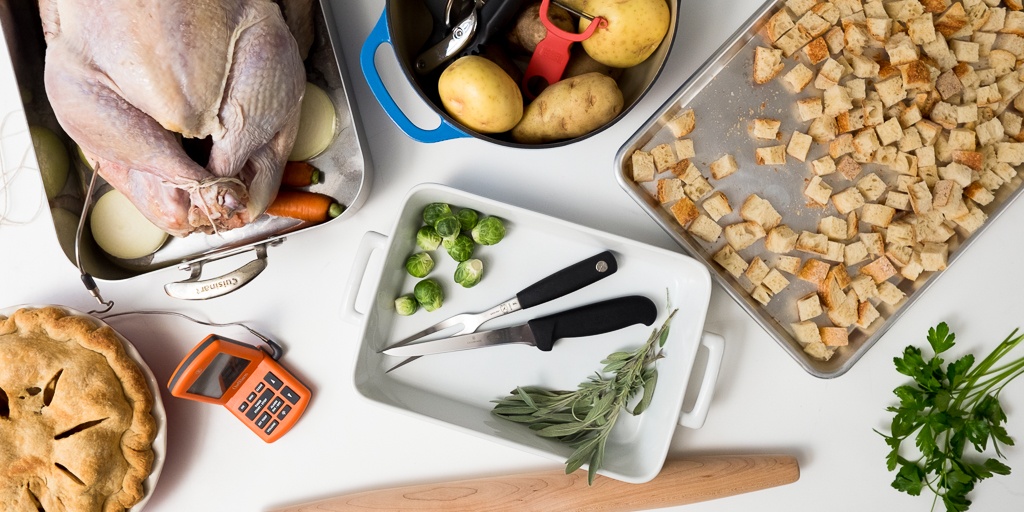
Thanksgiving cooking gets easier when the kitchen has a few dependable workhorses, not a cabinet full of bird-shaped gadgets. Start with an instant-read thermometer, two rimmed sheet pans, a large cutting board, a carving knife that is actually sharp, heatproof tongs, a ladle, and shallow containers for leftovers. Add a fat separator if gravy is part of the plan. For a bigger gathering, borrow or rent serving pieces before buying them for one meal.
The one tool that earns a place even in a small kitchen is an accurate Thermapen ONE-style instant-read thermometer. Turkey, stuffing, casseroles, leftovers, and reheated gravy all benefit from a real temperature check. The second best purchase is a Nordic Ware Naturals half sheet pan or another sturdy, uncoated aluminum rimmed pan; it handles vegetables, rolls, sheet-pan sides, cooling, and temporary prep space. Neither is glamorous. Both are useful long after November.
Our picks at a glance
| Pick | Buy it for | Main compromise |
|---|---|---|
| Most important tool: Thermapen ONE | Fast, direct temperature checks for poultry, stuffing, casseroles, and leftovers. | It costs more than a basic instant-read thermometer. |
| Best multipurpose pan: Nordic Ware Naturals half sheet | Roasting, baking, cooling, carrying, and holding ingredients. | Uncoated aluminum needs gentler cleaning and can react with strongly acidic foods. |
| Gravy helper: OXO Good Grips 4-cup fat separator | Separating pan juices from fat before making gravy. | It is a specialist tool; a spoon and patience can work for an occasional cook. |
| Leftover essential: Shallow lidded storage containers | Cooling and portioning leftovers promptly. | They take cupboard space, so choose nesting shapes you will use year-round. |
Buy the thermometer before another roasting pan
Thermapen ONE is the upgrade that changes the decision-making most. ThermoWorks specifies a one-second response time for the current Thermapen ONE, along with a fold-out probe and a waterproof rating. Those details matter because Thanksgiving food comes out of the oven on different schedules. A fast thermometer lets you check the thickest part of the breast, the innermost thigh, and the innermost wing without leaving a large puncture or holding an analog dial in a hot oven for a long time.
The US Department of Agriculture says turkey, stuffing, and casseroles need to reach 165°F. Check the bird in more than one place and keep the probe away from bone, which can distort the reading. A pop-up timer is not a substitute for a thermometer, and clear juices are not a reliable doneness test. If the turkey is done in one area but not another, keep cooking and check again. The thermometer is the tool that tells you when the meal is safe, rather than when the recipe timeline hoped it would be ready.
The Thermapen ONE is a premium pick. A basic instant-read thermometer can still do the safety job if it is accurate, readable, and used correctly. Do not skip a thermometer because the premium model feels expensive. Buy an alternative within your budget instead. The useful distinction is instant-read versus decorative. A probe thermometer that has been tested in ice water and boiling water, used cleanly, and stored dry is more valuable than an untested kitchen gadget with a clever display.
Do not leave an instant-read thermometer in the turkey while it roasts unless its instructions explicitly say it is an oven-safe leave-in model. Keep it clean between raw and cooked food, and wash the probe as directed after use. Our kitchen-setup guide covers the other basic tools worth owning before a holiday-specific upgrade.
Two rimmed sheet pans beat a collection of specialty trays
Nordic Ware Naturals Baker’s Half Sheet is the right shape and material for the many jobs that multiply around a holiday meal. The current pan is uncoated aluminum with a reinforced rim and a lifetime warranty from Nordic Ware. A half sheet’s raised edge keeps rendered fat, vegetables, and roasting juices from spilling, while the broad flat surface works for cookies, stuffing portions, rolls, roasted squash, and cooling cutlets or pie crusts. Buy two if you routinely feed a crowd and have the oven space; a pair lets you rotate vegetables while a dessert cools on the other pan.
Do not expect an uncoated aluminum pan to behave like a nonstick skillet. Line it with parchment when the recipe benefits from easy release, use a silicone mat only when the recipe calls for it, and do not scour it aggressively until the surface looks new. Discoloration is normal on a hardworking aluminum pan. Strongly acidic ingredients can react with bare aluminum, so use a lined or nonreactive vessel for a long tomato, citrus, or vinegar exposure. That limitation is fair given how much faster and more evenly plain aluminum can respond in the oven.
A roasting pan is still useful for a large turkey, but do not buy an oversized one before you measure the oven and the bird. USDA advises using a shallow pan about two to two-and-a-half inches deep with a flat rack for a whole turkey. A too-deep pan or an oversized bird can restrict heat circulation. If you cook turkey once a year, borrow a pan that fits rather than storing a huge single-purpose roaster in a small kitchen.
A fat separator makes gravy more predictable
OXO Good Grips 4-cup fat separator is the right specialized purchase for a cook who makes gravy from pan drippings often enough to want less guesswork. The current 4-cup model has a stopper in the spout, a strainer, measurement markings, and a splatter shield. Pour the rested pan juices through the strainer, wait for the fat to rise, then remove the stopper so the cooking liquid exits first. That is easier to control than skimming a roasting pan while a stove burner is waiting.
The tool does not create gravy by itself. You still need a saucepan, a thickener, seasoning, and attention to consistency. It also has a capacity limit; a particularly large bird can produce more drippings than one batch holds. Work in batches rather than filling beyond its markings. If you make gravy only once a year, tilt the drippings in a measuring cup, let them settle, and spoon fat from the top. The separator saves time and mess, but it is not a requirement for a good meal.
For other bar and pouring tools that are useful beyond Thanksgiving, see our barware guide. A sturdy whisk, ladle, and heatproof measuring cup are often a better first purchase than a novelty gravy boat.
Carving needs a stable board and a sharp knife
Use the largest stable cutting board you own, ideally one with a juice groove or a rimmed sheet pan beneath it to catch drips. Put a damp towel under the board if it slides. A broad, sharp carving knife or chef’s knife makes cleaner slices than a serrated knife sawing through the breast meat. A separate fork or tongs can steady the turkey, but do not grip it with your hand close to the blade.
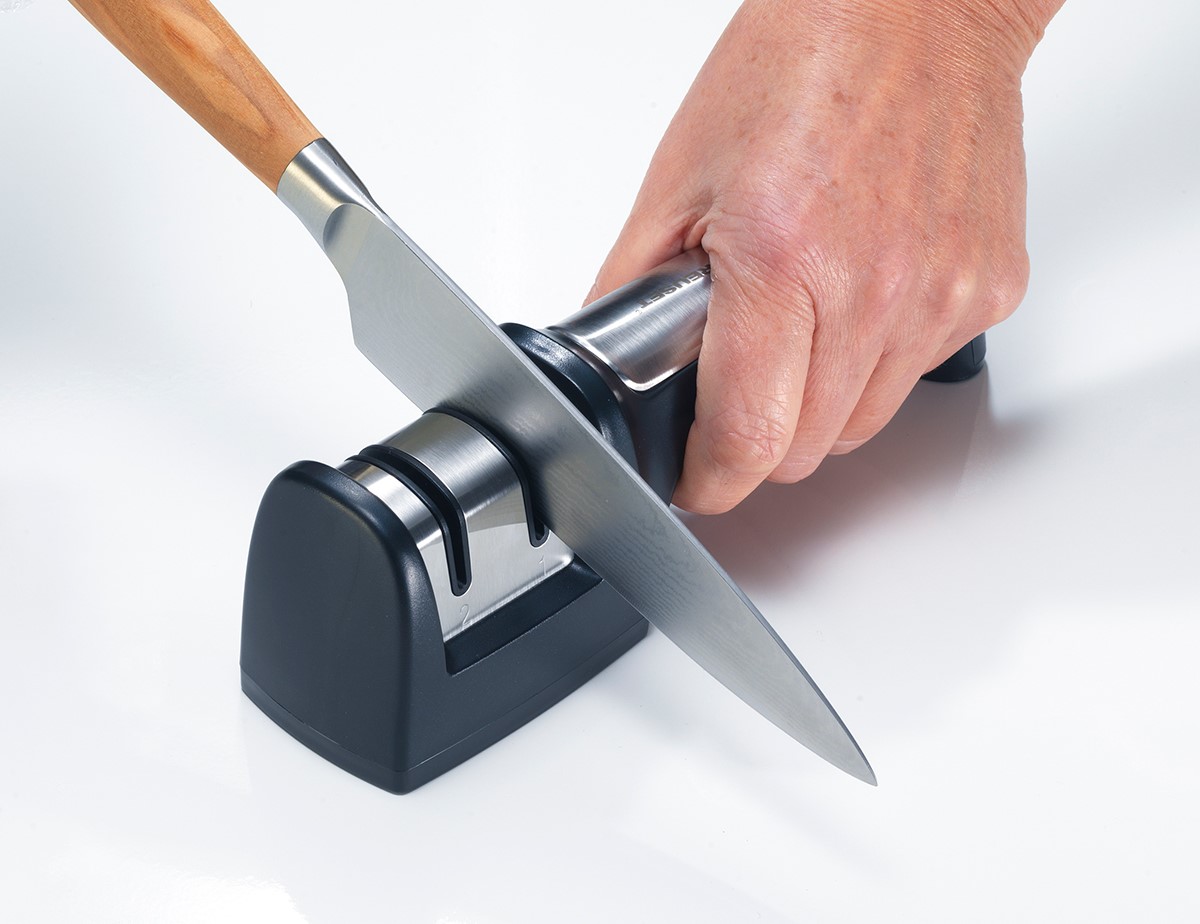
Sharpen the knife a day or two before the gathering, not in the middle of a crowded kitchen. A dull knife needs more force, skids more easily, and tears cooked meat. If your knives have not been maintained, our guide to knife sharpeners explains the difference between honing, sharpening, and choosing a tool that fits the knives you own. Do not carve directly in the roasting pan; it is awkward, can damage the pan, and lets the knife slide against hot metal.
Let the turkey rest before carving. USDA notes that a whole bird is easier to carve after a 20-minute rest. During that time, move the sides into serving bowls, make gravy, warm plates if that is your plan, and clear the counter. Resting is not empty time; it is the buffer that makes the serving moment less frantic.
Choose serving pieces by what must stay hot
Start with the dishes you already own. A large oven-safe casserole dish, a couple of serving bowls, tongs, a ladle, a big spoon, and trivets cover most tables. Do not buy matching place settings for a large group if you can borrow plates or use a simple mix of durable dinnerware. Guests remember warm food and an unhurried host more than a perfectly coordinated gravy boat.
For a buffet, group food by temperature. Hot food should go out close to serving time and be replenished in modest batches. Cold dishes should stay cold. USDA advises keeping perishable food out of the 40°F to 140°F danger zone; refrigerate leftovers within two hours at room temperature, or within one hour when the air temperature is above 90°F. Do not rely on a decorative warming tray or a pile of foil to keep a dish safe indefinitely. Use a thermometer where you need to know the temperature.
A slow cooker can be useful for holding a fully cooked side at the temperature its manufacturer supports, but it is not always the right device to reheat a cold, dense casserole safely. Read the appliance instructions and plan the oven schedule first. A calm meal comes from assigning each dish an oven, stovetop, counter, or refrigerator location before the cooking starts.
Shallow containers turn leftovers into food you will actually use
Buy enough shallow, lidded containers to portion turkey, stuffing, vegetables, and gravy rather than putting one huge warm pot into the refrigerator. Shallow portions cool more quickly and are easier to reheat. Label them with the date when the kitchen is busy. USDA says cooked leftovers are generally good in the refrigerator for three to four days, and Thanksgiving guidance specifically says to use or freeze them within four days. Reheat leftovers to 165°F before eating.
Glass containers are useful for people who want a visible, microwave-friendly dish. Plastic is lighter and less likely to break. Either can work if the lids fit, the shape stacks, and you are willing to use it for weekday lunches after the holiday. Skip single-use containers that leak or crack unless you are deliberately sending guests home with food. The best leftover system is the one that makes cooling, storing, and finding food simple.
Tools that look helpful but rarely earn a place
Electric carving knives, turkey lifters, oversized decorative platters, and one-purpose roasting gadgets can be useful for a particular cook, but they rarely come before the basics. A turkey lifter can be handy with a very heavy bird, yet two sets of steady hands and a solid board are often safer. An elaborate buffet set can be sensible for someone who hosts large groups repeatedly; for an occasional meal, it becomes storage. Avoid buying a gadget because the holiday is near. Buy it when a recurring task is awkward and the tool solves that exact problem.
Skip a deep-frying setup unless you understand its outdoor-only requirements, oil volume, turkey thawing, and fire risk. It is not a casual last-minute purchase. Skip a new countertop appliance if it cannot be tested before the gathering. Thanksgiving is a poor day to discover that a slow cooker runs hot, a slicer is unstable, or a new pan does not fit the oven.
Make a small cooking plan before shopping
Write each dish, its required temperature, cook time, pan, burner, serving dish, and holding spot. Count the oven racks and burners. Put cold dishes on the list too: refrigerator space is often tighter than oven space. Plan the turkey first, then assign sides around it. A half sheet pan, a sturdy thermometer, a sharp knife, and a few containers become more useful when the kitchen schedule is visible.
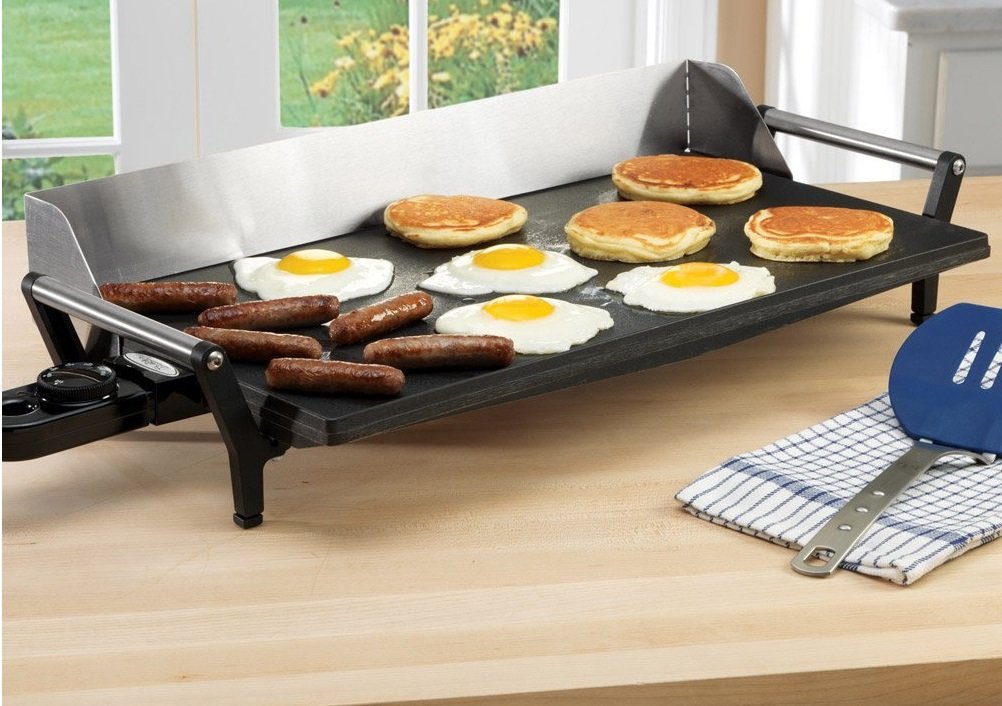
For an alternative to an oven-heavy breakfast or brunch spread, our electric-griddle guide helps with batch pancakes, eggs, and sandwiches. Do not add an electric griddle to the Thanksgiving counter without first checking outlet capacity and giving it a stable, clear work area.
Set the table with fewer pieces, used well
Tableware should support the menu and the number of guests, not create another project. Start with enough plates, drinking glasses, napkins, and forks for the meal. Add bowls only for dishes that are hard to serve from the cookware. A wide, low bowl is useful for mashed potatoes, a deeper bowl for stuffing, and a ladle-friendly vessel for gravy. Use trivets under hot pans and serving spoons that fit the dish. If you are short on matching plates, borrow from family, use durable everyday plates, or choose compostable plates that can hold the food you are serving. A plate that bends under gravy is false economy.
Put a small stack of extra napkins, a water pitcher, serving utensils, and a spot for discarded bones where people can find them. This prevents the host from crossing the room every time a serving spoon disappears. If guests will bring dishes, ask them to bring the dish in the vessel it will be served from, with a utensil and simple reheating instructions. That one request prevents an hour of last-minute transferring and searching for lids.
Use a realistic prep sequence
Three or four days before the meal, clear refrigerator shelves, confirm the turkey-thawing plan, sharpen knives, and count storage containers. The day before, chop vegetables, make pie dough or desserts that improve overnight, set the table, and write the oven schedule. On the day, reserve the counter closest to the sink for raw poultry work and keep it separate from cooked food, bread, and serving dishes. Wash hands, utensils, cutting boards, and surfaces after raw poultry contact. Do not wash the turkey; splashing can spread raw juices around the sink and counter.
When food comes out of the oven, use a landing zone: one clear trivet or sheet pan for hot cookware, one cutting board for carving, and one counter for plated serving dishes. Leaving every surface available for a new task sounds flexible, but it creates a crowded kitchen where hot handles and raw-food tools get mixed together. A modest plan makes more difference than a new gadget.
Plan for the next day too
Leave enough time and containers for leftovers before guests arrive. Once the meal is over, divide turkey and sides into shallow portions, label them, and refrigerate them within the safe time window. Do not wait until every guest has left if food has been sitting out. A few familiar lunch containers make the next several days easier and reduce waste. Gravy, cranberry sauce, and vegetables can be portioned separately so they reheat or travel well.
There is no need to own a dedicated Thanksgiving kit. A thermometer, two rimmed pans, one stable board, sharp knives, an OXO separator if you make gravy, and sensible storage containers are enough to handle the hard parts. The rest is scheduling, clear counters, and a meal plan that fits the oven you have.
How we chose these tools
We checked current maker information for the Thermapen ONE, Nordic Ware Naturals half sheet, and OXO 4-cup fat separator, then compared those tools with current USDA turkey and leftover guidance. The recommendations reflect product specifications, food-safety requirements, and the jobs that recur during a large meal; they are not claims of hands-on testing. Availability, pan sizes, colors, and bundles can change, so confirm the exact listing before buying.
Start with the thermometer, sheet pans, a sharp knife, and containers. Add the gravy separator only if gravy is a regular part of your cooking. A calmer Thanksgiving comes from tools that reduce uncertainty and clutter, then continue serving useful meals for the rest of the year.