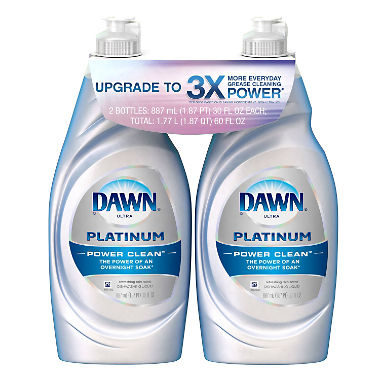
For most kitchens, buy Dawn Platinum EZ-Squeeze. It is a concentrated hand-dish liquid in a bottle that dispenses from the bottom, which makes it easy to put a small amount on a sponge instead of flooding the sink with soap. That sounds like a minor convenience, but it matters when a skillet, a stack of lunch containers, and the evening’s glasses are waiting at once. The compromise is simple: the common Platinum versions are fragranced. If an unscented formula is the priority, get Dawn Free & Clear EZ-Squeeze instead. Keep Dawn Powerwash around only if you regularly deal with a baked-on pan or want to clean a small batch without filling the sink; it is a useful spray, not an economical substitute for liquid soap.
Dish soap does not need to be exciting. It needs to cut cooking grease, rinse away without a long water bill, and fit the way your household actually washes up. A person who cooks eggs and oatmeal in one pan has a different problem from someone who hand-washes a Dutch oven, an air-fryer basket, and several glass storage containers every night. Start with that difference instead of a scent or a bottle claim.
Our picks at a glance
| Pick | Buy it if | Main compromise |
|---|---|---|
| Everyday pick: Dawn Platinum EZ-Squeeze | You want a concentrated liquid for greasy cookware and ordinary dishes, with controlled bottom dispensing. | The standard versions have fragrance. |
| Fragrance-free pick: Dawn Free & Clear EZ-Squeeze, Unscented | You want a familiar liquid format without added fragrance or dyes. | It is not a promise that every ingredient will suit every person. |
| Targeted-mess pick: Dawn Powerwash Dish Spray | You want to loosen stuck food on a pan, tray, or small batch before scrubbing. | It costs more per use than regular liquid and is unnecessary for a whole sink of plates. |
| High-volume alternative: Dawn PowerSuds | You hand-wash a large volume and value longer-lasting suds plus a refillable jug. | It is a newer, premium formula with a fresh-rain scent. |
What we would buy for a normal sink full of dishes
Dawn Platinum EZ-Squeeze is the sensible default because the format solves the routine problem well. The 18-ounce Fresh Rain version has a bottom-dispensing bottle, so it can be used one-handed and put directly on a damp sponge or brush. Dawn describes Platinum as its grease-focused line and says the current formula removes up to 99% of grease and food residue; that is the maker’s comparison, not an independent laboratory result. The useful real-world takeaway is more modest: it is a concentrated liquid designed for greasy pans, and a small measured squeeze is easier to manage than a loose cap bottle.
The bottle is also a reason to choose it over an abstract “strongest soap” claim. A dispenser that gives you a pea- to nickel-size dose cuts down on both waste and rinsing. If the sponge begins spreading oil instead of lifting it, add a little more soap or rinse the sponge. Do not solve that problem by pouring a long stream of liquid into the pan. Extra detergent does not remove a burnt layer on its own; it creates more product to rinse and can leave you with a sudsy pan that still needs time and friction.
Platinum is the pick for people who cook with oil, butter, cheese, sauces, or roasted vegetables and still hand-wash the cookware. It is equally fine for glasses and forks, though a lower-strength product would clean those too. The boundary is fragrance. Fresh Rain, Clean Lemon, and Wild Jasmine are scent choices, not performance upgrades. If a fragranced dish liquid makes a kitchen unpleasant, skip this one without overthinking it. Its one job does not require perfume.
For cookware decisions beyond detergent, see our guide to electric griddles. Nonstick coatings, removable plates, and grease channels change the cleaning routine more than the brand of soap does.
The unscented choice is Dawn Free & Clear EZ-Squeeze
Dawn Free & Clear EZ-Squeeze, Unscented is the right pick when you want a no-fragrance, no-dye liquid without switching to an unfamiliar bar, powder, or tablet system. The current unscented 24.3-ounce version is labeled with 0% fragrance, dyes, phthalates, or chlorine added, and Dawn says it uses biodegradable surfactants. It uses the same practical bottom-dispensing idea as the Platinum bottle, which is a better reason to buy it than a vague “clean” label.
“Fragrance-free” has a narrow and useful meaning: there is no added fragrance in that version. It does not mean that the product is medically recommended, hypoallergenic for every person, or interchangeable with all other Free & Clear bottles. Product lines change, and the lemon-essence version is a different scent choice. Read the precise front and back label of the listing you are considering, especially if you avoid particular ingredients or have had a reaction to a cleaning product. Stop using a product that irritates your skin or eyes, and use the first-aid directions on its label if an exposure occurs.
This is not a consolation pick. It is a hand-dish liquid for normal plates, utensils, storage containers, and pans. For a greasy roasting pan that has been left overnight, it may take more soaking and brush work than a more aggressive-sounding formula. That is a fair trade if minimizing scent is what makes the product usable in your kitchen. A good routine is better than a bottle that stays under the sink because nobody likes using it.
Dawn Powerwash is for a pan you want to deal with now
Dawn Powerwash Dish Spray earns a place beside regular liquid when the problem is targeted residue, not a large pile of dishes. Spray it onto a skillet, casserole dish, air-fryer basket, cutting board, or plate stack, then wipe or lightly scrub and rinse. For tougher stuck-on food, Dawn’s directions say to allow the suds to sit for three to four minutes before scrubbing. That short dwell time can make an after-dinner pan less annoying without requiring you to fill a basin and wait for a long soak.
The reusable sprayer is meant to be transferred to refill bottles. That is convenient for people who like the format, but it does not turn Powerwash into the most economical way to wash every mug and fork. A conventional liquid applied to a wet sponge stretches farther through a full sink. Think of Powerwash as a pre-treatment or a quick cleanup tool. Use it before food hardens onto one pan; do not reach for it as a reflex when the dishwasher is empty and the dishes are already dishwasher-safe.
Surface compatibility matters here. Dawn specifically cautions against using Powerwash on marble, unsealed or finished wood, specialty-coated glass, precious metals, copper, sterling silver, leather, and various painted or coated surfaces. It also notes that dish soap can remove the seasoning from cast-iron pans and griddles. Check the care instructions for the specific item, rinse food-contact surfaces thoroughly, and do not spray a cleaner onto a material you cannot rinse. A good shortcut never needs to become a rescue project.
For cookware that is meant to be hand-washed gently, our crepe-pan guide explains why surface material and utensil choice matter as much as how hard you scrub it.
Consider PowerSuds when you wash a lot at once
Dawn PowerSuds is worth considering for a household that routinely hand-washes many dishes in one session. The current 21.6-ounce liquid bottle and its refillable jug are designed around persistent suds. Dawn says PowerSuds has twice the suds of Dawn Platinum on greasy soil and is formulated to help keep grease from moving from one dish to the next. Those are brand claims, but the format makes intuitive sense for the right user: someone who fills a sink with plates, bowls, pans, and plastic containers instead of washing a few items immediately.
The difference from Platinum is not that a regular liquid suddenly stops working. It is that the premium formula is intended to keep the wash water useful longer. That can be handy after a family dinner or an extended cooking project. It is a poor value for someone who rinses one coffee mug and one plate at a time; a smaller bottle of normal liquid will do the job. The available Fresh Rain version is fragranced, so this is not an alternative to the unscented pick.
Use the same restraint with PowerSuds as with any concentrated formula. Begin with a small amount on a sponge or in a basin of warm water. Work from the least greasy pieces toward the pan that held the cooking fat. Once the water has visible oil or food particles, change it. Long-lived foam is not a license to keep washing in grimy water.
Dish-liquid formats solve different problems
Standard or concentrated liquid should be the first purchase for most people. It works on a sponge, a brush, or in a basin; it is easy to meter; and it is generally the lowest-cost option for repeated hand washing. Concentrated liquid rewards a light hand. The bottle may last longer than you expect when you treat it as a dosing tool rather than a sauce bottle.
Sprays are for direct application and short dwell time. They are useful on a pan that cannot fit in a dishwasher, a rim of cooked-on sauce, or a few items that need attention before you leave the kitchen. They are not intended for an automatic dishwasher. Never put hand-dish liquid or a dish spray in a dishwasher detergent dispenser: their high foam can overflow the machine and create a cleaning problem far larger than the original dirty plate.
Bars, powders, and tablet systems can appeal to buyers who want to reduce plastic packaging. They are not inherently better cleaners. The decision usually turns on storage: a bar needs a dish that drains, and a powder needs a dry scoop and a container that stays dry. If the sink is shared or rushed, a liquid bottle may be the system that actually gets used. Start with a small purchase when trying a new format, then decide after a few weeks of ordinary dishes rather than after one unusually greasy dinner.
What matters more than foam
Dish liquid contains surfactants, ingredients that help water lift oil and food soil. Suds help show where the product is applied, but a giant foam cap is not proof that the dishes underneath are clean. Scraping leftovers into the trash or compost, using friction with a clean sponge or brush, and rinsing with clean water do more for the result than chasing the most dramatic label at the store.
For typical dishes, use water that is comfortably warm for the item and your hands. Put a small dose of soap on the tool or in the wash water. Clean glassware and lightly soiled utensils first, then plates, containers, and cookware. Let a stuck-on pan sit with warm soapy water while you handle the easy pieces. Do not grind abrasive pads over a nonstick coating, soft metal, or decorated glass just because the food is stubborn. Soaking is slower, but it is less likely to damage the item.
Replace or clean a sponge, brush head, or dishcloth when it smells, sheds, or stays visibly greasy after rinsing. No formula can compensate for a tool that redistributes old food soil. A dish brush with a replaceable head is particularly useful for a household that hates handling a damp sponge, while a soft sponge remains better for some delicate coatings.
Cleaning dishes is different from sanitizing them
Hand-dish soap is a cleaner. It removes food debris and grease with water and scrubbing. It is not a food-contact sanitizer, and a more powerful-sounding soap label does not make it one. For ordinary daily plates, washing in hot, soapy water, rinsing well, and letting them dry is the normal job.
After raw meat, poultry, fish, eggs, or their juices touch a board, knife, counter, or sink, clean first, then use a food-contact sanitizing method appropriate for that surface or a dishwasher sanitizing cycle if the item is dishwasher-safe. Follow the product label exactly. A surface disinfectant is not automatically suitable for a cutting board or a utensil that will touch food, and household cleaners should never be mixed. The US Department of Agriculture also advises against washing meat, poultry, or produce with dish soap; wash fresh produce under running water instead.
There is no prize for turning a daily dishwashing routine into a chemistry experiment. Clean the cookware, rinse it, keep the dish tool clean, and use a labeled food-safe sanitizing process only when the task calls for it.
Fragrance, ingredient labels, and marketing language
Fragrance is a preference, not a measure of cleaning power. Lemon, floral, or “fresh rain” can make a chore feel more pleasant. For someone else, the lingering scent on a reusable water bottle lid or on their hands is reason enough to choose unscented. Both decisions are reasonable. Pick the version people in the household will use consistently.
Words such as “natural,” “plant-based,” “biobased,” “free and clear,” and “power” need a closer look. They can describe an ingredient source, an excluded ingredient, a certification, or just a product name. They do not tell you how a liquid will behave with hard water, how easily it rinses from a particular pan, or whether the fragrance is welcome in your kitchen. Check the exact product name, scent, instructions, warning panel, and bottle size. A refill jug can be a good purchase only if it fits the dispenser you own and can be stored safely.
Getting better results without using more soap
Start by removing food scraps before the dishes hit the sink. If grease has cooled into a pan, wipe most of it out with a paper towel before washing; do not send a large quantity down the drain. Give burnt or dried-on food a short soak. Then use enough soap to lubricate the tool and lift the soil, not enough to make the rinse take longer.
A two-basin approach can make a big difference when there are many dishes: one side for warm soapy water and one for rinsing. If you have one sink, wash in batches and keep the faucet off while you scrub. Avoid pouring cooking oil and fat down the drain; even hot water and a strong dish liquid will not prevent large amounts of grease from becoming a plumbing problem as they cool.
For a kitchen being stocked from scratch, begin with a straightforward dish liquid, a soft sponge or dish brush, a drying rack, and one gentle scrubber for tougher cookware. Our kitchen-setup guide covers the broader list of tools worth buying before specialty gadgets. If you are building a coffee corner, keep the dish routine simple there too: rinse a grinder catch cup and brewer promptly, then use soap sparingly where the manufacturer allows it. Our pour-over guide explains the gear that benefits from careful cleaning rather than aggressive scrubbing.
Why these are the picks
We checked current manufacturer product pages for the exact bottle formats, scents, use directions, refill options, and surface cautions described here. We also reviewed current US food-safety guidance for the cleaning-versus-sanitizing section. Recommendations are based on the stated formula purpose, dispensing method, and trade-offs, not on a claim of hands-on testing. Retail listings change frequently, so confirm the current listing, bottle size, and scent before placing an order.
If you want one bottle, buy Dawn Platinum EZ-Squeeze and use less of it than you think you need. If scent is a nonstarter, buy the unscented Free & Clear version. Add Powerwash only when its spray-and-wait convenience matches a real habit in your kitchen. That small, practical choice will matter more at the sink than a cabinet full of overlapping cleaners.