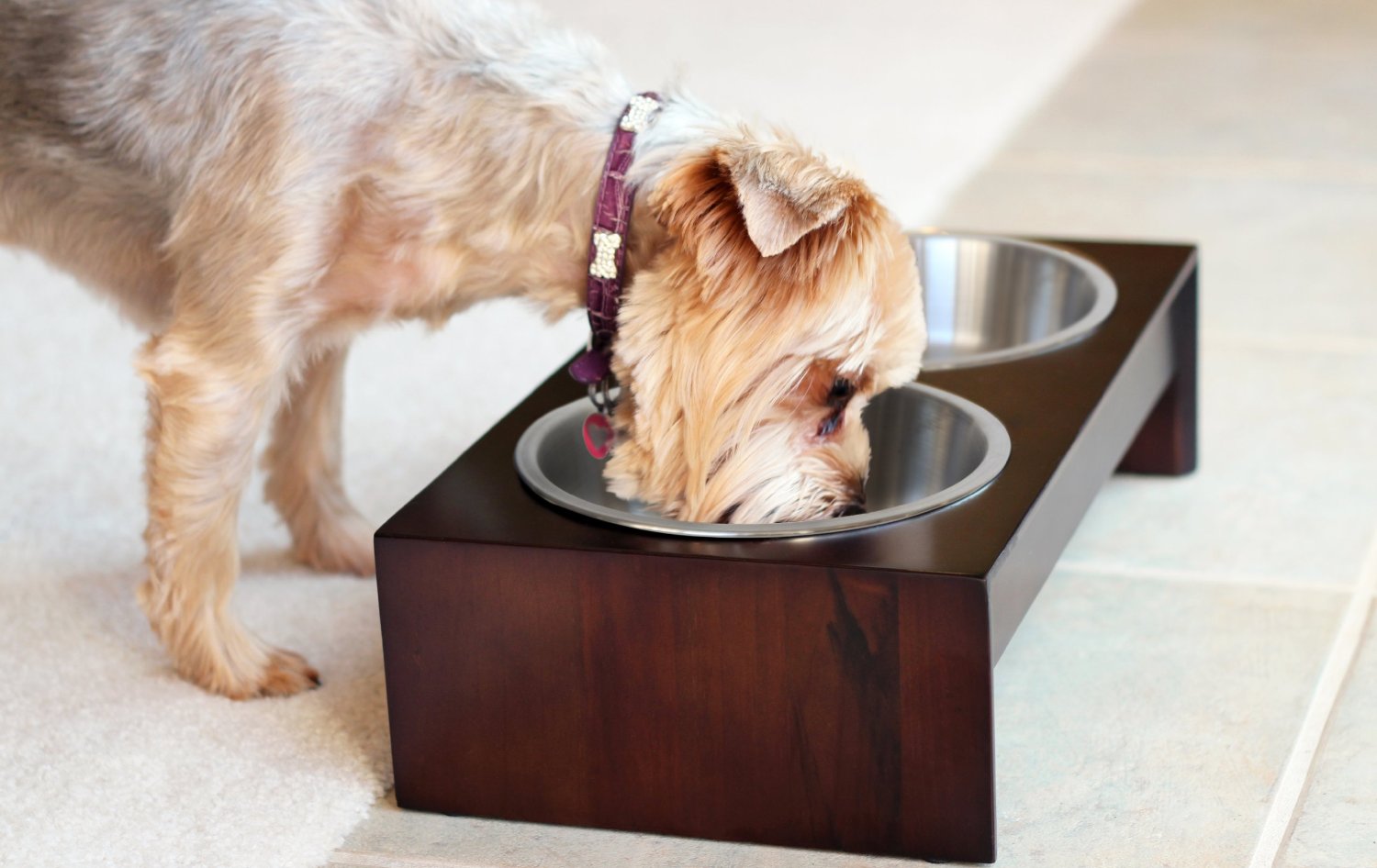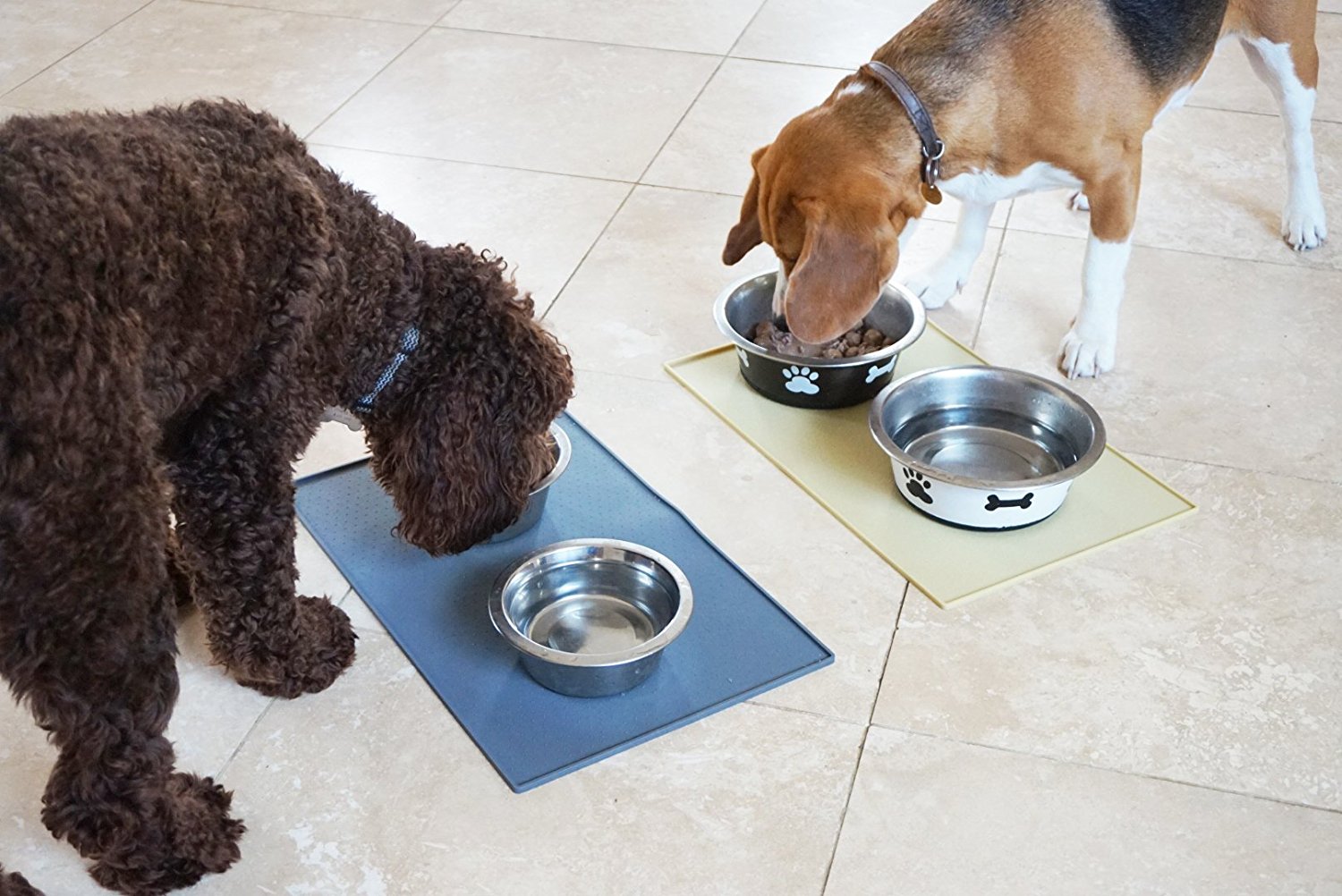
A feeding mat is a containment tool, not a decorative placemat. The useful ones stay flat, keep bowls from drifting, have enough room for the dog or cat to eat without pushing a dish over the edge, and can be washed before old water and kibble turn into a sticky film. For most homes, the MessyMutts small silicone bowl mat is the right starting point. Its 15.75-by-12-inch footprint fits two regular bowls, its half-inch lip catches normal splashes, and its food-grade silicone surface can be rinsed or put in the dishwasher. The limit is size: it is not made for a large water bowl or a particularly enthusiastic drinker.
For large bowls or a broad water-splash zone, choose the MessyMutts large 24-by-16-inch mat. Its raised edge has embedded steel rods that make a wet mat easier to lift and carry to the sink. The PetFusion Tough Grip mat is the sturdier alternative for a wide feeding station, with a 27.5-by-17.5-inch silicone surface, circular grooves, and a raised outer lip. If you are starting from scratch and want bowls included, the Gorilla Grip bowl-and-silicone-mat set pairs removable 304 stainless bowls with a raised-border silicone base.
Before buying, measure the two bowls side by side, including the space a dog needs to approach them. Then add room for a paw, a wet chin, and an occasional nudge. The right mat is usually larger than the neat rectangle you first picture.
Quick picks
- Best everyday mat: MessyMutts small silicone bowl mat. A 15.75-by-12-inch, BPA- and PVC-free silicone mat with a 0.5-inch raised edge. Good for two regular bowls. Check the MessyMutts small mat on Amazon.
- Best for large bowls and substantial spills: MessyMutts large silicone dog-bowl mat. A 24-by-16-inch mat with a half-inch lip, chevron ridges, and steel-reinforced lifting sides. Check the MessyMutts large mat on Amazon.
- Best wide, heavy-duty mat: PetFusion Tough Grip Dog Food Mat. A large silicone mat with circular spill channels, raised dots, and a raised outer lip. Check the PetFusion Tough Grip mat on Amazon.
- Best all-in-one setup: Gorilla Grip stainless-steel bowls with silicone feeding mat. A mat and two removable bowls for a new feeding station, rather than a mat to pair with bowls you already own. Check the Gorilla Grip bowl-and-mat set on Amazon.
Our pick: MessyMutts small silicone bowl mat
The standard MessyMutts silicone bowl mat gets the fundamentals right without becoming an oversized tray that occupies half the kitchen. It measures 15.75 by 12 inches, has a half-inch raised edge, and is made from food-grade silicone that the maker says is BPA- and PVC-free. The surface grips bowls and the floor, while the low wall contains the normal mix of splashed water, a missed piece of kibble, and the drips left by a wet muzzle.
That edge is the reason to choose a purpose-built feeding mat rather than a flat towel, rug, or generic placemat. A towel absorbs water but then stays damp; a flat plastic mat lets water travel straight to the floor. A shallow silicone lip gives a spill a place to stop. It will not contain a full bowl deliberately knocked over, and it will not make a pet stop splashing. It does make the everyday cleanup a single lift, rinse, and wipe.
This is the pick for two regular bowls, a small dog or cat water station, or a low-profile feeding setup near a wall. It can be wiped with warm soapy water, rinsed under the faucet, air dried, or placed in a dishwasher. The important habit is to clean it before residue dries in the textured surface. A mat that is technically dishwasher safe still needs routine attention after wet food or a tipped water bowl.
The drawback is that the footprint is deliberately compact. Measure large bowls instead of assuming they count as “regular.” If the bowls touch the rim, the mat is too small; a moving bowl can turn the raised edge into a ramp for spilled water. Use the next size up when a large water bowl, fountain, double feeder, or broad-shouldered dog is involved. See the MessyMutts small silicone bowl mat on Amazon.
For big bowls and a messy water station: MessyMutts large mat
The larger MessyMutts mat is the better choice when the issue is capacity, not a more elaborate material. At 24 by 16 inches, it has room for two extra-large bowls or a wider food-and-water setup. It uses the same silicone approach and a half-inch raised border, then adds embedded steel rods to two sides so you can lift a wet mat without it folding into itself. Its chevron ridges keep bowls slightly raised and give loose water a route away from the bowl base.
That makes it suitable for a dog that drinks with a lot of enthusiasm, two medium-to-large bowls, or a shared station where water is refilled often. The added surface area means an occasional splash lands on the mat instead of just beyond it. The mat can be rinsed with a hose, washed with warm soapy water, or put in the dishwasher; hand washing is still more convenient for a piece this large in many kitchens.
The trade-off is visual and physical bulk. A 24-by-16-inch mat is a real object on the floor. It needs a flat location with room for the dog to stand without kicking a bowl into the edge. It also catches more debris, so a large mat is not a “set it and forget it” solution. Shake out kibble, empty pooled water, and clean underneath it routinely. A feeding mat protects a floor only when moisture does not stay trapped below it.
Choose this model for the dog whose bowls are genuinely large or whose water splashes exceed a compact mat. Skip it if the station consists of two small bowls or you need something easy to pack for travel. See the MessyMutts large silicone mat on Amazon.
For a broad, stable feeding zone: PetFusion Tough Grip
The PetFusion Tough Grip mat is for a larger permanent feeding zone that needs more structure than a thin silicone sheet. It measures 27.5 by 17.5 inches and uses a stiff silicone construction with circular grooves, anti-slip bumps, and a raised outer lip. The large format suits a wide automatic feeder, a fountain, a double-bowl station, or a dog whose food tends to escape in every direction.
The circular grooves are meant to redirect loose kibble and small spills toward the contained area, while the raised outer edge gives water a second barrier. The mat is flexible enough to fold and carry to a sink, yet it weighs more than a basic small mat. That extra mass and broad footprint can be helpful on smooth floors because the feeding zone feels planted instead of sliding with the bowls.
It is not the best choice for everyone. The large size is awkward to fit in a dishwasher, and the more structured surface takes a moment longer to rinse clean than a smooth sheet. It is also too much mat for a compact apartment feeding corner or a single small cat bowl. Buy it for the layout it solves, not because a heavy mat is automatically a better mat.
See the PetFusion Tough Grip Dog Food Mat on Amazon.
For a new station with bowls included: Gorilla Grip bowl-and-mat set
The Gorilla Grip set makes sense when you need both the bowls and the mat. It combines two removable 304 stainless-steel bowls with a silicone base that has a raised border and a finger notch to lift a bowl out for cleaning. The maker rates the bowls and the mat as dishwasher safe and says the silicone is third-party tested to be BPA-free and food safe.
The advantage is that the parts are designed to fit. You do not have to guess whether a bowl's base will fit inside a small mat or whether the lip leaves enough room to lift the bowl. The stainless bowls are a clean, simple everyday material, while the silicone base helps reduce sliding and catches the normal crumbs and drips around them. It is a tidy solution for a first dog, a new kitchen, or a feeding corner where mismatched bowls keep wandering apart.
The limitation is flexibility. If you already own bowls you like, a separate mat is less wasteful. And the included bowls have a fixed capacity and shape, so a dog who needs a particular large, shallow, or slow-feeder bowl may outgrow the set. Do not buy an all-in-one station just because it looks coordinated; start with the food and water vessels your animal actually needs.
See the Gorilla Grip bowl-and-mat set on Amazon.
How to choose the right footprint
Put both bowls on the floor where they will sit, then measure the outer rectangle. Add at least a few inches on every side. That extra margin catches the spill that happens when a pet backs away from the bowl, shakes its head, or noses a dish while eating. A mat should feel like a defined feeding zone, not like a narrow coaster that barely fits underneath.
For a water fountain, automatic feeder, or raised stand, measure the entire base and leave room for accessing the lid, cord, or bowls. Tall sides on a tray can make removal awkward, so choose a lip that contains the normal spill without trapping the equipment. If the water source needs electricity, keep the cord and connection away from standing water and follow the maker's installation instructions.
For two pets, separate stations are often easier to keep clean than one gigantic mat. It gives you more control over portions and lets one animal eat without standing over the other. A large shared mat still works when the animals already share space calmly, but it should not be used to force a new feeding arrangement.
Set up a feeding station that is easy to live with
Put the mat on a flat, low-traffic part of the floor. A corner or a wall can keep the station from becoming an obstacle, but leave enough room that the animal is not trapped between the bowls and furniture. Avoid placing water where shoes, cleaning chemicals, or a swinging door can contaminate or knock it over. The most elegant feeding area is the one you do not have to step around every time you pass through the kitchen.
Keep food and water bowls separate enough that one can be removed without dragging through the other. This is especially helpful with wet food: you can lift the food bowl for washing while leaving fresh water in place. If a dog regularly flips a bowl, do not rely only on the mat's grip. Try a lower, heavier bowl, put the station against a wall, or ask a veterinarian or qualified trainer for help if the behavior is new or persistent.
For travel, a small flexible silicone mat can be useful in a hotel or at a relative's house because it establishes a clean, familiar eating area. It is not a substitute for washing bowls or checking the floor for hazards. Roll the mat only after it is clean and dry; packing a damp mat in a bag turns a convenience item into something you will not want to unpack.
Finally, avoid turning the station into storage. Bags of kibble, supplements, dirty scoops, and spare bowls on the same mat make cleanup less likely and create more places for crumbs to collect. Keep food sealed nearby, keep the scoop clean, and let the feeding mat do its one job well: catch the meal that misses the bowl.
Silicone, rubber, fabric, and plastic are not interchangeable
Silicone is the best all-round material for most feeding mats because it is waterproof, flexible, grippy, and simple to rinse. Its weakness is dust and hair: those can cling to silicone, especially on a dark surface. Clean both sides instead of only wiping the visible top.
Rigid plastic trays can contain a large spill and are easy to carry, but they are less forgiving on uneven floors and can slide without a textured underside. They also take up more storage space. Choose one when you need a deep tray, not merely because it is cheap.
Fabric or absorbent mats can look softer in a room and may work below a water bowl that sees tiny drips. They are poor protection against a tipped bowl or wet food. They must be washed and dried thoroughly. An absorbent surface left damp against a wood or laminate floor defeats the reason you bought a mat.
Rubber-backed mats can grip well, but check the care instructions and inspect the backing over time. A damaged or flaking backing is harder to clean and can leave residue on flooring. For most people, a straightforward silicone mat with a raised edge is easier to understand and replace.
Cleaning routine and floor care
Empty standing water from the mat after a spill instead of letting it evaporate slowly. Wipe crumbs and wet food soon after meals. Lift the mat regularly, dry the floor below it, and let the underside air out before putting it back down. This matters on hardwood, laminate, and any flooring where trapped moisture is a concern.
Wash the mat with mild soap and warm water, following its instructions for dishwasher use. Do not use abrasive scouring pads that can roughen the surface and create difficult-to-clean scratches. If a mat develops tears, deep bite marks, permanent odor, or an edge that will no longer sit flat, replace it. A warped lip cannot reliably contain water.
The mat works best with a bowl suited to your pet. Our guide to dog bowls and slow feeders explains when a simple stainless bowl, non-slip bowl, maze feeder, or lick-style feeder makes sense. If you are considering changing feeding height, read our guide to raised pet bowls after discussing a specific comfort concern with a veterinarian.
What we left out
We did not recommend thin flat placemats as the main pick. They can catch crumbs, but water needs a raised boundary. A flat mat is fine under a dry kibble bowl that never moves; it is not much help under a water bowl, fountain, or messy wet-food station.
We also skipped mats with extremely tall walls for ordinary use. A deep tray does contain more liquid, but it can make lifting bowls awkward and may cause a dog to step over an uncomfortable edge. Buy a deep tray for a specific spill problem, not for a few normal drips.
Finally, a feeding mat cannot solve a behavioral, appetite, or medical issue. It keeps the floor cleaner. If the change you are trying to address is persistent gulping, regurgitation, unwillingness to eat, or a sudden difference in drinking, talk to a veterinarian.
How we researched this guide
We reviewed current manufacturer specifications for each recommended product, including dimensions, material, lip height, bowl compatibility, cleaning guidance, and the features that affect spill containment. We did not conduct hands-on testing. Recommendations are based on the practical decisions that determine whether a mat will work in a real feeding area: sufficient footprint, an edge that contains normal spills, a stable surface, and cleanup that an owner will actually keep up with.
Amazon links on SuperGrail may earn us a commission. That does not change the products we include or the trade-offs we explain.